


7 Healthy Screen Time Tips to Help Your Preschooler Watch and Learn
Your preschooler just finished a show about planets, and on the drive to Lola’s house, the questions start pouring in. “Why does Saturn have rings?” “Can we live on the moon?” You talk all the way there, and your kid tries out new words like “orbit” and “crater.” That’s healthy screen time at work: the show sparks your kid’s curiosity, and your conversation turns it into language practice. Between ages 3 and 5, your kid reaches big language milestones, and moments like this give their growing vocabulary room to stretch.
With a few simple habits, Mom, screen time can become one of your kid’s favorite ways to learn. Dr. Kaye Napalinga, a developmental and behavioral pediatrician and Wyeth Nutrition medical advisor, sees it the same way. “It can be used as a resource of facts, and also a resource of entertainment that can actually be a platform for a conversation,” she says.
Choosing the right shows, watching together, and setting family routines can turn each episode into a chance to pick up new words and share big ideas with you. Start with what the guidelines say about healthy screen time, then try the seven tips that follow.
How Much Screen Time Is Healthy for Preschoolers?
Here’s what experts say healthy screen time per day looks like for kids ages 3 to 4. The World Health Organization (WHO) says your kid should have no more than 1 hour of sedentary screen time a day, meaning time spent passively watching TV, a computer, or a phone. Less is better, so think of that hour as a ceiling, not a daily goal.
Dr. Napalinga puts it this way: “Ano ba ’yung pinapanood niya? Ano ba ’yung natatanggal sa buhay niya dahil nanonood lang siya? So it’s not the actual watching; it’s the content of what they’re watching. It’s the context. Why are they even watching?”
Her questions echo the 5 Cs of media use from the American Academy of Pediatrics (AAP), whose 2026 policy statement says you can’t judge your kid’s media use by screen limits alone. If your family wants a specific limit, the AAP says one under 1 hour a day can work for preschoolers. Beyond the number, these five questions, adapted from the AAP’s 5 Cs, can guide your kid’s screen time:
- Child: How does your kid respond to screens? Do they let go easily, or struggle when the show ends?
- Content: What are they watching?
- Calm: Do screens become their go-to way to settle down?
- Crowding out: What is it taking away from their day?
- Communication: How does your family talk about what they see?
The first four help you choose what your kid watches. The fifth is about talking together, and that’s where PROMIL Gold’s 3Cs come in. You’ll see how in the tips below.
The good news, Mommy? Every one of these questions is something you can answer at home. If you’re worried your kid spends too long on gadgets, read the article “Is My Child a Gadget Addict?” for warning signs.
Healthy Screen Time Is About How, Not Just How Long
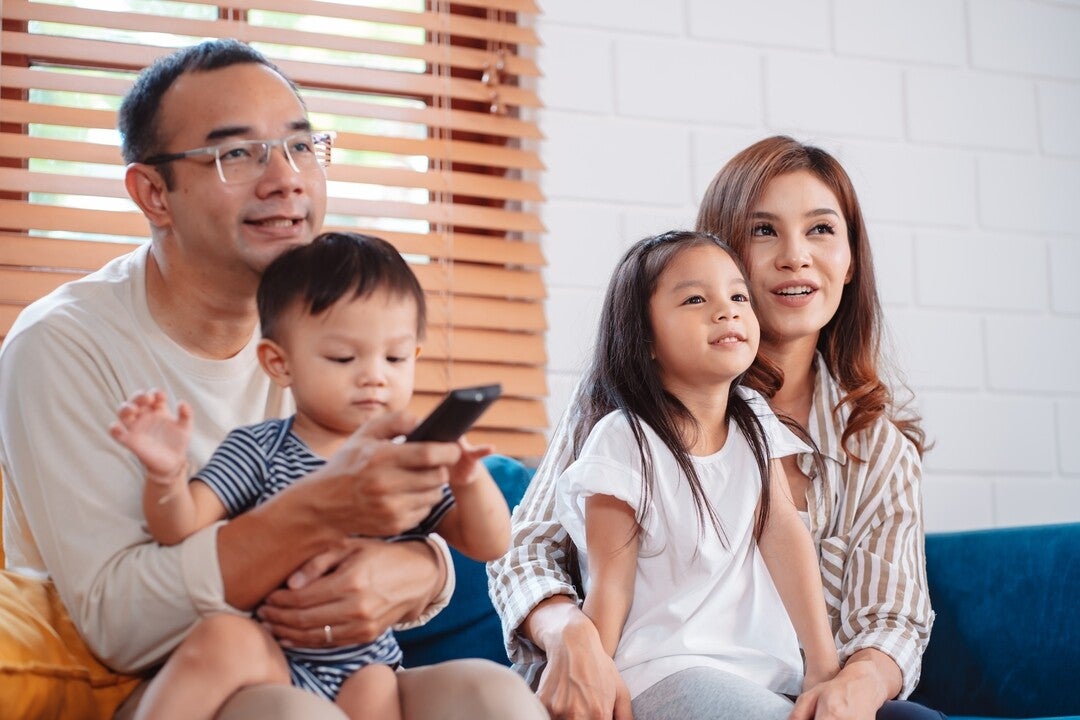
Co-viewing and educational shows are linked to stronger language skills, so the way your kid watches matters as much as time.
Knowing the limit is a good start, but what fills that time shapes what your kid takes from it. The AAP’s 2026 policy statement sums up what research shows about the effects of screen time on child development from birth to age 5.
High-quality educational shows are linked to stronger language and more prosocial behavior, like sharing and kindness, in preschoolers, especially when a caregiver watches along. Heavier non-educational and solo screen use is linked to delays in language, thinking, and social-emotional skills.
A 2024 review of 100 studies on kids from birth to almost 6 found that the setting matters, too. Background TV was linked to weaker thinking skills. Age-inappropriate shows and parents’ screen use during meals and play were linked to more behavior and emotional challenges. But kids who watched with someone else, like a parent or older sibling, tended to have stronger thinking skills. These studies show links, not cause and effect, but they point the same way.
Basically, the parts of screen time you can control, like what’s on, who’s watching, and whether your phone stays down at mealtime, are the same parts linked to how your kid learns and behaves. So, the positive effects of screen time show up most when you’re part of it, Mommy. Your kid’s language grows from the words they hear, the talk you share, and the nutrition that supports their brain.
7 Ways to Make Screen Time Count
Making screen time count takes small, everyday habits, not big changes. Here are seven you can try this week.
1. Pick shows made for your kid’s age.
Not every kids’ show is worth your preschooler’s time, Momma. The AAP describes high-quality content as shows with a relaxing pace that doesn’t feel too fast or frantic, characters who model kindness and good thinking, and no ads or violent scenes. Shows from Sesame Workshop are a good example.
What your kid watches also shapes how they act. “Kaya dapat tama din ’yung pinapanood nila. Kasi kung mali, mali din gagayahin nila. Mahilig sila mang-gaya,” Dr. Napalinga says. She adds that the right show depends on what your kid can follow right now. A 4-year-old may understand a full movie, while a 3-year-old who can’t follow the story may get more out of nursery rhymes.
Before you hand over a new show, watch it ahead of time. Dr. Napalinga suggests noting what your kid might not understand and what lessons they could pick up, so you know what to talk about afterward. Then switch off autoplay on your streaming apps, as the AAP encourages, so one episode doesn’t roll into five.
2. Watch together when you can.
Co-viewing, or co-watching, means you sit with your kid, watch the same show, and talk about it. Your kid gets someone to laugh with and ask questions, and you get a front-row seat to what they’re learning. A Philippine study also found that 2-year-olds who watched alone had about 8.56 times greater odds of excessive screen use than kids who watched with a parent or other kids.
Dr. Napalinga calls co-viewing protected time, something you set aside on purpose. Pick one favorite show to watch together each day, Mommy. On days you know you’ll be swamped, she suggests planning in the morning: set out blocks, a drawing pad, or pictures so your kid can play beside you instead of watching alone.
3. Comprehend: Ask simple questions about the story.
Every show gives you a chance to practice what PROMIL Gold calls the 3Cs: Comprehend, Converse, and Connect. Comprehend comes first. The AAP notes that preschoolers understand a lot more language at this age, which makes it a great time to talk about what they see.
Dr. Napalinga compares screen time to a classroom, “especially if you’re using educational content.” When you pause a show and talk about it together, she explains, your kid has a better chance of using those words in real life.
Simple questions like “Ano’ng nangyari?” or “Was that a kind thing to do?” help your kid put the story into their own words. Keep it light, like kuwentuhan, not a quiz. If an ad pops up, point it out and talk about what it’s trying to sell.
4. Converse: Let your kid share what they think.
Once your kid understands the story, converse with them by inviting their opinions. Ask, “Which part did you like best?” or “What would you do if you were him?” Then wait for their answers and build on what your kid says.
These back-and-forth chats let your kid practice taking turns and explaining their ideas, and they show your kid that their thoughts matter to you. For more on why this talking matters, read about how talking to your kid helps foster brain development.
5. Connect: Link the show to real life.
Connect is the last of the 3Cs, and it’s where new words start showing up outside the screen, Mom. Try, “That dog looks like the one at Lola’s house!” At the palengke, point out the fruits your kid saw in a show and ask them to name each one.
From the first question to a real-life link, each of these chats gives your kid daily practice with words. That’s where PROMIL Gold comes in. Its nutrition supports your kid’s growing brain, while your 3C conversations give it new words to work with, so the two work hand in hand for advanced language development.
6. Build a family screen routine.

Screen-free mealtimes give you daily time to talk with your kid about the shows they love and the day they had.
A routine tells your kid what to expect, so screen time feels calm and predictable instead of a daily negotiation. Good screen time management starts with when and where. The AAP suggests phone-free zones during meals, in bedrooms, and for an hour before bed. It also recommends using one screen at a time and turning off the TV when no one’s watching. Keep your own phone away during these times, too, Mom, so your kid sees the habit in action.
Try a screen-free merienda where you talk about the day’s show over pandesal and a glass of PROMIL Gold 3+, a powdered milk drink for kids over 3 years old. It has α-lipids, which contain sphingomyelin to support myelination, which helps support faster brain connections. It also has choline to support overall mental function. Together with a varied, balanced diet, it nourishes your kid while your conversation feeds their vocabulary.
7. End screen time with something to look forward to.
Turning off a show is easier when your kid knows what comes next. Give a heads-up, like “Two minutes na lang, tapos let’s do arts and crafts,” and stop at a natural break, such as the end of an episode. Have a swap ready, like a craft, book, or board game. Smooth endings like these help your kid practice moving from one activity to the next.
On days your kid stays with Lola, Dr. Napalinga suggests giving them a small chore instead of a gadget, like carrying the laundry basket. “Endorse mo siya kay Lola. 'Patulungin natin sya sa household chores'. Mas madami pa sya matututunan", she says.
For more screen-free ideas, read Healthy Screen Time Habits: Engaging Alternatives for Toddlers.
Frequently Asked Questions
Once you start co-watching and setting routines, a few practical questions tend to come up. Here are clear answers based on expert guidelines.
Does co-watching count as screen time?
Yes. Under the WHO’s definition, time your kid spends passively watching a screen counts, even when you watch together. Co-watching doesn’t stretch the limit, but it helps your kid get more out of that time, since watching with a caregiver is linked to stronger learning.
Should my preschooler have their own tablet?
The AAP notes that personal tablets are designed for solo use, which makes it harder for you to stay involved. A shared family tablet, or waiting until your kid is older, can help you set boundaries, and your kid won’t miss out on learning if you wait. Using a tablet on a long road trip to the province or a plane ride can still be appropriate. Dr. Napalinga compares navigating the internet to exploring a foreign country: you wouldn’t send your kid to Hong Kong alone before showing them how to get around.
Are video calls with family a healthy kind of screen time?
They’re different from watching a show. The AAP notes that video chatting can give kids a chance for back-and-forth interaction. So when your kid chats with Lola in the province or Papa working abroad, help them take turns talking and listening.
Make Every Screen Moment Count
Helping your kid stay one step ahead doesn’t mean banning screens, Mommy. It means making every minute on them count: a good show, a few questions, and routines your family can keep. That’s what healthy screen time looks like, and each chat adds new words to your kid’s vocabulary.
As the Global No. 1 in Brain Research, PROMIL Gold is clinically proven to advance 47% more of the brain for advanced language development. Pair PROMIL Gold 3+ with a varied, balanced diet. Add healthy screen time and your daily 3C conversations, and you give your kid’s brain both nourishment and words to grow with.
Turn screen time moments into a 3C movement. Advance language with PROMIL Gold.
References
American Academy of Pediatrics Center of Excellence on Social Media and Youth Mental Health. “Kids & Screen Time: 5 C’s Questions for Toddlers & Preschoolers.” HealthyChildren.org. Accessed October 27, 2026. https://www.healthychildren.org/English/family-life/Media/Pages/kids-and-screen-time-5-cs-questions-for-toddlers-and-preschoolers.aspx
Dy, Angel Belle C., Alane Blythe C. Dy, and Samantha Katrina Santos. “Measuring Effects of Screen Time on the Development of Children in the Philippines: A Cross-Sectional Study.” BMC Public Health 23 (2023): 1261. Accessed October 27, 2026. https://pmc.ncbi.nlm.nih.gov/articles/PMC10308687/
Mallawaarachchi, Sumudu, Jade Burley, Myrto Mavilidi, et al. “Early Childhood Screen Use Contexts and Cognitive and Psychosocial Outcomes: A Systematic Review and Meta-analysis.” JAMA Pediatrics 178, no. 10 (2024): 1017–26. Accessed October 27, 2026. https://jamanetwork.com/journals/jamapediatrics/fullarticle/2821940
Munzer, Tiffany, Joanna Parga-Belinkie, Libby Matile Milkovich, Suzy Tomopoulos, Taiwo Ajumobi, Corinn Cross, Roslyn Gerwin, Sheri Madigan, and American Academy of Pediatrics Council on Communications and Media. “Digital Ecosystems, Children, and Adolescents: Policy Statement.” Pediatrics 157, no. 2 (2026): e2025075320. Accessed October 27, 2026. https://publications.aap.org/pediatrics/article/157/2/e2025075320/206129/Digital-Ecosystems-Children-and-Adolescents-Policy

PROMIL Gold 3+ is a powdered milk drink for kids over 3, made with NUTRIGIFT ADVANCE™. Make it part of your preschooler’s day, along with a varied, balanced diet.
Related articles

27 Conversation Starters for Kids That Turn Screen Time into Talk Time
Try these conversation starters for kids during and after screen time. Ask a question, share a thought, and watch your kid’s words grow.
10 mins to read

Is Screen Time Really Bad for Language Development in Children?
Screen time can affect language development in children, but how your kid watches matters as much as how long. Here’s what experts and research say.
14 mins to read

9 Water Safety Rules Every Filipino Parent Should Teach Their Kids
Water safety starts before your child dips a toe in the water. Teach these easy rules your child can follow, plus skills to build by age and what to do in an emergency.
11 mins to read

Exploring the Philippines with Kids: 6 Travel Safety Tips You Should Know
Good travel safety habits keep your family trip fun from start to finish. Stay close at the beach, beat the heat, eat safely, and stick together in crowds.
10 mins to read

10 Bible Stories for Kids That Teach Values They Can Live By
Teaching big values to preschoolers isn’t easy. These Bible stories for kids bring concepts like patience and kindness in a way little minds can get.
13 mins to read

7 ₱500 Budget Ulam Ideas to Feed Your Family
Use these budget ulam ideas to cook hearty yet wallet-friendly meals for your family.
6 mins to read

Bored Preschooler? 10 Fun Activities for Kids at Home
Keep your preschooler entertained with these activities for kids at home. Use pillows, paper, and kitchen scraps for hours of active, creative play.
8 mins to read

15 Gifts for Kids Who Have Too Many Toys
Running out of space for toys? Try these thoughtful gifts for kids that focus on fun, learning, and family time without the clutter.
5 mins to read

The One Nutrition Secret to Help Protect your Child
Being a first time mom is a challenging experience. With all the new things you have to learn, it can get overwhelming. The first few years are the most difficult.
3 mins to read

Easy Daily Bonding Activities for Moms and Kids
Every mom shows love differently, but if you turn everyday moments into meaningful adventures, you might be an “Experience Mom.” From simple playtime to shared routines, discover how these bonding
4 mins to read

Will Lactose-Free Milk Be Enough for My Preschooler?
Lactose-free milk can ease your child’s bloating and loose stools, but does it give them enough of what they need to grow? A pediatrician and nutritionist answer.
6 mins to read

6 Healthy Drinks Even Picky Preschoolers Will Enjoy
Skip the soda and powdered juice with these healthy drinks for kids 3 and up. Each one is easy to make, easy on the budget, and easy for picky kids to love.
9 mins to read

Is It Shyness or Social Anxiety? Signs Your Child May Need Extra Support
Social anxiety in kids isn’t just being quiet. Learn the signs a psychologist watches for, from school refusal to withdrawal, and how to help your child cope.
8 mins to read

Does Your Child Learn Better with Pictures? 4 Visual Learning Tips to Try
Visual learning turns flashcards, drawings, and picture charts into real study tools. Here’s how to spot it and try it with your child.
7 mins to read

How to Feed a Picky Eater: A Nutritionist’s Guide for Preschoolers
Raising a picky eater doesn’t mean giving up on healthy meals. Get practical, nutritionist-backed ideas to make mealtimes easier and more satisfying.
12 mins to read

10 Signs na Hiyang Ang Anak Sa Kinakain Niya
Makikita mo sa kilos, sa energy, at kahit sa pagtulog ng anak mo na hiyang ang anak mo sa kinakain nya!
7 mins to read

Sterilized Milk Benefits for Growing Kids: What Parents Should Know
Sterilized milk benefits your whole household, from safety to shelf life. Here’s what it offers your family and your growing kids.
5 mins to read

Does Your Preschooler Need Fresh Milk or Growing-Up Milk?
Fresh milk gives your preschooler a strong start—but does it cover everything they need? Here’s how to know if growing-up milk can help your child.
7 mins to read

6 Budget-Friendly Milk Products for Your Preschooler’s Baon
Milk products don’t have to strain your budget. Here are six affordable picks that fit your preschooler’s baon and their growing needs.
7 mins to read


