

Babbling to Full Sentences! Your Language Development Checklist by Age
Language development starts long before your child says their first word. You'll notice clues in the way your baby reacts to your voice, how they watch your expressions, and the sounds they try to copy.
Knowing the early signs that show your child is learning how to communicate is crucial. It puts you in a better position to support your child's progress and notice if anything needs attention.
Here's a guide to help you understand the stages of language development from those first few months all the way to the preschool years.
Language Development in Babies From 2 to 6 Months Old
The widely used developmental checklists today come from updated guidance published in Pediatrics by the American Academy of Pediatrics (AAP), together with the Centers for Disease Control and Prevention (CDC).
These language and communication milestones show what most babies can accomplish at a specific age. Here's what to expect at 2 to 6 months old.
At 2 months
- Makes sounds that aren't crying
- Reacts when there's a sudden or loud noise
At 4 months
- Produces longer cooing, often sounding like "ooo" or "aah"
- Tries to respond with sounds when you talk
- Turns their head when they hear your voice
At 6 months
- Takes turns "talking" with you using sounds
- Tries blowing air with their tongue out, like little raspberries
- Makes squealing or high-pitched noises
Know more about the early childhood stage in 30 Must-Know Terms for New Parents.
Language Learning From 9 to 15 Months Old
At this point, you'll start to notice your baby getting better at communicating. They'll make a broader range of sounds and use more precise gestures, which are an essential part of language development.
When you hold out your hand and say, "Give me the toy," and your baby hands it to you, these are those little moments that show how your baby is starting to pick up language skills as they grow.
At 9 months
- Makes different sounds like "mamamama" or "babababa"
- Lifts their arms when they want to be carried
At 12 months
- Waves "bye-bye" during interaction
- Calls a parent using "mama," "dada," or another name
- Shows they understand "no" by pausing or stopping for a moment
Read more in A Guide to Your 1-Year-Old Baby's Milestones.
At 15 months
- Tries to say one or two new words besides "mama" or "dada," like "ba" for ball
- Looks at familiar objects when you name them
- Follows directions that include gesturing and words
- Points when asking for something or when they need help
Language Milestones From 18 to 36 Months Old
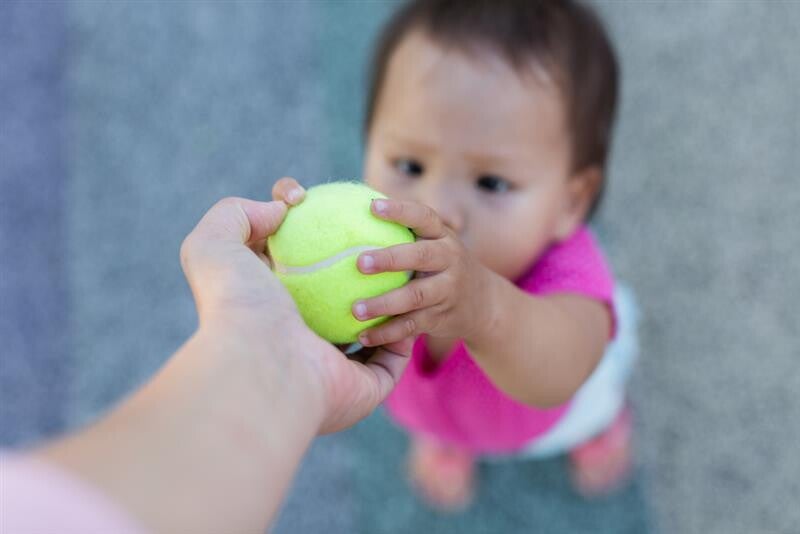
As your little one enters the toddler stage, you'll start to notice them using more words, making more gestures, and having fun back-and-forth conversations.
These little communication milestones give you a glimpse into how they're grasping language and progressing through the various stages of language development.
At 18 months
- Tries to say at least three words other than "mama" or "dada"
- Follows one-step directions without gestures, like handing you a toy they're holding when you say "Give it to me"
Read more about your 18-month-old baby's growth and milestones to expect.
At 24 months (2 Years)
- Points to things in a book when you ask, such as "Where is the dog?"
- Says at least two words together, like "More milk"
- Points to at least two body parts when asked
- Uses more gestures beyond waving and pointing, like blowing a kiss or nodding
At 30 months (2.5 Years)
- Says around 50 words
- Uses two or more words with an action word, like "Doggie run"
- Names objects in a book when you point and ask, "What is this?"
- Uses words like "I," "me," or "we"
At 36 months (3 Years)
- Talks with you in conversation with at least two back-and-forth exchanges
- Asks who, what, where, or why questions
- Describes an action happening in an image when asked, such as running or eating
- Says their first name when you ask
- Speaks clearly enough that other people understand them most of the time
Language Development in the Preschool Years
By the time your child reaches preschool age, their language skills really start to take off. You'll notice they're using longer sentences, have a wide vocabulary, and can chat about their day or tell stories.
While they may still use some gestures, most of their communication is now through words. These milestones demonstrate their progress and their ability to use speech to connect with you and the world around them.
At 4 years
- Says sentences with four or more words
- Recites words or phrases from songs, stories, or nursery rhymes
- Talks about at least one thing that happened during their day, like "I played soccer"
- Answers simple questions, such as "What is a coat for?" or "What is a crayon for?"
At 5 years
- Tells a story they heard or made up with at least two events, like a cat stuck in a tree and a firefighter saving it
- Answers simple questions about a book or story after you read or tell it
- Keeps a conversation going with more than three back-and-forth exchanges
- Uses or recognizes simple rhymes, like "bat-cat" or "ball-tall"
When to Be Concerned
If you notice your child isn't hitting the milestones expected for their age, talk with your pediatrician. Getting expert advice as soon as possible will give you the tools to know how to support and boost your child's communication skills in the best way.
A 2020 study in Pediatrics in Review also lists these red flags that indicate a high risk of language or speech disorder:
- Any age: Rarely participates in social interactions
- 6 months: Doesn't laugh, vocalize, respond to sounds, or take turns "talking" with you
- 9 months: Doesn't respond to their name or make babbling sounds like "baba" or "dada"
- 12 months: Can't point to objects or actions, doesn't use gestures like waving or shaking head "no," or hasn't started saying "mama" or "dada" for a parent
- 18 months: Uses fewer than five words beyond "mama" or "dada" or can't follow simple commands with gestures
- 24 months: Has a vocabulary of under 50 words, doesn't combine two words, or less than half of their speech is understandable to strangers
- 36 months: Can't follow simple directions without gestures, doesn't use three or more word combinations, or less than 75% of speech is understandable to strangers
- Up to 36 months: Any loss of language or speech skills, especially if it comes with a decline in social abilities but not motor skills
If you see any signs of speech delay, early evaluation can make a difference. You can also read 3 Major Red Flags You May Have a Child with Special Needs where we spoke with a pediatrician about early warning signs.
How to Support Your Child's Communication Skills
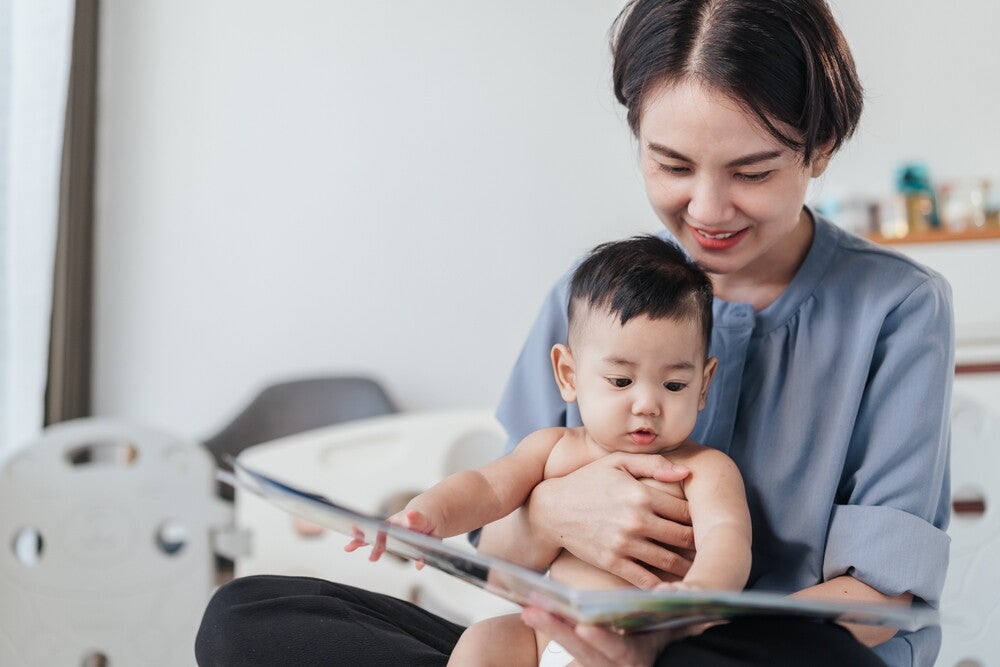
Language development benefits from everyday conversations, playtime, and reading. Here are some ways you can provide your child with numerous opportunities to pick up language cues and practice their speech.
Through conversation
- Speak often to your child from infancy. Baby talk (using simple sentences with exaggerated intonation) helps them notice sounds and patterns in words.
- Describe what your child is doing or expand on what they say. For example, if they say "ball," you can say, "Yes, the red ball is rolling fast."
- Give your child time to respond. Listening patiently supports early communication milestones and builds confidence.
Through play
- Name objects and actions as you play, like "push the car" or "throw the ball."
- Encourage pretend play. Talking to dolls or stuffed animals gives your child a chance to practice words and sentences.
- Use gestures, pointing, and other non-verbal cues to reinforce meaning and support language stimulation.
Through reading
- Read books daily. Research shows reading provides more language input than meals, baths, or playtime alone.
- Pause to point, ask questions, or let your child predict what happens next.
- Repeat favorite words or phrases together to build vocabulary and memory.
Read more in Teacher-Recommended Reading Strategies for Toddlers.
Happy Talking!
Watching your child's language development milestones is one of the most exciting parts of their early years. From cooing and babbling to speaking in complete sentences and telling stories, each stage shows how your child learns to connect, express themselves, and understand the world.
Remember, small everyday moments, like pointing, talking, singing, and reading, make a huge difference over time in their language development. Keep observing, talking, and celebrating each step along the way!
References
American Speech-Language-Hearing Association. “Activities to Encourage Speech and Language Development,” n.d. https://www.asha.org/public/speech/development/activities-to-encourage-speech-and-language-development/.
The Genius of Play. “Benefits of Pretend Play - Language & Literacy Learning for Kids,” n.d. https://thegeniusofplay.org/tgop/genius/expert-advice/articles/the-power-of-pretend-play-in-language-and-literacy-learning.aspx.
Ginsburg, Kenneth R., Donald L. Shifrin, Daniel D. Broughton, Benard P. Dreyer, Regina M. Milteer, Deborah A. Mulligan, Kathleen G. Nelson, et al. “The Importance of Play in Promoting Healthy Child Development and Maintaining Strong Parent-Child Bonds.” PEDIATRICS 119, no. 1 (January 1, 2007): 182–91. https://www.bowdoin.edu/childrens-center/pdf/the_importance_of_play_in_prom-1.pdf.
Pajor, Allison. “The Role of Oral Language Development in Reading Proficiency.” IMSE - Journal, December 14, 2023. https://imse.com/journal/article/the-role-of-oral-language-development-in-reading-proficiency/.
Sheldon-Dean, Hannah. “Why Is It Important to Read to Your Child?” Child Mind Institute, December 2, 2024. https://childmind.org/article/why-is-it-important-to-read-to-your-child/.


