


Finding healthy drinks your preschooler will happily finish can feel like a daily challenge. Tetra Pak juice from the sari-sari store and soft drinks at family parties are sweet, affordable, and everywhere, Mommy, so it’s no surprise your child reaches for them first. But the right drinks keep your child hydrated and give their growing body nutrients like calcium and protein. They also make it easier to cut back on sugar at home. Here are six healthy drinks for kids 3 and up, plus simple ways to win over even the choosiest sipper.
What Are Healthy Drinks for Kids?
The best drinks for kids are probably already in your kitchen, Mommy. Child health experts recommend plain water and plain milk as everyday drinks for kids 3 to 5. They also advise skipping drinks with added sugar for kids 5 and under, like soft drinks, powdered juice drinks, sweetened iced tea, and sports drinks. When it comes to juice for kids, even 100% fruit juice is best kept small, since whole fruit is the better pick. If you do serve it, keep it to about half a cup a day for 3-year-olds and no more than three-fourths cup for ages 4 to 5.
Cutting back on those sweet drinks helps your child in more ways than one. According to the American Academy of Pediatrics (AAP), sugary drinks raise a child’s risk of cavities and excessive weight gain. They can also influence your child’s taste. Kids who get used to sweet drinks early can develop a strong preference for them, and some even start refusing plain water. This means that if soft drinks show up at every birthday party or family gathering, your child might begin to think of water as “walang lasa.”
Healthy doesn’t have to mean boring, though. The six drinks below start with water and milk, then add a few local favorites for days your child wants something different.
1. Plain Water, Served Their Way
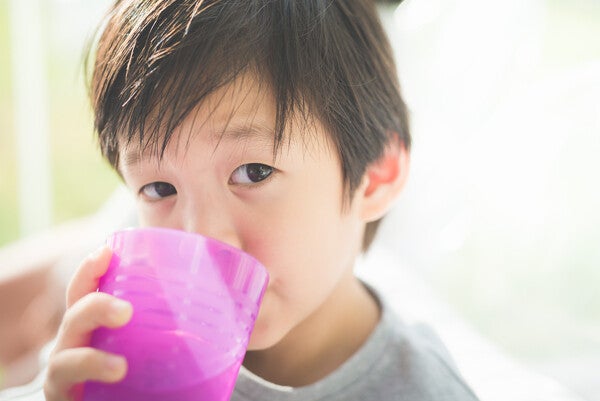
Letting your child pick their own cup and adding a few ice cubes can encourage them to drink more water.
Water keeps your child hydrated all day long, from breakfast to recess to afternoon play. If your child feels water is too boring, the trick is making it fun enough that your picky one asks for a refill.
Start by letting your child pick their own cup or tumbler in their favorite color. Giving your child a choice, a trick that also helps picky eaters at mealtime, makes them feel like they’re in charge of what they drink. Toss in a few ice cubes or a fun straw to make each sip more exciting. Then keep a filled bottle within reach during play and meals, so your child can drink whenever they feel thirsty.
So how much water should they drink? Here’s a simple guide: if your 3-year-old drinks 2 cups of milk a day, about 2 cups of water covers the rest of their needs. Basically, the more milk your child drinks, the less water they need, and the other way around. Just remember that your child also needs more water on hot days and after running around, so keep offering it throughout the day.
2. Fruit-Infused Water
If plain water still gets a “yuck,” don’t give up yet, Mommy. A few slices of fruit might change your child’s mind. Fruit-infused water is just water with fruit soaking in it. It’s still mostly water, with a hint of flavor and no added sugar.
The Centers for Disease Control and Prevention (CDC) suggests adding a wedge of lemon or lime to water as an easy way to drink more of it. For a Pinoy twist, try calamansi, dalandan, or pipino. Drop the slices into a pitcher of cold water, chill it in the ref for an hour or two, and serve. Your kid might even think your house is like a restaurant!
Let your child pick the fruit and drop the slices in themselves. Prep time becomes a little bonding moment, and your child gets to serve a drink they made. Pour an ice-cold glass after outdoor play. The fruit gets soggy after a few hours in a baon bottle, so plain water is still the better pick for school.
3. Pre-School Powdered Milk Drink
Once your child is sipping more water, milk fills in the nutrients their growing body needs. For kids 3 to 5, an age-appropriate pre-school powdered milk drink makes this easy, especially on busy mornings, or on days when your picky eater barely touches their plate. It’s easy to prepare, and many kids like its familiar, creamy taste.
For instance, NIDO Toddler 3+ has no added table sugar and comes with calcium, magnesium, phosphorus, and vitamins D and K to support your child’s growing bones. It also has DHA and 1 billion probiotics. Meanwhile, PROMIL 3+ is formulated with nutrients like DHA, choline, and sialic acid to support brain development. It also has calcium and vitamins D and K to help build and maintain strong bones and teeth.
Like other age-appropriate powdered milk drinks, both work best alongside your child’s meals, not in place of them. Serve a glass at breakfast or merienda, and prepare it the way the pack says, since each brand has its own mixing instructions.
4. Buko Juice
Water and milk will always be your child’s everyday go-tos, but on a hot afternoon, few healthy drinks in the Philippines feel as refreshing as a cold glass of buko juice. Many kids already love its naturally sweet taste, so it’s an easy win when your child wants something different.
Buko juice gives your child minerals like potassium, calcium, and magnesium, along with natural sugars. According to Mayo Clinic, a cup has about 45 to 60 calories, and it doesn’t hydrate any better than plain water. So think of coconut water for kids as a refreshing change from water, not a replacement for it.
Buy it fresh from the palengke or your suki at the supermarket, and skip bottled versions with added sugar. Serve it cold at home on the day you buy it, since fresh buko juice spoils quickly. Pour it into a clear cup so your child can see the soft coconut strips floating inside, a small surprise that makes every sip more fun. On a beach trip, order it served in the whole coconut, so your child can scoop out the soft meat after drinking.
5. Homemade Fruit Shakes
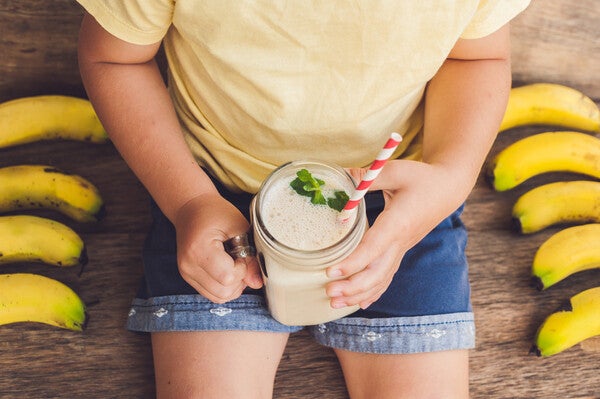
A shake made with banana and cold milk keeps the whole fruit and needs no sugar or condensed milk to make it a healthy drink.
When your child craves something sweet and creamy, a homemade fruit shake hits the spot, and you get to decide what goes into it. Blend ripe mango, saba, papaya, or banana with cold fresh milk or water and a few ice cubes for a thick, naturally sweet treat.
A shake also gives your child something juice can’t. When you blend fruit, the whole fruit goes into the glass, pulp and all. According to the AAP's advice on smoothies for kids, blending keeps the fruit’s fiber intact, while juicing removes it. In other words, your child gets the fiber that makes fruit so good for them, and not just the sweet liquid.
To keep it healthy, skip the sugar syrup and condensed milk that many shake stalls use, since ripe fruit is already sweet. Use only as much fruit as your child would usually eat in one sitting. You can also add a few vegetables like spinach or malunggay. Serve it on a weekend or for merienda after school.
Let your child press the blender button while you hold the lid, Mommy, and give your fruit blend a fun name together.
6. Fresh Milk
Plain fresh milk is another everyday option, and it’s one the whole family can share. According to the AAP, the benefits of milk come from nutrients like calcium, vitamin D, protein, vitamin A, and zinc, all important for your child’s healthy growth.
When choosing fresh milk for kids, child health experts recommend plain low-fat or skim milk—up to 2 cups a day for 3-year-olds, and up to 2½ cups for ages 4 to 5. In short, you can serve one cup at breakfast and one at merienda.
If your child can’t drink milk because of an allergy or trouble digesting it, the AAP considers soy milk an acceptable alternative. Check with your pediatrician first, so you can make sure your child still gets the nutrients milk provides.
If your child pushes milk away, try changing how you serve it, Mommy. Some kids like it ice-cold, while others prefer it slightly warm. Serving it in a small glass with pandesal at breakfast can also make it easier to finish. On school days, a Tetra Pak of plain milk makes easy baon, since it keeps without a ref until opened.
Packing Healthy Kid Drinks for School
Once you’ve found your child’s favorites, you can pack them for school, too. It’s a goal DepEd shares; its healthy food policy aims to make healthier food and drink choices available to learners. Packing healthy baon drinks for kids helps you support the same goal. These tips make it easier:
- Use a leak-proof tumbler your child can open on their own.
- Choose an insulated tumbler and add a few ice cubes, so the water stays cold until recess.
- Measure pre-school powdered milk drink into a clean, sealed container and pack a bottle of water, so your child or their teacher can mix it fresh at snack time.
- Let your child pick their baon drink the night before, so they’re excited to finish it at school.
Want something to go with those drinks? Try these healthy baon snacks for kids 3 and up, or these budget-friendly milk products for baon.
Small Sips, Big Wins for Your Picky Drinker
Raising a child who enjoys healthy drinks starts with small, everyday choices. Keep water and milk (fresh or powdered) as your child’s daily go-tos. Then bring in fruit-infused water, buko juice, or homemade shakes when your picky one wants something new. When your child says no, change one thing at a time, like the cup, the temperature, or the fruit.
Start with one easy switch, Mommy. This week, pick one sweet drink your child has every day, like the juice drink at merienda, and replace it with water, milk, or buko juice.
Have a trick that finally got your picky one to drink more water? Share it with other parents in the ParenTeam Moms and Dads Facebook group, and discover the healthy drinks they serve at home and pack for baon.
References
Centers for Disease Control and Prevention. "About Water and Healthier Drinks." Last reviewed March 5, 2026. Accessed September 30, 2026. https://www.cdc.gov/healthy-weight-growth/water-healthy-drinks/index.html
Department of Education. "DO 13, s. 2017 – Policy and Guidelines on Healthy Food and Beverage Choices in Schools and in DepEd Offices." March 14, 2017. Accessed September 30, 2026. https://www.deped.gov.ph/2017/03/14/do-13-s-2017-policy-and-guidelines-on-healthy-food-and-beverage-choices-in-schools-and-in-deped-offices/
Gillin, Shakha. "Are Blended Smoothies Good for My Child?" HealthyChildren.org, American Academy of Pediatrics. Last updated July 28, 2017. Accessed September 30, 2026. https://www.healthychildren.org/English/tips-tools/ask-the-pediatrician/Pages/Are-blended-smoothies-good-for-my-child.aspx
Lott, Megan, Emily Callahan, Emily Welker Duffy, et al. Healthy Beverage Consumption in Early Childhood: Recommendations from Key National Health and Nutrition Organizations. Consensus Statement. Durham, NC: Healthy Eating Research, September 2019. Accessed September 30, 2026. https://healthyeatingresearch.org/wp-content/uploads/2019/09/HER-HealthyBeverage-ConsensusStatement.pdf
Mayo Clinic Staff. "Coconut Water: Is It Super Hydrating?" Mayo Clinic, July 12, 2023. Accessed September 30, 2026. https://www.mayoclinic.org/healthy-lifestyle/nutrition-and-healthy-eating/expert-answers/coconut-water/faq-20207812
Muth, Natalie D. "Recommended Drinks for Children Age 5 & Younger." HealthyChildren.org, American Academy of Pediatrics. Last updated October 3, 2023. Accessed September 30, 2026. https://www.healthychildren.org/English/healthy-living/nutrition/Pages/recommended-drinks-for-young-children-ages-0-5.aspx
Shi, Shaoran, Wenxin Wang, Fengzhang Wang, et al. "Research Progress in Coconut Water: A Review of Nutritional Composition, Biological Activities, and Novel Processing Technologies." Foods 14, no. 9 (2025): 1503. Accessed September 30, 2026. https://www.mdpi.com/2304-8158/14/9/1503
Related articles

How to Feed a Picky Eater: A Nutritionist’s Guide for Preschoolers
Raising a picky eater doesn’t mean giving up on healthy meals. Get practical, nutritionist-backed ideas to make mealtimes easier and more satisfying.
12 mins to read

Sterilized Milk Benefits for Growing Kids: What Parents Should Know
Sterilized milk benefits your whole household, from safety to shelf life. Here’s what it offers your family and your growing kids.
5 mins to read

Does Your Preschooler Need Fresh Milk or Growing-Up Milk?
Fresh milk gives your preschooler a strong start—but does it cover everything they need? Here’s how to know if growing-up milk can help your child.
7 mins to read

6 Budget-Friendly Milk Products for Your Preschooler’s Baon
Milk products don’t have to strain your budget. Here are six affordable picks that fit your preschooler’s baon and their growing needs.
7 mins to read

6 Benefits of Protein in Milk for Preschoolers
Protein in milk gives your preschooler the fuel to play hard, grow strong, and fight germs—here’s exactly how it works and how much they need.
7 mins to read

Powdered Milk or Fortified Milk: What’s the Difference for Your Preschooler?
Powdered milk and fortified milk might seem similar, but they serve different purposes. Learn how they differ and which one your preschooler might need.
6 mins to read

8 Masustansyang Ulam Ideas for Your Preschooler’s Healthy Weight Gain
Consistent weight gain happens when you serve the right meals. Discover eight budget-friendly ulam ideas packed with nutrients for your growing child.
6 mins to read

6 Key Benefits of Milk to Fuel Your Active Preschooler
The benefits of milk go beyond strong bones—fueling energy, sharpening focus, and building immunity for your always-on-the-go preschooler.
6 mins to read

10 Tipid Gift Ideas for Mothers that Dads and Kids Can Do Together
These creative gift ideas for mothers help you lead the kids in making something special. Learn how to pull off a heartfelt surprise on a budget.
6 mins to read

How to Create a 15-Minute Morning Routine Before the Kids Wake Up
A calm day starts with you. Build a quick morning routine to find quiet time before the household chaos begins, so you can respond to your kids with patience.
7 mins to read

Your Guide to Sugar Reduction to Raise Healthier, Happier Eaters
Forget strict sugar restrictions. Here's a more relaxed approach to sugar to keep your kid’s sweet tooth satisfied.
5 mins to read

Your Preschooler Eats Enough. But Are They Getting the Right Nutrients?
Even with regular meals, kids may miss out on essential vitamins and minerals. Here's how to spot the signs and feel confident about healthy meal planning.
6 mins to read

Brain Vitamins for Kids: What Matters for Thinking and Learning
Here's a list of the best brain vitamins for kids, which don't come in a bottle.
5 mins to read

Prebiotics vs. Probiotics: Which One Is Better for Your Child?
Here's a quick prebiotic vs. probiotic game: which one is the good bacteria, and which one is food to microbes? Read to know which one supports your child's gut health!
8 mins to read

Child Obesity Can Lead to "Adult" Diseases: How to Help Prevent It
Without early intervention, child obesity puts kids at risk for serious conditions at younger ages, not just later in life.
7 mins to read

Healthy Food for Kids: The Basics of Eating Well
Raise a preschooler to love all kinds of food! Learn the basics of balanced meals, smart snacks, and how to make nutritious food fun and stress-free.
7 mins to read

9 Fun Ways to Help Your Preschoolers Make Nutritious Food Choices
Choosing nutritious food is easier when you turn it into a fun game for your child. Learn how to empower your preschoolers to pick the right snacks today.
7 mins to read

On a Tight Budget? 11 Diskarte Tips to Stretch Your Food Allowance
Stretching a tight budget is easier with the right diskarte. Learn how to shop smart, cook better, and serve nutritious food for your kids without overspending.
6 mins to read

How to Interpret the Percentages on a Nutrition Facts Label
A registered nutritionist-dietitian shares the important things to know when reading a nutrition facts label at the supermarket.
7 mins to read


