


Exploring the Philippines with Kids: 6 Travel Safety Tips You Should Know
Mommy, you know that look on your kids’ faces when you finally pull up at the beach or at lola’s house in the province? Every trip gives them something new to discover: a different town, food they’ve never tried, or a fiesta they’ll talk about for weeks. While these shared adventures help your child grow in confidence and independence, travel safety makes sure your family enjoys them with peace of mind.
Here are six safety tips for your family while traveling around the Philippines, covering the beach, the heat, roadside food, crowds, and small scrapes.
1. Stay Close While Your Kids Enjoy the Water
A swim at the beach or the resort pool is often the part your kids look forward to most, and it's also where you need to watch them closely. According to the World Health Organization (WHO), drowning is the fourth leading cause of death for children aged 1 to 4 and the third for kids aged 5 to 14 around the world. Put simply, the water is where your attention protects your kids the most.
Keep your eyes on your kids the whole time.
Drowning is often silent and can happen in less than five minutes, Safe Kids Worldwide reports. The American Academy of Pediatrics (AAP) suggests these habits:
- Tell your kids to always ask an adult before swimming, and to never go into the water alone.
- At big family gatherings, take turns being the “water watcher” or bantay.
- Put your phone away while it’s your turn to watch.
- Stay within arm’s reach of younger kids and new swimmers, and keep a hand on them while they float and play.
Check the water before your kids jump in.
A quick look at the water helps you pick the safest spot to swim. The AAP recommends these steps:
Choose a beach with a lifeguard on duty when you can and follow any posted warnings about currents or waves.
Remind your child to face the water so they can see the waves coming in.
Don’t let them dive or jump from high spots like docks or boats. Shallow water or hidden debris can cause serious head and spine injuries.
Pack a properly fitted life jacket instead of floaties, which the AAP warns can deflate and don’t prevent drowning.
Planning a dip at a river or waterfall in the province? Take extra care, Mommy. Open water rarely has depth markers, and rocks, logs, or sudden drop-offs can be hard to see. River water also keeps flowing downstream, which can create strong currents.
2. Help Your Kids Beat the Tropical Heat
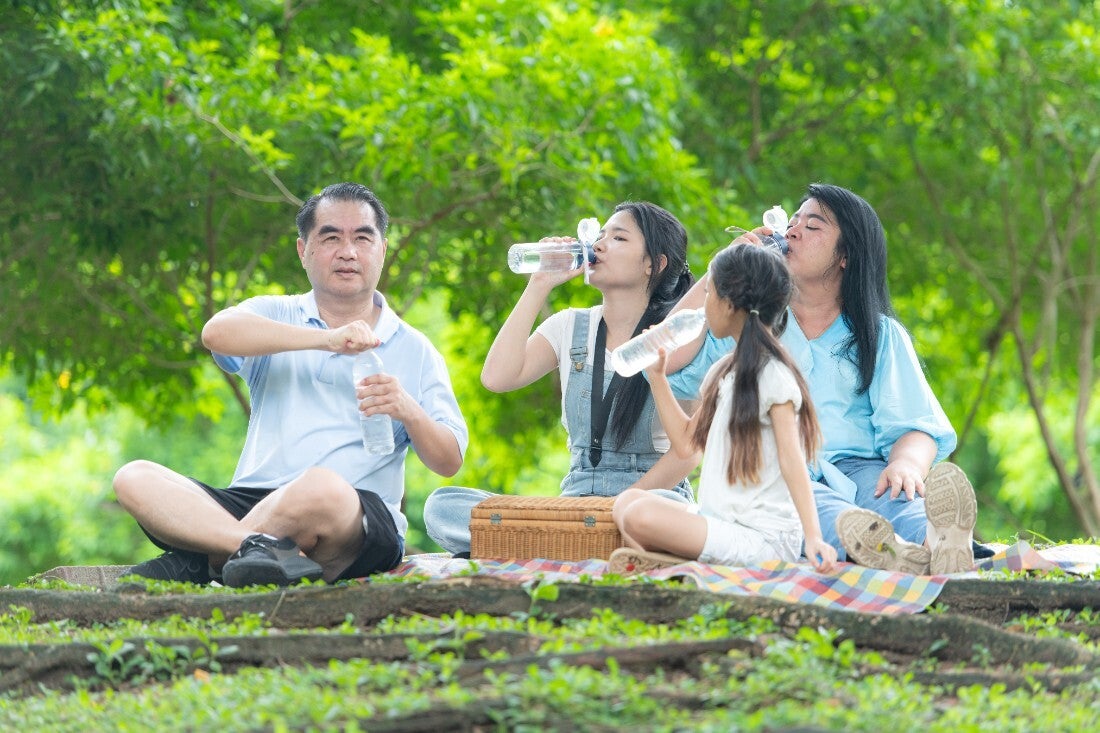
Travel safety tips include heat prevention. Make sure to take water breaks and time away from direct sun.
After a morning in the water, the midday sun takes over. High heat can make children sick very fast, from dehydration to heat stroke, the AAP explains. So, keeping your kids cool keeps them well enough to enjoy the rest of the trip.
Offer water before your kids ask for it.
Your little one may be having too much fun to ask for water. The AAP notes that young kids often can’t tell when they’re getting dehydrated, so it’s up to you to keep the water coming.
- Pack a refillable water bottle for each child.
- Offer sips often, even before they say they’re thirsty.
- Choose water over soft drinks and sugary juices.
Dress them for the sun and the heat.
The right clothes and sunscreen keep your kids cooler and protect their skin. The AAP suggests these steps:
- Pick loose, light-colored clothes that let air flow, since lighter colors absorb less heat.
- Use rash guards or long-sleeved swim tops on beach days, especially from 10 a.m. to 4 p.m., when UV rays are strongest.
- Apply a broad-spectrum sunscreen with an SPF of at least 15 or 30, about 30 minutes before heading out, and reapply every two hours or after swimming.
Plan your day around the hottest hours.
Outdoor fun is easier on your kids when you work around the heat, not through it.
- During the hot, dry months, check PAGASA’s heat index updates to see how hot the day will feel.
- Save swimming, sightseeing, and parade walks for the morning or late afternoon.
- Take regular breaks in the shade or somewhere with aircon, like a mall or a relative’s house.
- Never leave your child alone in a parked car, even for a quick stop with the windows open.
Call your pediatrician right away if your child feels faint, confused, or unusually sleepy after time in the heat, especially if they don’t improve after cooling down. Heat stroke can be life-threatening, so go to the nearest ER if your child seems seriously unwell.
3. Choose Safe Food and Water on the Road
Once your kids have cooled down, you’ll probably hear the familiar “Mommy, gutom nako!” Trying local food and stopping for pasalubong are part of the fun of any province trip. But unsafe food and drinking water are among the main ways kids pick up diarrhea. These safety tips while traveling help keep tummy trouble from cutting your trip short.
Choose food that’s freshly cooked and served hot.
When eating out, follow WHO’s Five Keys to Safer Food, which the Department of Health (DOH) also promotes:
- Pick dishes that are cooked through and served hot, especially meat, chicken, eggs, and seafood.
- Skip ulam that’s been sitting out for a long time, since WHO advises against leaving cooked food at room temperature for more than two hours.
- Wash fruits in clean water before your kids eat them.
- Pack healthy baon for the long drive, so your kids have something familiar to eat between stops.
Stick to safe drinking water.
Safe water protects your kids from many of the germs that cause stomach trouble.
- Bring enough drinking water from home, or buy sealed bottled water on the road.
- If you’re unsure about the water where you’re staying, boil or treat it before drinking.
If your child still gets diarrhea, WHO notes that the biggest risk is losing too much water and salt. Give your child ORS (Oresol), mixed as the package directs. See a doctor if you notice blood in their stool, signs of dehydration like sunken eyes or unusual sleepiness, or diarrhea that doesn’t go away.
4. Keep Little Hands Clean on the Go
Little hands touch everything on a trip: jeepney handrails, playground slides, coins from the sari-sari store, and the family dog at lola’s house. According to the CDC, clean hands help prevent the spread of both diarrhea and respiratory infections. So, good hygiene helps keep tummy bugs and colds from tagging along on your trip.
Wash with soap at key times.
Soap and water are still the best way to get rid of germs, so wash your kids’ hands for at least 20 seconds, as the DOH advises. To make it fun, sing “Happy Birthday” twice together. The CDC recommends washing:
- Before and after eating, including snacks in the car
- After using the toilet
- After touching animals, like pets or farm animals in the province
- After blowing their nose, coughing, or sneezing
Pack alcohol for when there’s no sink.
When soap and water aren’t available, use an alcohol-based hand sanitizer. Keep a small bottle or spray in your bag, and follow these tips:
- Check the label for at least 60% alcohol.
- Use enough to cover both hands, and rub until they’re dry, which takes about 20 seconds.
- Supervise young kids when they use it, so they don’t swallow any.
5. Stay Together in Crowded Places

Physical closeness, ID bracelets, and a meeting plan are your best crowd safety tools.
Busog na buong pamilya? Then it’s off to the town fiesta, a busy mall, or an evening stroll around the plaza. Crowds tend to be biggest on weekends and during the holiday season, when it’s easiest to lose sight of each other. These holiday travel safety tips help your kids enjoy the crowd while you keep them close.
Make a plan before you step into the crowd.
Before you arrive, agree on a simple plan with your kids, so everyone knows what to do if you get separated:
- Pick a meeting spot that’s easy to see and find, like the church steps or the mall’s information counter.
- Teach your kids to stay put, ask a staff member for help, and wait for you if they can’t find you.
- Show them who to ask for help, like a security guard or a staff member in uniform, not other people in the crowd.
Give your kids a way to reach you.
If your child does get lost, your contact number is what helps staff bring them back to you.
- Teach your kids to say their full name clearly.
- Help older kids learn your phone number by heart. ParenTeam’s Emergency Phone Number Karaoke game turns it into a song.
- For younger kids who can’t remember it yet, use an ID bracelet or tag with your contact number written on it.
Stick together in thick crowds.
A few habits make it easier to keep everyone together when the crowd gets packed:
- Hold your younger child’s hand. A wrist link can also help in very busy places.
- Stay near the edges of the crowd, where it’s easier to move, and leave early if it gets too packed.
- Make sure someone is always watching the kids.
6. Pack a First Aid Kit for Bumps and Scrapes
Even with all these precautions, a scraped knee or an itchy bite is part of any trip. Bring a first aid kit whenever your family travels, whether it’s a long trip to the province or a quick weekend out of town, so you can treat small injuries on the spot.
Start with these supplies, all available at your local drugstore:
- Adhesive bandages in several sizes, sterile gauze pads, and adhesive tape
- Antiseptic wipes, soap, and hand sanitizer
- Tweezers, small scissors, and disposable gloves
- A thermometer and instant cold packs
- A list of emergency numbers, including your child’s pediatrician and the nearest hospital where you’re staying
Then add the medicines your family might need:
- Antibiotic ointment for scrapes, plus hydrocortisone cream (1%) or calamine lotion for itchy bites
- Paracetamol or ibuprofen for fever and pain, in the form and dose your pediatrician recommends for your child’s age and weight
- An antihistamine for allergic itching, as advised by your pediatrician
- Any prescription medicines your child takes, plus a little extra in case your trip runs long
- Any other medication or maintenance your family needs
- ORS sachets for diarrhea
Check expiration dates before each trip, and keep the kit out of your kids’ reach. Make sure lolo, lola, or yaya knows where it is.
Make Travel Safety Part of Every Family Trip
Most of these habits fall on you, from staying close in the water to packing the right supplies. Your kids have a few jobs, too: asking before they swim, facing the water, and knowing what to do if they get separated.
Travel safety starts the night before your next trip. Take a few minutes to review your “if we get separated” plan with your kids, practice your phone number together, and check that your first aid kit and ORS sachets are packed. Then all that’s left, Mommy, is to enjoy the trip together.
Got your own domestic travel safety tips? Share them with other parents in the ParenTeam Moms and Dads Facebook group, and pick up fresh ideas for your family’s next adventure.
References
American Academy of Pediatrics Council on Injury, Violence, and Poison Prevention. “Drowning Prevention for Curious Toddlers: What Parents Need to Know.” HealthyChildren.org. Last updated May 18, 2026. Accessed September 28, 2026. https://www.healthychildren.org/English/safety-prevention/at-play/Pages/Water-Safety-And-Young-Children.aspx
Centers for Disease Control and Prevention. “About Handwashing.” Last reviewed February 16, 2024. Accessed October 1, 2026. https://www.cdc.gov/clean-hands/about/index.html
Centers for Disease Control and Prevention. “Hand Sanitizer Guidelines and Recommendations.” Last reviewed March 12, 2024. Accessed October 1, 2026. https://www.cdc.gov/clean-hands/about/hand-sanitizer.html
Davies, Dele, Clayton Mowrer, and David Schonfeld. “Extreme Heat: Tips to Keep Kids Safe When Temperatures Soar.” HealthyChildren.org, American Academy of Pediatrics Council on Children and Disasters. Last updated June 30, 2026. Accessed September 28, 2026. https://www.healthychildren.org/English/safety-prevention/at-home/Pages/Protecting-Children-from-Extreme-Heat-Information-for-Parents.aspx
Lee, Lois. “Beach Safety for Families: How to Keep Kids Safe in the Sun, Sand & Surf.” HealthyChildren.org, American Academy of Pediatrics Council on Injury, Violence, and Poison Prevention. Last updated June 25, 2026. Accessed September 28, 2026. https://www.healthychildren.org/English/safety-prevention/at-play/Pages/beach-safety-for-families-safe-fun-in-the-sun-sand-and-sea.aspx
Lopez, Maria Caroline A. “DOH Promotes Food Safety, Handwashing, Water Sanitation amid Rainy Season.” Philippine Information Agency, July 2, 2025. Accessed September 28, 2026. https://pia.gov.ph/news/doh-promotes-food-safety-handwashing-water-sanitation-amid-rainy-season/
Nemours KidsHealth. “First-Aid Kit.” Medically reviewed by Melanie L. Pitone. June 2022. Accessed September 28, 2026. https://kidshealth.org/en/parents/firstaid-kit.html
Philippine Atmospheric, Geophysical and Astronomical Services Administration (PAGASA). “Heat Index.” n.d. Accessed September 28, 2026. https://www.pagasa.dost.gov.ph/weather/heat-index
Safe Kids Worldwide. “Swimming Safety Tips.” n.d. Accessed September 28, 2026. https://www.safekids.org/tip/swimming-safety-tips
SickKids Staff. “Keeping Children Safe in Large Crowds.” AboutKidsHealth, The Hospital for Sick Children. Last updated April 21, 2026. Accessed September 28, 2026. https://www.aboutkidshealth.ca/healthaz/prevention/keeping-children-safe-in-large-crowds/
World Health Organization. “Diarrhoeal Disease.” March 7, 2024. Accessed September 28, 2026. https://www.who.int/news-room/fact-sheets/detail/diarrhoeal-disease
World Health Organization. “Drowning.” May 1, 2026. Accessed September 28, 2026. https://www.who.int/news-room/fact-sheets/detail/drowning
World Health Organization. “Five Keys to Safer Food.” Appendix VII in Guidelines for an Integrated Approach to the Nutritional Care of HIV-Infected Children (6 Months–14 Years). Geneva: World Health Organization, 2009. Accessed September 28, 2026. https://www.ncbi.nlm.nih.gov/books/NBK143666/
Related articles

10 Bible Stories for Kids That Teach Values They Can Live By
Teaching big values to preschoolers isn’t easy. These Bible stories for kids bring concepts like patience and kindness in a way little minds can get.
13 mins to read

7 ₱500 Budget Ulam Ideas to Feed Your Family
Use these budget ulam ideas to cook hearty yet wallet-friendly meals for your family.
6 mins to read

Bored Preschooler? 10 Fun Activities for Kids at Home
Keep your preschooler entertained with these activities for kids at home. Use pillows, paper, and kitchen scraps for hours of active, creative play.
8 mins to read

15 Gifts for Kids Who Have Too Many Toys
Running out of space for toys? Try these thoughtful gifts for kids that focus on fun, learning, and family time without the clutter.
5 mins to read

Is It Shyness or Social Anxiety? Signs Your Child May Need Extra Support
Social anxiety in kids isn’t just being quiet. Learn the signs a psychologist watches for, from school refusal to withdrawal, and how to help your child cope.
8 mins to read

Does Your Child Learn Better with Pictures? 4 Visual Learning Tips to Try
Visual learning turns flashcards, drawings, and picture charts into real study tools. Here’s how to spot it and try it with your child.
7 mins to read

How to Feed a Picky Eater: A Nutritionist’s Guide for Preschoolers
Raising a picky eater doesn’t mean giving up on healthy meals. Get practical, nutritionist-backed ideas to make mealtimes easier and more satisfying.
12 mins to read

10 Signs na Hiyang Ang Anak Sa Kinakain Niya
Makikita mo sa kilos, sa energy, at kahit sa pagtulog ng anak mo na hiyang ang anak mo sa kinakain nya!
7 mins to read

Sterilized Milk Benefits for Growing Kids: What Parents Should Know
Sterilized milk benefits your whole household, from safety to shelf life. Here’s what it offers your family and your growing kids.
5 mins to read

Does Your Preschooler Need Fresh Milk or Growing-Up Milk?
Fresh milk gives your preschooler a strong start—but does it cover everything they need? Here’s how to know if growing-up milk can help your child.
7 mins to read

6 Budget-Friendly Milk Products for Your Preschooler’s Baon
Milk products don’t have to strain your budget. Here are six affordable picks that fit your preschooler’s baon and their growing needs.
7 mins to read

6 Benefits of Protein in Milk for Preschoolers
Protein in milk gives your preschooler the fuel to play hard, grow strong, and fight germs—here’s exactly how it works and how much they need.
7 mins to read

Powdered Milk or Fortified Milk: What’s the Difference for Your Preschooler?
Powdered milk and fortified milk might seem similar, but they serve different purposes. Learn how they differ and which one your preschooler might need.
6 mins to read

Your 6 Ways to a Good Night’s Sleep
Have some problems with sleeping? Try these 6 tips for well-rested sleep.
3 mins to read

How to Build Your Child’s Attention Span
Nurture your child’s ability to concentrate from an early age—and give him the mental discipline to succeed in school and life
6 mins to read

Eat Healthy for a Good Immune System
Food is very important for a healthy immune system to fight all types of infections. What are the nutrients needed to keep us nourished?
3 mins to read

Why You Shouldn’t Force Picky Eaters – And What Works Better
Does your child refuse to a large variety of food? Learn the real issue behind picky eating, and how to get your child to warm up to healthier and more nutritious options.
4 mins to read

Why Play is Essential For Your Kid in Stressful Times
Check out this research-backed listicle of ways that play can ease tension and promote a more positive outlook for kids, particularly as the “post new normal” has upended their more carefree way of
6 mins to read

What to Do When Your Toddler Kicks, Hits or Screams
It's common for toddlers to throw tantrums and be aggressive. But you can teach them to control their temper even at a young age. Read this article to find out how.
4 mins to read


