


If you’ve ever watched your toddler proudly put away their toys—even if they forget a few strays—you already know something important: household chores for kids are doable.
Sure, their version of “helping” might involve a few more crumbs on the floor than before, but it’s not all about keeping the house clean. It’s also about teaching them practical life skills they’ll carry into adulthood.
Research shows that kids who regularly do house chores are likely to grow up with better self-confidence, social skills, and math scores by the third grade. In other words, chores are not a punishment; they’re practice for real life and the key to success. What’s important is giving them chores that match their developmental stage so that they feel capable, not overwhelmed.
Ages 2 to 3: Tots in Training
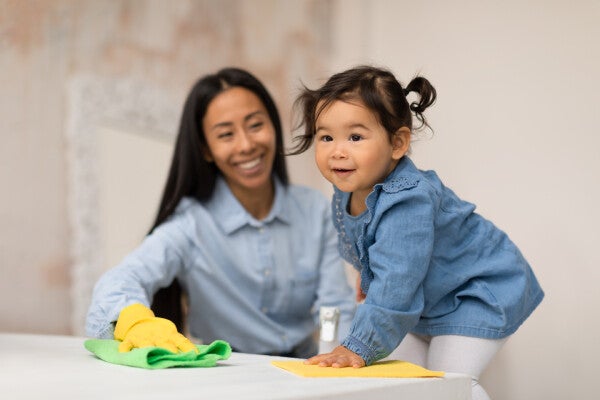
Letting your toddler help you wipe your counter down may take time, but it’s worth it in the end.
While your toddler may be a pro at prolonging bedtime, you’d be surprised at what else they're capable of.
According to the American Academy of Pediatrics (AAP) and the Centers for Disease Control and Prevention (CDC), children this age are already learning to follow simple, two-step instructions and can even copy you doing chores. Sure, their cleaning skills may be questionable but at this age, it’s all about introducing them to the concept of chores and keeping their little hands busy.
Give these a try:
- Putting toys back into bins
- Helping put books on a shelf
- Wiping small spills with a cloth
- Sweeping dust (you can buy a kid-sized set for this!)
- Placing dirty clothes in the laundry basket
These small tasks help toddlers develop motor skills, routine awareness, and a sense of responsibility. And yes, it may take a bit longer than doing it yourself but you’re laying the foundation for cooperation later.
Ages 4 to 5: Independent Preschoolers
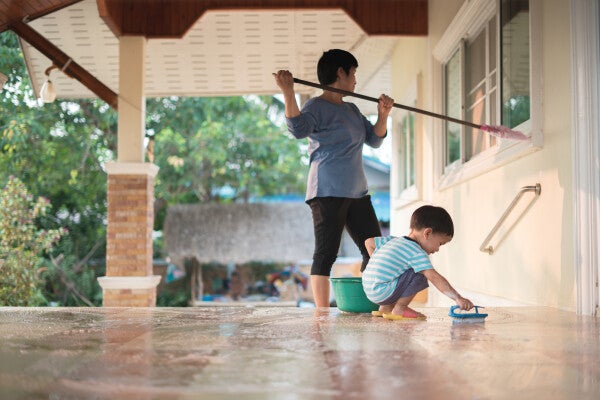
Let your preschooler show off the new skills they’ve learned from school.
Now that your kiddo’s in preschool, they’ve probably learned a few new practical life skills. At this time, a 4-year-old likes to be a “helper” and can serve food or pour water, with adult supervision. By age five, they can do simple chores at home, like matching socks or clearing the table after eating.
Preschoolers are also motivated by praise, so tell them how they’ve “saved the family” from tripping by putting away their shoes.
At this age, kiddos can:
- Make their own bed
- Set the table
- Water plants
- Make a bowl of cereal
- Take plates into the kitchen
- Feed pets
- Bring in the newspaper
These household chores teach basic organization skills and follow through, two skills that will help them in school and in their adult life. Turn these into a routine, and it’s plus points for everyone!
Ages 6 to 8: Kids Who Understand Responsibility
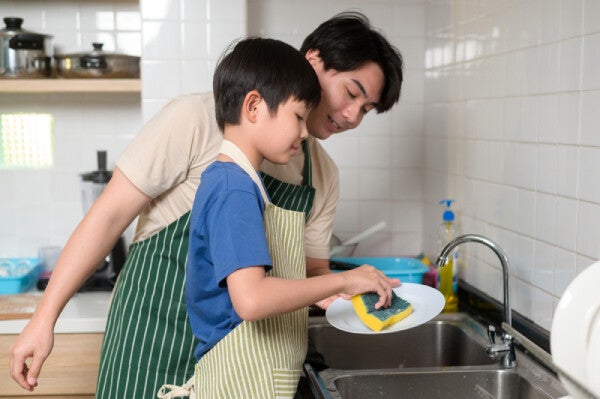
Starting young is the secret to raising an independent, capable human.
It’s time to take advantage of your child’s newfound love of being independent and helpful! At this age, they’re able to handle more responsibility and understand that chores contribute to the whole family. It’s also an easy way for them to earn pocket money and learn the value of saving.
Chores for this age group can include:
- Doing the dishes and putting them away
- Clearing the table after meals
- Packing their baon (after you’ve laid it out for them, of course)
- Prepping simple snacks
- Folding towels or simple laundry
According to Harvard’s Center on the Developing Child, by age seven, kids are rapidly developing the brain’s "air traffic control" system. By giving them regular responsibilities, you’re helping them practice the focus and planning skills (known as executive function) that they’ll rely on for the rest of their lives.
Ages 9 to 12: Preteens Who Can Do More Than You Think
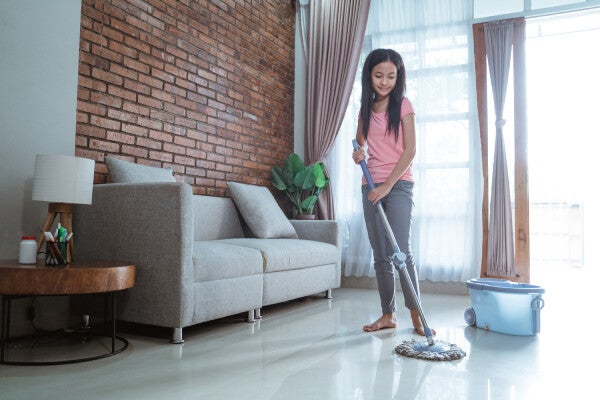
Teaching them takes longer than doing it yourself, but their "I’ve got this" attitude is the ultimate payoff.
Your preteen should be pretty much able to do everything (don’t let them trick you!). They’re capable of handling more complex chores and (maybe) enjoy the independence.
Since they might have more on their plate than the younger ones, do your best to work the chores into their schedule and reserve bigger tasks for the weekend. You could even reward them with a little more screentime or extra budget for their baon.
You can try assigning them:
- All previously mentioned chores
- Taking out the trash
- Helping cook ulam or rice
- Vacuuming or sweeping rooms
- Folding or putting away laundry
These chores help kids become self-sufficient, which becomes more important the closer they approach their teenage years. It also sends a powerful message: being part of a family means contributing to it.
Why House Chores Matter More Than You Think
For many parents, encouraging kids to do chores can feel tedious. Life is busy, especially when you’re working, and sometimes it's faster to do things ourselves. But research reveals that children who take on some household responsibilities tend to grow up with stronger work habits and problem-solving skills and a better sense of accountability.
It also teaches kids the truth: a home doesn’t run on its own; it’s a shared space that everyone helps maintain. When children see that their contributions matter, they don't just learn how to work; they build the self-confidence that comes from being a capable, necessary part of a team.
How to Make Household Chores for Kids Stick
If getting chores done in your house feels more like a battle than a habit, here’s how to keep it top of mind minus the tears:
1. Start small.
While it might be tempting to hand your child a laminated list of household chores for kids, there’s a big chance they’ll be overwhelmed. Pick one or two doable non-negotiables from the list instead. This way, they’ll build the muscle memory of contribution without the burnout.
2. Stay consistent.
Kids and adults thrive on predictability, which is why having a routine might make them more likely to follow through. A sudden request to empty out the trash in the middle of homework time can feel like an attack. Why not weave in chores into the day? This way, expectation becomes part of the routine instead of a power struggle.
3. Let go of perfection.
If you go behind your kids and “fix” the books they’ve stacked or re-wipe the streaky counter, you’re sending the message: “Your help isn’t helpful.” Remember, kids won’t learn the “right” way if they never get to practice the “OK” way. Focus on effort instead.
The Goal Isn't a Cleaner House
Be honest, if you wanted a spotless house, you’d hire kasambahays or do the cleaning yourselves. Yes, household chores for kids might cause an even bigger mess, but the real goal here is way greater than a gleaming floor.
There’s a certain kind of magic when your child starts pitching in. When kids learn to help at home, they’re building practical life skills that will serve them for years—independence, responsibility, and the confidence that comes from knowing they can take care of themselves.
And honestly, that’s worth a few sticky countertops.
What household chores for kids have you tried at home? Share your experiences with other parents on the ParenTeam Moms & Dads Facebook page!
References
White, E. M., DeBoer, M. D., & Scharf, R. J. (2019). Associations between household chores and childhood self-competency. Journal of Developmental and Behavioral Pediatrics, 40(3), 176–182. https://pubmed.ncbi.nlm.nih.gov/30507727/
Gunderson, E. A., Gripshover, S. J., Romero, C., Dweck, C. S., Goldin-Meadow, S., & Levine, S. C. (2013). Parent praise to 1- to 3-year-olds predicts children’s motivational frameworks 5 years later. Child Development, 84(5), 1526–1541.
https://pmc.ncbi.nlm.nih.gov/articles/PMC3655123/
Life Skills Advocate. (n.d.). Executive function skills by age: Development milestones. https://lifeskillsadvocate.com/blog/executive-function-skills-by-age/
He, Z., & Cheng, J. (in press). Associations between screen time and social-emotional development in children: A meta-analysis. Acta Psychologica. https://doi.org/10.1016/j.actpsy.2025.104694
Related articles

25 Filipino Nursery Rhymes and Lullabies to Sing to Your Child
Explore this list of 25 Filipino nursery rhymes and lullabies. You can sing these songs to help your child learn, grow, and have fun!
9 mins to read

GROWING TOGETHER: The Importance of Tracking Developmental Milestones in the First 2000 days. -2nd
The first 2,000 days are critical in shaping a child’s future—discover why every developmental milestone matters in these early years of growth and learning.
2 mins to read
GROWING TOGETHER: The Importance of Tracking Developmental Milestones in the First 2000 days.
The first 2,000 days are critical in shaping a child’s future—discover why every developmental milestone matters in these early years of growth and learning.
2 mins to read

How to Survive Toddler Haircuts Without the Tears
Say goodbye to the struggles of toddler haircuts. Here are practical ways to make salon visits fun, tear-free, and comfortable for your child.
6 mins to read

15 Brain Games to Help Your Babies and Toddlers Learn!
No pricey toys required. These brain games need just one important thing: Mom or Dad. Get ready to have fun with your little one!
8 mins to read

How to Discipline a Child Without Hitting or Yelling
Disciplining your child without yelling or hitting? It’s possible with these effective tips that build better behavior.
4 mins to read

7 Teacher-Recommended Reading Strategies to Use at Home
Get your little one to build their reading skills with these expert tips and strategies from a teacher.
4 mins to read

How to Control Emotions: 9 Ways to Help Toddlers Who Feel Too Much
Toddlers feel big emotions but are still learning to manage them. Discover science-backed, mom-approved tips to guide meltdowns into calm without losing your cool.
6 mins to read

10 Fun Activities to Keep Toddlers Entertained in the Heat
You can keep your toddler cool and engaged even on the hottest days while making the most of play-based learning!
6 mins to read

How to Handle Short-Tempered Kids (Is It More Than a Phase?)
When your toddler becomes short-tempered, they can throw a fit like there's no tomorrow. Here's how to calm things down.
6 mins to read

Gentle Parenting Through Toddler Tantrums: What Works (and What Doesn’t)
The latest research shows gentle parenting isn't always easy. But it may be worth it, especially when dealing with toddler tantrums. Here's what it takes.
6 mins to read

How a Daily Routine Can Support Your Child’s Emotional Health
Did you know that a simple daily routine can do wonders for easing tension at home? Learn how to start one now!
7 mins to read

Taming Tantrums: How to Teach Your Toddler Emotional Regulation
Struggling with meltdowns? Emotional regulation is the key to calm. Discover how to teach your toddler to manage big feelings with love.
6 mins to read

Real Moms Share What Works When Setting Boundaries With Lolos and Lolas
Setting boundaries with family takes patience, practice, and teamwork with your spouse. Here are seven ways to approach it with calm.
6 mins to read

How to Use the 5 Kinds of Love Language to Connect with Your Toddler
Knowing the different kinds of love language allows you to parent better! Here's how to talk to your toddler to meet their emotional needs.
5 mins to read

Sharing Is Caring: How to Teach Toddlers to Share Toys
The idea of "sharing is caring" works better when you begin with realistic expectations. Here's a realistic guide to raising a cooperative child.
6 mins to read

3 Ways Dads Build Self-Confidence in Kids
Want to build self-confidence in kids? Find out why Dad's kulitan and harutan are actually good for their future success.
4 mins to read

Toys for a 1-Year-Old to Help Motor, Brain, and Language Development
With toys for a 1 year old, think less about quantity and more about how they can support your child's developmental milestones.
7 mins to read

10 Montessori Toys to Help Your Child Develop Problem-Solving Skills
Discover how Montessori toys help kids think independently, solve problems, and grow through play—no flashing lights, batteries, or hovering needed.
4 mins to read


