


Is It Shyness or Social Anxiety? Signs Your Child May Need Extra Support
Maybe your preschooler is standing behind you at a classmate’s birthday party, refusing to let go and join the other kids. Or perhaps it’s school drop-off, and what used to be first-week jitters has turned into tears and pleading to stay home, weeks into the term. You start to wonder: is this just shyness, or is it social anxiety?
That’s exactly what licensed psychologist Ariana Dee helps parents figure out. Here, she explains how to tell social anxiety apart from typical shyness, and what you can do to help your child feel more at ease.
For more of her insights on children, read this guide on building emotional stability in kids.
What Social Anxiety Actually Is
Knowing what to look for starts with understanding what social anxiety is, and how it’s different from just having anxious moments.
Every child experiences some form of childhood anxiety, and that’s natural. Dee explains that anxiety itself isn’t the problem. It only becomes what’s clinically called social anxiety disorder (SAD) once it starts interfering with daily life. To tell typical anxiety apart from SAD, Dee points to three things:
- Intense fear of or anxiety in social situations, like talking to new people or joining group activities
- Extreme or inappropriate coping, like avoiding the situation entirely or isolating themselves
- Real difficulty functioning at school, at home, or with friends because of that fear
The difference isn’t whether your child feels nervous. It’s how big that fear gets, and how much it stops them from doing everyday things.
A 2024 systematic review and meta-analysis estimated that approximately 4.7% of children worldwide experience SAD. This means that social anxiety isn’t something only a handful of kids deal with, and if you’re noticing these signs, reaching out for support is a reasonable next step.
Is It Shyness or Social Anxiety Disorder?
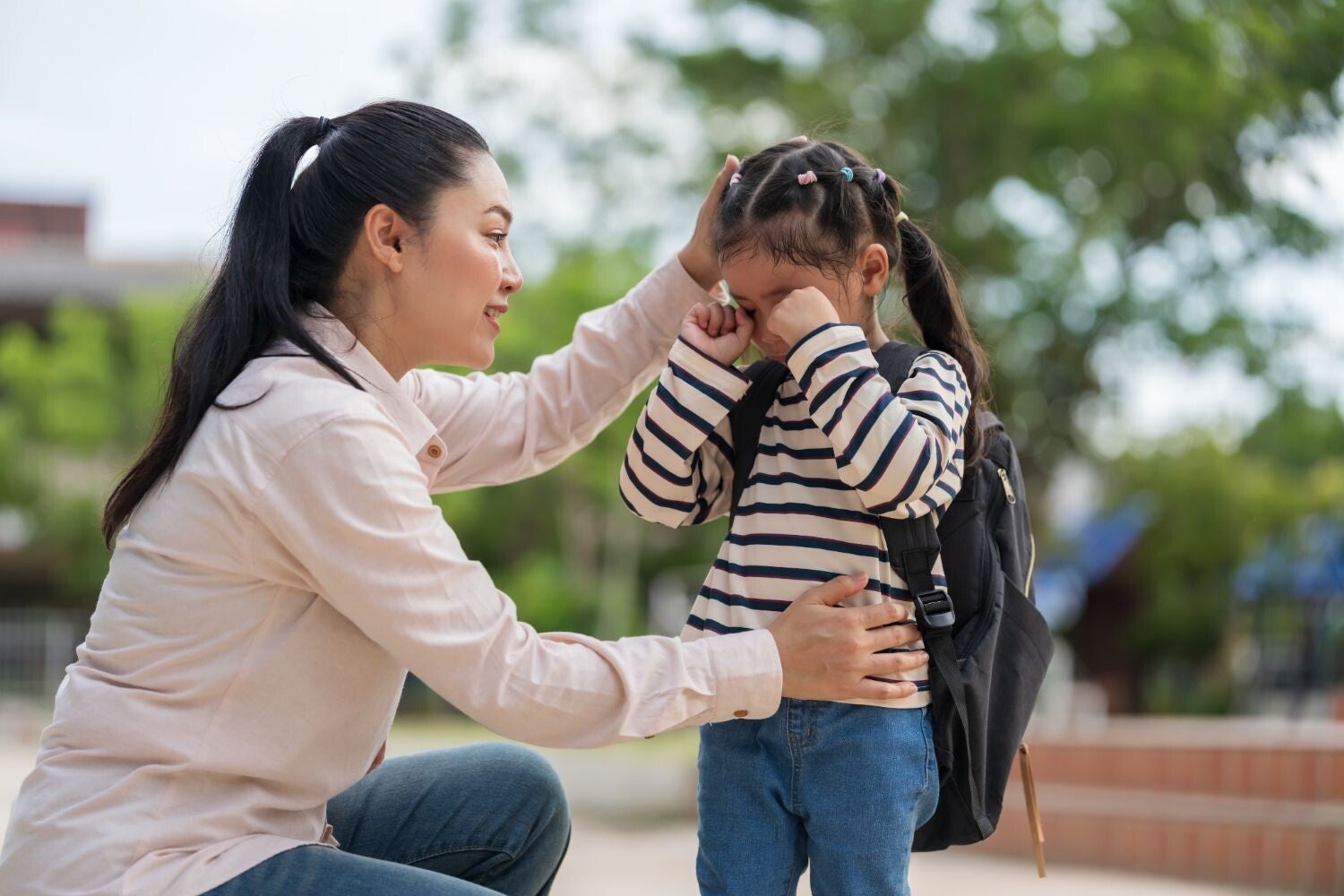
Social anxiety can appear as a consistent refusal to enter school, not just first-day nerves.
Shyness vs. social anxiety comes down to degree, not just behavior. A shy child might take a while to speak up in a new group or hang back before joining a game, then ease in once they’re comfortable. A child with SAD doesn’t ease in the same way, and Dee describes them as trying to avoid the situation altogether.
She also points out that SAD often shows up alongside separation anxiety, where your child might cling to you, and sometimes, they might also show regression. For example, a preschooler acting like a toddler, or a child who speaks clearly suddenly having a hard time talking.
When anxiety gets this extreme, Dee explains, a child’s nervous system shifts into survival mode, and most kids default to flight over fight. That’s why they avoid others and don’t want to talk to anyone, isolating themselves. “They feel like if they engage in conversations or if they try to socialize, they might be judged. They might be criticized," Dee says. The result is a child who’s very cautious, even hyper-vigilant, in social situations.
Either way, noticing if your child is merely shy or socially anxious helps you know what kind of support to give.
Social Anxiety in Preschoolers
Starting school for the first time is a big adjustment, and some anxiety in preschoolers is typical at first. They might cling to you or feel unsure around strangers. “It’s their way of self-soothing and seeking support, given that experiencing new things can be quite overwhelming,” Dee explains. In her experience, preschool is often the earliest age she can tell if a child has social anxiety, since it’s usually a child’s first real exposure to sustained social settings outside the home.
To help you, this guide on getting your child ready for preschool covers what typical adjustment looks like. But if clinginess doesn’t ease up, or if your child consistently refuses to attend rather than just needing a slower transition, it may be more than a rough morning here and there, and it can start affecting how well they keep up in class. If this sounds like your child, there’s a lot you can do to help them through it.
What to Do if You Have Concerns
Once you notice anxiety symptoms in children, there’s a lot you can do to help.
Before an event or change happens
Talk to your child ahead of any new routine or transition, like starting school or a new class year begins, so they know what to expect. Dee describes this kind of heads-up conversation directly: “[Parents should] really talk to their kid na, 'hey, starting this time you will be attending this and then here’s what you can expect.’”
“It's really also important to be transparent with your children,” she adds, since kids can sense when something’s being hidden from them, even if they can’t say so directly.
Once the routine is underway
Make time to check in daily. Dee’s recommended approach? “Dedicate a part of your day to check in with your kids: how was school? What was the thing that you liked? What was the thing that you didn’t like? What made you happy? What made you sad?”
This isn’t just conversation. Naming these feelings out loud helps kids build the vocabulary to understand their emotions, so your child grows up better equipped to say “I feel scared” or “I feel sad” instead of just acting it out and having a tantrum. Plus, it teaches them that sharing hard feelings with you is safe.
For kids who aren’t very verbal yet
Play can do the same job, whatever your child’s age. “A lot of kids actually express their emotions through play,” Dee says, “even just allowing them to have those kinds of activities can be kind of like a processing for them.”
Letting them process through play, rather than pushing them to talk it out, gives them another way to work through what they’re feeling.
How to Help an Anxious Child Feel More Confident
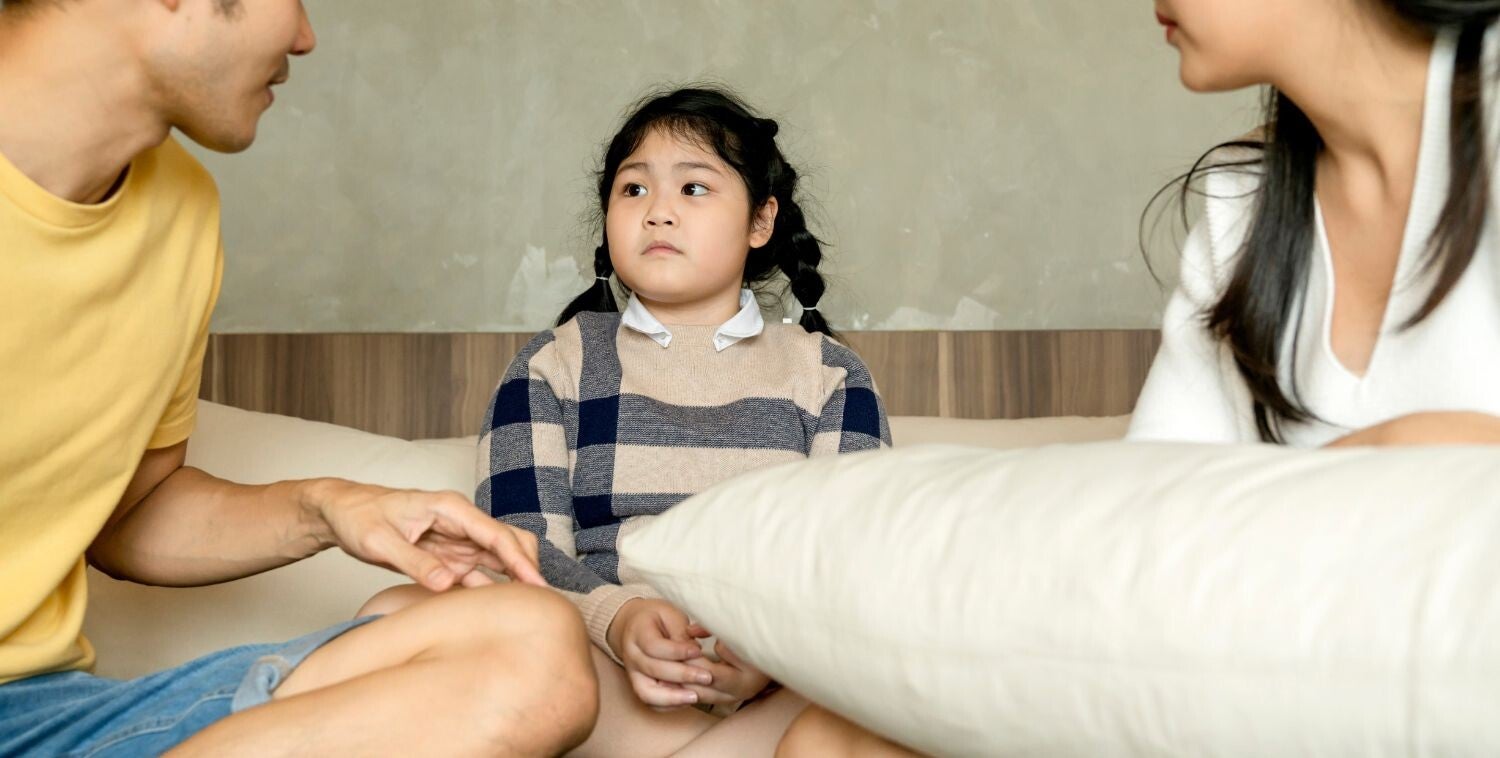
Daily check-ins help kids name what they’re feeling, from happy moments to hard ones.
A lot of social anxiety traces back to a specific memory of being embarrassed or criticized in a social setting, sometimes something as small as an offhand comment from a relative at a family gathering.
Your child can’t control what other people say, but they can learn that they’re safe with you. That’s why Dee’s top advice is simple: reassure your child that it’s okay to mess up, and stay connected to them even when they’re struggling. “Connection before correction. Connection and regulation, really,” she says.
She also advises you to practice co-regulation. This means that your child can learn to manage their own emotions by watching you manage yours. A calm, present parent teaches a child how to regulate their own emotions more effectively than any lecture could. Find more ways to support your child’s confidence day-to-day here.
What to Expect When Consulting a Professional
Reassurance and connection at home go a long way, but sometimes your child needs more support than you can give on your own, especially when it comes to SAD. Here’s what that path usually looks like.
Who should you see first
There’s no fixed order here. Dee explains that many parents start with a developmental pediatrician simply because they already have one for tracking milestones, making it the more accessible entry point.
But it can go the other way too. Some parents bring their child to a psychologist first without realizing what they’re dealing with is social anxiety, and the psychologist is the one who then recommends a formal assessment. What matters more than who you see first is making sure everyone involved, whoever that ends up being, stays aligned on how they’re helping your child.
What therapy looks like
As a psychologist, Dee relies heavily on play-based therapy with young kids, since they don’t yet have the words to process big feelings the way adults do. Play lets that processing happen without needing your child to talk it out directly.
She may also send updates to the school or other doctors involved along the way, so everyone supporting your child stays aligned rather than giving conflicting guidance. Some schools can also help ease your child in, like starting with a small group activity before asking them to speak in front of the whole class.
Dee is clear that you don’t need to wait for things to get worse before reaching out. She believes therapy should be there for any child who needs it. “Everyone should have access to therapy,” she says. “I'm a firm believer in that, even if they’re not clinically diagnosed.”
Supporting Your Child with Confidence, Not Labels
You know your child best, and noticing these patterns early doesn’t mean something is wrong with them. Social anxiety, when it does show up, responds well to the same things every child needs: your patience, your presence, and a safe space to feel understood. Whether your child just needs a little more time to warm up or would benefit from professional support, staying connected to them through it makes all the difference.
Wondering if there are other parents navigating the same experiences? Head over to the ParenTeam Moms and Dads Facebook group to swap tips on helping kids manage social anxiety and other big feelings.
About Ariana Denise Dee, MA, RPsy
Ariana Denise Dee, MA, RPsy, is a licensed psychologist. She earned her master’s degree in counseling psychology from Ateneo de Manila University. She currently works as a consultant psychologist for the Ateneo Bulatao Center of Psychological Services and Life Ready Psychological Services. She works with children, adolescents, and young adults, both neurotypical and neurodivergent, navigating relational and school concerns. Believing in the therapeutic power of play, she mainly conducts Child-Directed Play Therapy with her younger clients. As a firm believer that healing is a collective human endeavor, she also offers parenting sessions and parent coaching for the primary caregivers of her younger clients.
Disclaimer: This article includes insights from a licensed child psychologist for informational purposes. It isn't a substitute for a professional evaluation, and any expert opinions shared here may not reflect ParenTeam's overall views. If you have concerns about your child, consult a pediatrician or mental health professional directly.
Reference
Salari, Nader, Pegah Heidarian, Masoud Hassanabadi, et al. "Global Prevalence of Social Anxiety Disorder in Children, Adolescents and Youth: A Systematic Review and Meta-analysis." Journal of Prevention 45, no. 5 (2024): 795–813. Accessed on September 16, 2026. https://link.springer.com/article/10.1007/s10935-024-00789-9
Related articles

Does Your Child Learn Better with Pictures? 4 Visual Learning Tips to Try
Visual learning turns flashcards, drawings, and picture charts into real study tools. Here’s how to spot it and try it with your child.
7 mins to read

How to Feed a Picky Eater: A Nutritionist’s Guide for Preschoolers
Raising a picky eater doesn’t mean giving up on healthy meals. Get practical, nutritionist-backed ideas to make mealtimes easier and more satisfying.
12 mins to read

10 Bible Stories for Kids That Teach Values They Can Live By
Teaching big values to preschoolers isn’t easy. These Bible stories for kids bring concepts like patience and kindness in a way little minds can get.
13 mins to read

10 Signs na Hiyang Ang Anak Sa Kinakain Niya
Makikita mo sa kilos, sa energy, at kahit sa pagtulog ng anak mo na hiyang ang anak mo sa kinakain nya!
7 mins to read

Sterilized Milk Benefits for Growing Kids: What Parents Should Know
Sterilized milk benefits your whole household, from safety to shelf life. Here’s what it offers your family and your growing kids.
5 mins to read

7 ₱500 Budget Ulam Ideas to Feed Your Family
Use these budget ulam ideas to cook hearty yet wallet-friendly meals for your family.
6 mins to read

Does Your Preschooler Need Fresh Milk or Growing-Up Milk?
Fresh milk gives your preschooler a strong start—but does it cover everything they need? Here’s how to know if growing-up milk can help your child.
7 mins to read

6 Budget-Friendly Milk Products for Your Preschooler’s Baon
Milk products don’t have to strain your budget. Here are six affordable picks that fit your preschooler’s baon and their growing needs.
7 mins to read

6 Benefits of Protein in Milk for Preschoolers
Protein in milk gives your preschooler the fuel to play hard, grow strong, and fight germs—here’s exactly how it works and how much they need.
7 mins to read

Powdered Milk or Fortified Milk: What’s the Difference for Your Preschooler?
Powdered milk and fortified milk might seem similar, but they serve different purposes. Learn how they differ and which one your preschooler might need.
6 mins to read

Your 6 Ways to a Good Night’s Sleep
Have some problems with sleeping? Try these 6 tips for well-rested sleep.
3 mins to read

How to Build Your Child’s Attention Span
Nurture your child’s ability to concentrate from an early age—and give him the mental discipline to succeed in school and life
6 mins to read

Eat Healthy for a Good Immune System
Food is very important for a healthy immune system to fight all types of infections. What are the nutrients needed to keep us nourished?
3 mins to read

Why You Shouldn’t Force Picky Eaters – And What Works Better
Does your child refuse to a large variety of food? Learn the real issue behind picky eating, and how to get your child to warm up to healthier and more nutritious options.
4 mins to read

Why Play is Essential For Your Kid in Stressful Times
Check out this research-backed listicle of ways that play can ease tension and promote a more positive outlook for kids, particularly as the “post new normal” has upended their more carefree way of
6 mins to read

What to Do When Your Toddler Kicks, Hits or Screams
It's common for toddlers to throw tantrums and be aggressive. But you can teach them to control their temper even at a young age. Read this article to find out how.
4 mins to read

Natural and Organic Ways to Fight Colds, Fever and Flu
Medicine isn't the only remedy when your child comes down with a flu. We listed down practical, natural remedies that can help your child fight the dreaded fever and sniffles.
6 mins to read

8 Masustansyang Ulam Ideas for Your Preschooler’s Healthy Weight Gain
Consistent weight gain happens when you serve the right meals. Discover eight budget-friendly ulam ideas packed with nutrients for your growing child.
6 mins to read

6 Key Benefits of Milk to Fuel Your Active Preschooler
The benefits of milk go beyond strong bones—fueling energy, sharpening focus, and building immunity for your always-on-the-go preschooler.
6 mins to read


