


Do you sometimes feel like a juggler? Life at home can feel like a crazy balancing act. You have school runs, chores, mealtimes, playtime, homework, extracurricular activities, and bedtime. In the middle of all this, establishing a daily routine might feel more like another item on your to-do list. But the good news is that a predictable rhythm does more than keep your day organized. It strengthens your child’s emotional well-being and builds a sense of stability for the family. Ready to learn how?
What Are Family Routines?

A daily routine doesn’t mean planning something every hour. A few consistent habits can already make your child feel secure.
Family routines are patterns of everyday activities that happen in roughly the same order each day. Picture waking up, eating meals, playtime, study time, and bedtime. A daily routine anchors your child’s day, giving them something they can count on no matter what surprises life brings.
What Is Emotional Health?
Emotional health refers to your child’s ability to notice, understand, and manage their feelings, such as excitement, frustration, worry, or joy. It also includes how your child can relate to others, handle change, and cope with stress. A child who is emotionally healthy feels safe, confident, and supported.
How to Make Your Child Feel Safe, Secure, and Supported
When your child knows what to expect, they feel safe and secure. Predictability reduces uncertainty and helps children relax because they know what comes next. When kids feel supported, their emotional resilience grows, and they’re better able to manage stressful situations, like school transitions, fights with peers, or big life changes.
Why Routines Help Children Emotionally
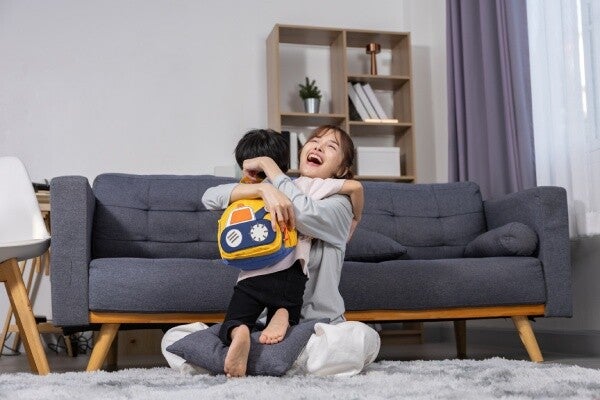
With consistency, just one predictable habit can turn an awful day into a positive one.
Imagine a child who had an awful day at school. The fingerpaint spilled on them and a classmate stole their cookie. They also lost their favorite toy. But despite all the mishaps of the day, they know that bedtime is happening and it is a calm and predictable moment. Even after a long, emotional day, this familiar sequence helps signal that the day is ending safely.
Here’s how a daily routine benefits your child.
1. An everyday routine provides a sense of security.
Predictability matters. Knowing the rhythm of the day helps children feel in control of their environment, reducing confusion and worry. This sense of safety is key to healthy emotional regulation.
A 2024 study in Advances in Neurodevelopmental Disorders journal, family routines are significantly associated with child impulsivity and emotional regulation. Another study, in Mindfulness, also states that there is a correlation between families who follow daily routines and parents who practice mindful parenting.
For example, a parent who is present during bedtime, listening, noticing when their child feels anxious, and responding calmly, is more likely to guide their child toward better behavior. This kind of attentive, calm response can reduce “externalizing behaviors” like tantrums, aggression, or acting out.
In short, when parents are more present and responsive during everyday routines, children feel understood and supported, which helps them regulate their emotions and behavior more effectively.
2. It helps reduce anxiety.
Transitions, such as leaving the house or stopping playtime, are often some of the biggest triggers for tantrums. When children don’t know what’s coming next, these moments can feel abrupt and overwhelming. A consistent routine helps act as a buffer, allowing transitions to feel like a natural next step rather than a sudden loss of control.
Children who regularly take part in family routines tend to have positive behavior and have stronger social and emotional support than those who don’t. In fact, each additional routine has been linked to better emotional outcomes, including improved empathy and self-regulation.
3. It encourages a stronger family connection.
Routines are more than schedules. Consider them moments of connection. Eating together, winding down with a bedtime chat, or sharing a laugh after school strengthens family bonds and communicates to your child: “You are loved and supported.” These micro moments ensure that even on your busiest days, there’s dedicated quality time that doesn’t get squeezed out.
Easy Family Routines You Can Start With

If you’re just starting a routine for your family, start small. Consistency is the most important factor.
- Mealtimes. Sitting down for dinner isn't just about nutrition. Regular family mealtimes are linked to higher self-esteem and lower rates of depression in children. It’s a dedicated space for checking in.
- Bedtime. Sleep and emotional health are two sides of the same coin. A consistent bedtime routine (dim lights, warm bath, lullaby or a favorite story) lowers cortisol and prepares the brain for rest.
- A regular “hello” and “goodbye.” Small habits, like a special “I love you” handshake before school or a five-minute cuddle when you get home from work, provide the emotional re-fueling children need to feel supported.
How You Can Start Family Routines at Home
Starting a daily routine doesn’t mean coming up with a strict schedule. The goal is to create gentle patterns that support your child’s emotional health without adding pressure for yourself as the parent.
1. Keep it small and simple.
You don’t need to fix the whole day at once. And you’re certainly not expected to come up with an activity by the hour. Start the habit, for example, of getting a small snack as an after-school routine. Once that feels natural, you can slowly add more.
Digestible routines are easier to maintain and less overwhelming for everyone in the family.
2. Aim for consistency, not perfection.
Consistency is what gives routines their emotional power. Try to do activities at roughly the same time and in the same order each day. That said, it’s okay if things don’t go exactly as planned. After all, life happens.
What matters most is that your child knows what to expect most days.
3. Adjust routines to your family’s reality.
Every family is different. Some parents work night shifts, some kids have early school hours. Some kids take to schedules while others prefer something more freestyle. In these cases, a regular family dinner might be a better option instead of a rigid morning routine.
Remember to choose routines that fit your household, not what works for someone else on social media. A routine will only last if it’s realistic to begin with.
4. Involve your child when possible.
Letting your kids participate, from choosing a bedtime story, helping set the table, or picking pajamas, gives them a sense of control. This involvement helps routines feel comforting rather than forced, which supports emotional regulation.
5. Be patient.
It’s normal for children to resist at first, especially if routines are new. Expect reminders, some pushback, and a few off days. Stay calm and consistent. Routines usually take a few weeks to feel natural. Exercising a bit of patience helps your child feel supported, not pressured.
6. Treat routines as connection time.
Routines aren’t just tasks to check off. They’re not a to-do list to make the parenting juggling act less taxing. Yes, they are those things, but more importantly, they’re opportunities to connect. A few minutes of eye contact, conversation, or affection during family routines can make your child feel seen and emotionally secure.
What About Overscheduling?
Sometimes, the need to plan a routine can lead to the opposite end of the spectrum: overscheduling. Several studies have noted that overscheduled children tend to be more irritable, unyielding, and anxious.
While a daily routine can help your kids feel safer and secure, adding small moments of spontaneity can demonstrate a crucial emotional skill: flexibility. It teaches children that while structure matters, it’s also okay when plans change.
Some ways you can prevent overscheduling include:
- Sticking with the routine but changing the activity. Maintain your 8 p.m. bedtime but change the bedtime story.
- Allot an “open time in the day.” Give your child at least 30 minutes of unscheduled play to explore, imagine, and unwind on their own.
- Say yes to small, joyful detours. A quick stop for taho after school or an extra song before bed won’t dampen your daily routine and might even add excitement to your day.
- Talk through changes. Set aside time with your child to explain major shifts in your rituals. This helps them feel secure even when plans change.
A daily routine may not seem like much, but even this small step can do wonders to ease the grind of home life. From your morning routine to your favorite bedtime habits, share how a bit of consistency has helped your family’s emotional wellness and mental load on the ParenTeam Moms & Dads Facebook page!
References
Admin. (2025, January 31). The significance of family meals on adolescent development. Hilltop Behavioral Health. https://hilltopbehavioralhealth.com/the-significance-of-family-meals-on-adolescent-development/
Caetano, C., Caetano, G., & Nielsen, E. (2024). Are children spending too much time on enrichment activities? Economics of Education Review, 98, 102503. https://doi.org/10.1016/j.econedurev.2023.102503
Is my child overscheduled? – Children’s Health. (n.d.). https://www.childrens.com/health-wellness/is-my-child-overscheduled
Muñiz, E. I., Silver, E. J., & Stein, R. E. (2014). Family routines and Social-Emotional school readiness among Preschool-Age children. Journal of Developmental & Behavioral Pediatrics, 35(2), 93–99. https://doi.org/10.1097/dbp.0000000000000021
Related articles

25 Filipino Nursery Rhymes and Lullabies to Sing to Your Child
Explore this list of 25 Filipino nursery rhymes and lullabies. You can sing these songs to help your child learn, grow, and have fun!
9 mins to read

GROWING TOGETHER: The Importance of Tracking Developmental Milestones in the First 2000 days. -2nd
The first 2,000 days are critical in shaping a child’s future—discover why every developmental milestone matters in these early years of growth and learning.
2 mins to read
GROWING TOGETHER: The Importance of Tracking Developmental Milestones in the First 2000 days.
The first 2,000 days are critical in shaping a child’s future—discover why every developmental milestone matters in these early years of growth and learning.
2 mins to read

How to Survive Toddler Haircuts Without the Tears
Say goodbye to the struggles of toddler haircuts. Here are practical ways to make salon visits fun, tear-free, and comfortable for your child.
6 mins to read

15 Brain Games to Help Your Babies and Toddlers Learn!
No pricey toys required. These brain games need just one important thing: Mom or Dad. Get ready to have fun with your little one!
8 mins to read

How to Discipline a Child Without Hitting or Yelling
Disciplining your child without yelling or hitting? It’s possible with these effective tips that build better behavior.
4 mins to read

7 Teacher-Recommended Reading Strategies to Use at Home
Get your little one to build their reading skills with these expert tips and strategies from a teacher.
4 mins to read

How to Control Emotions: 9 Ways to Help Toddlers Who Feel Too Much
Toddlers feel big emotions but are still learning to manage them. Discover science-backed, mom-approved tips to guide meltdowns into calm without losing your cool.
6 mins to read

10 Fun Activities to Keep Toddlers Entertained in the Heat
You can keep your toddler cool and engaged even on the hottest days while making the most of play-based learning!
6 mins to read

How to Handle Short-Tempered Kids (Is It More Than a Phase?)
When your toddler becomes short-tempered, they can throw a fit like there's no tomorrow. Here's how to calm things down.
6 mins to read

Gentle Parenting Through Toddler Tantrums: What Works (and What Doesn’t)
The latest research shows gentle parenting isn't always easy. But it may be worth it, especially when dealing with toddler tantrums. Here's what it takes.
6 mins to read

Age-Appropriate Household Chores for Kids to Teach Life Skills
Getting kids to help doesn’t have to be a battle. Learn the best age-appropriate household chores for kids to build confidence, independence, and real-life skills.
6 mins to read

Taming Tantrums: How to Teach Your Toddler Emotional Regulation
Struggling with meltdowns? Emotional regulation is the key to calm. Discover how to teach your toddler to manage big feelings with love.
6 mins to read

Real Moms Share What Works When Setting Boundaries With Lolos and Lolas
Setting boundaries with family takes patience, practice, and teamwork with your spouse. Here are seven ways to approach it with calm.
6 mins to read

How to Use the 5 Kinds of Love Language to Connect with Your Toddler
Knowing the different kinds of love language allows you to parent better! Here's how to talk to your toddler to meet their emotional needs.
5 mins to read

Sharing Is Caring: How to Teach Toddlers to Share Toys
The idea of "sharing is caring" works better when you begin with realistic expectations. Here's a realistic guide to raising a cooperative child.
6 mins to read

3 Ways Dads Build Self-Confidence in Kids
Want to build self-confidence in kids? Find out why Dad's kulitan and harutan are actually good for their future success.
4 mins to read

Toys for a 1-Year-Old to Help Motor, Brain, and Language Development
With toys for a 1 year old, think less about quantity and more about how they can support your child's developmental milestones.
7 mins to read

10 Montessori Toys to Help Your Child Develop Problem-Solving Skills
Discover how Montessori toys help kids think independently, solve problems, and grow through play—no flashing lights, batteries, or hovering needed.
4 mins to read


