


Manas ang Paa? Here’s Why You Have Swollen Feet During Pregnancy
You get home after a long day, and your concerned partner looks at your feet and asks, “Namamaga ba ’yang paa mo?” You look down and see ankles that look puffier than they did this morning. Mommy, swollen feet during pregnancy, or manas sa paa, are one of the many ways your body changes as it supports your pregnancy.
The good news? Board-certified ob-gyn Dr. Sheryl Santiago says swelling in both feet and ankles is usually a typical part of pregnancy. Still, some kinds of swelling need a doctor’s check right away. Here, she explains why your feet swell, what you can do at home for relief, and which warning signs mean you shouldn’t wait for your next checkup.
Why Your Feet Swell During Pregnancy
Mommy, your body works overtime to help your baby grow, and some of that hard work shows up in your feet. According to Dr. Santiago, a few changes team up to cause manas sa buntis, or pregnancy edema.
Extra blood and fluid in your body
When you’re pregnant, your blood volume goes up. Dr. Santiago says this is exactly what should happen, since the extra blood helps support your pregnancy and your baby. “For survival ’yun eh,” she says.
The catch? As she point out, more blood also means more fluid in your body. In healthy pregnancies, that increase adds up. A 2019 review of 10 studies found that plasma, the liquid part of your blood, goes up by 48% near your due date. This means that in your last few weeks, the liquid in your blood is almost one and a half times what it is when you’re not pregnant. So, momma, some of your manas comes from your body doing its job for your baby.
Pressure from your growing uterus
As your baby grows, your uterus gets bigger and heavier. It presses on the big veins in your pelvis, which slows down the blood flowing back up from your legs. When that blood moves slowly, fluid builds up around your feet and ankles.
Hormones that relax your blood vessels
Your body also makes more progesterone during pregnancy. Dr. Santiago explains that this relaxes your muscles, including your blood vessels. Basically, when your blood vessels relax, blood moves more slowly, and fluid can stay stuck in one spot.
Gravity pulling fluid down to your feet
Gravity does the rest, mama. Fluid naturally moves downward, so it tends to collect in your feet and ankles, especially when you stand for long periods. That’s why manas during pregnancy usually looks worse at night, after a full day of activities. The upside? A few simple habits can help ease it (more on that below).
When Manas Usually Starts
So when should you expect your feet to start feeling heavier? According to Dr. Santiago, it depends on two things: how far along you are and how you spend your day. Manas rarely shows up early on. During your first trimester, your uterus is still very small. She notes that before 12 weeks, you usually don’t even have a visible bump yet.
Swelling tends to start at around 16 to 20 weeks. By the time you’re 20 weeks pregnant, the top of your uterus reaches the level of your pusod. This means your uterus now has enough weight to press on your veins, so manas often gets more noticeable through your second and third trimesters. If your ankles start looking puffier halfway through your pregnancy, now you know why.
Your daily routine plays a part too, mama. How your swelling progresses can depend on your lifestyle, like whether you stand for most of your workday or sit in front of a laptop for hours. “Kasi double edged ’yan, either nakatayo nang matagal or nakaupo nang matagal, right?” she says. Either way, staying in one position for too long can add to the swelling.
Home Remedies for Swollen Feet During Pregnancy
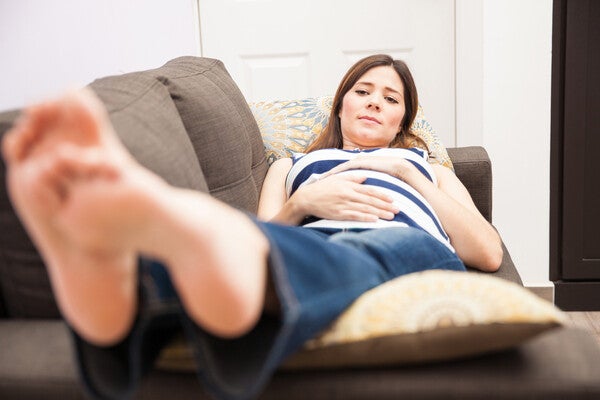
Prop your legs up on at least two pillows so they rest higher than your heart. This helps fluid drain from your swollen feet.
If your swelling is mild, shows up in both feet, builds slowly, and comes with no other symptoms, Dr. Santiago says there’s plenty you can do at home. Try these simple habits to help your feet feel lighter by the end of the day, mom.
1. Raise your legs when you rest.
When you lie down, prop your legs up so they’re higher than your heart. Stack at least two pillows under your legs, as Dr. Santiago suggests. Basically, this helps the fluid drain away from your feet instead of pooling there. The World Health Organization (WHO) also notes that resting and raising your legs cost little and are unlikely to cause harm.
As your belly grows, ask your ob-gyn about the most comfortable and safe position for this, since lying flat on your back isn’t ideal in the later months.
2. Change positions every 30 minutes to an hour.
It’s easy to forget to move when you’re busy with work or hooked on your favorite K-drama. That’s why Dr. Santiago has some of her patients set an alarm on their phone or smartwatch to remind them to move. “Lalo na for pregnant, you have to move those legs,” she says.
3. Do ankle pumps and ankle circles.
You can move your ankles while you’re sitting or lying down. For ankle pumps, point your toes up toward you, then down, like you’re pressing a gas pedal. For ankle circles, slowly roll each foot in a circle, then switch directions. Do these several times, even while you rest.
4. Sleep on your left side.
Once your belly gets bigger, try lying on your left side whenever you nap or sleep. Dr. Santiago says this position can improve blood flow back to your heart, which can help ease the swelling. It’s also one of the recommended pregnancy sleeping positions as your bump grows.
5. Wear comfortable shoes and loose clothes.
When you have swollen feet while pregnant, what you wear can make you feel better or worse. Dr. Santiago warns against restrictive shoes, especially strappy ones, because the straps cut into your already swollen feet. “Lalo siyang mukhang longganisa, ‘di ba?” she says.
Instead, she recommends supportive, comfy shoes and loose bottoms too. She also advises against splurging on new shoes while you’re pregnant, especially pricey designer pairs, since they might feel loose once you give birth.
6. Ask your doctor about compression stockings.
Graduated compression stockings fit snugly at your ankles and get looser as they go up your legs. These can help too, according to Dr. Santiago, and the WHO also lists compression stockings among the options for managing leg swelling during pregnancy. Before you buy a pair, ask your ob-gyn which type and fit are right for you.
7. Keep drinking water.
Drinking more water might sound strange when you’re already swollen. Dr. Santiago gets it: “Kasi parang it may seem counterintuitive na, ‘bakit doc namamaga na nga ako papainumin pa?’” The reason? Pregnancy itself increases your body’s need for fluids. Staying hydrated supports your growing blood volume, your circulation, and your kidneys, she adds. It can also help prevent constipation and urinary problems.
When you’re dehydrated, your body tends to hold on to more water and salt, which can make your manas worse. “Kasi the body is matalino. If you deprive yourself of water, you will conserve water. You will conserve that salt,” she points out. In short, cutting back on water won’t shrink your swelling. It can actually make it worse, momma.
8. Go easy on salty and processed food.
Dr. Santiago also explains that too much salt can lead to more fluid retention in pregnancy. That’s why she suggests going easy on processed food too. Still, she doesn’t ban salt completely: “Everything in moderation.”
For you, that could mean enjoying your tuyo, chicharon, or instant noodles once in a while instead of every day.
Skip water pills for manas.
You might wonder if a diuretic, or water pill, can flush out the extra fluid. Dr. Santiago says it isn’t safe for this, since it can lower your blood pressure suddenly and mess up your body’s balance of salts and minerals. That’s why she usually starts with home remedies. Never take any medicine for your manas without your doctor’s go-signal.
When to Call Your Doctor Right Away
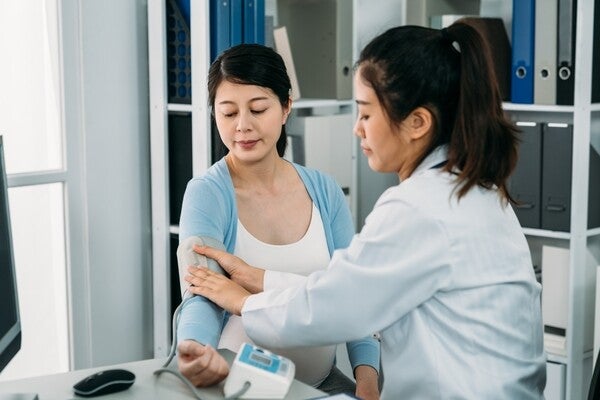
Swelling in your face or hands, especially with a severe headache or high BP, means it’s time to call your doctor right away.
Most of the time, manas is something you can manage at home. When swelling stays in your feet and ankles, shows up on both sides, and comes with no other symptoms, Dr. Santiago reassures her patients that it’s okay.
But some kinds of swelling are different, mommy. Knowing what they look like helps you act fast and get the right care for you and your baby.
Swelling in your face and hands
Puffy feet are one thing, but a puffy face or swollen fingers need a closer look. “Sudden swelling of the face or hands, especially if associated with severe headache or pain—that’s dangerous,” Dr. Santiago says. She explains that this is how preeclampsia swelling classically shows up: in your face and hands, along with a headache and a rise in blood pressure.
The WHO describes preeclampsia as a high blood pressure disorder that usually develops after 20 weeks of pregnancy. Its list of common symptoms includes swelling in the hands and face, severe headaches, and blurred vision. So if your hands and face look puffy, call your doctor.
Learn more about the warning signs and how to protect yourself and your baby in this preeclampsia guide.
Swelling in only one leg
Manas usually affects both legs, so one-sided swelling makes Dr. Santiago think of deep vein thrombosis. Deep vein thrombosis, or DVT, is a blood clot in a deep vein, usually in the leg. She’s especially concerned when the swollen leg is very painful, warm to the touch, and a bit reddish. This kind of swelling needs urgent evaluation, and it’s one reason she reminds you to change positions every 30 minutes to an hour.
A 2022 review in Breathe notes that the usual swelling and aches of pregnancy can look a lot like the symptoms of a clot. This means it’s hard to tell them apart on your own, so let your doctor check. Still, try not to panic, momma. The same review cites research showing that clots during pregnancy happen in about 0.6 of every 1,000 pregnancies. That’s 6 in every 10,000.
Swelling with chest pain or trouble breathing
Swelling that comes with chest pain or difficulty breathing calls for immediate care. “Kasi baka mamaya pulmonary embolism, or cardiac disease,” Dr. Santiago warns.
A pulmonary embolism happens when a blood clot travels to your lungs. If you notice these symptoms, go to the nearest ER or call your doctor right away.
Swelling all over your body
Sometimes, the swelling doesn’t stop at your feet. Dr. Santiago describes this more serious kind: “Meron tayong tinatawag na anasarca. That’s generalized, like from head to toe you look like a marshmallow.” This kind of swelling all over your body needs a consultation right away, she adds.
Small Habits for Lighter Feet
Pregnancy swelling can make your last months feel heavier, but a few habits go a long way. Raise your legs, keep moving, drink your water, and wear comfy shoes.
Bring up any swelling at every prenatal checkup, especially in your third trimester, when your belly is at its heaviest. If you notice swelling in your face, hands, or just one leg, call your doctor right away. With your doctor’s help, you can manage swollen feet during pregnancy and focus on getting ready to meet your baby. Kapit lang, momma. Malapit mo nang makita si baby.
Wondering what helped other parents through the manas months? Join the ParenTeam Moms and Dads Facebook group and ask moms and dads who’ve been there how they handled swollen feet during pregnancy.
About Dr. Sheryl Santiago, OB-GYN
Dr. Sheryl Santiago is a board-certified ob-gyn and women’s health advocate. She shares reproductive health education on TikTok, Instagram, and Facebook.
Disclaimer This article is for general information only and isn’t a substitute for personalized medical advice. Always check with your doctor about what’s right for your pregnancy and any swelling you notice. The views and opinions expressed by the medical professional featured in this article are their own and don’t necessarily reflect the views of ParenTeam.
References
Aguree, Sixtus, and Alison D. Gernand. “Plasma Volume Expansion across Healthy Pregnancy: A Systematic Review and Meta-Analysis of Longitudinal Studies.” BMC Pregnancy and Childbirth 19, no. 1 (2019): 508. Accessed October 12, 2026. https://pmc.ncbi.nlm.nih.gov/articles/PMC6924087/
Edebiri, Osasere, and Fionnuala Ní Áinle. “Risk Factors, Diagnosis and Management of Venous Thromboembolic Disease in Pregnancy.” Breathe 18, no. 2 (2022): 220018. Accessed October 12, 2026. https://publications.ersnet.org/content/breathe/18/2/220018
World Health Organization. “Pre-eclampsia.” Fact sheet, October 6, 2026. Accessed October 9, 2026. https://www.who.int/news-room/fact-sheets/detail/pre-eclampsia
World Health Organization. WHO Recommendations on Antenatal Care for a Positive Pregnancy Experience. Geneva: World Health Organization, 2016. Accessed October 9, 2026. https://www.who.int/publications/i/item/9789241549912
Related articles

Prenatal Checkup Guide: When to Go, What to Expect, What to Ask Your Ob-Gyn
A prenatal checkup does more than confirm your pregnancy. It tracks your health and your baby’s growth, catches risks early, and helps you prepare for birth.
11 mins to read

The Complete Birth Plan Guide for Filipino Moms: An Ob-Gyn Weighs In
Your birth plan is your voice in the delivery room. Here’s how to build one with real ob-gyn advice and two moms’ true stories.
11 mins to read

28 Weeks Pregnant: Baby Development, Symptoms, and Tips for Mommies
Your guide to being 28 weeks pregnant is here! Learn about key baby development milestones, how to manage new symptoms, and what you can do to stay comfortable.
6 mins to read

The Stages of Pregnancy: What to Expect for You and Baby
Get to know the stages of pregnancy! Learn about each trimester, track your baby's growth, and embrace your body’s changes.
5 mins to read

How to Track Ovulation Symptoms If You Have Irregular Periods
Tracking ovulation symptoms is key when your cycle changes. Learn how to read your body’s signs and spot your fertile window even with irregular periods.
10 mins to read

Ginger Tea in Pregnancy: Is It Safe for Morning Sickness?
Ginger tea in pregnancy can help ease morning sickness, but safe doesn’t mean unlimited. Here’s what your ob-gyn wants you to know about salabat and dosage.
7 mins to read

Does Milk Help You Sleep? How a Glass Before Bedtime Helps Kids Unwind
Does milk help you sleep? A pediatric nutrition specialist breaks down what’s true, what’s myth, and how bedtime milk fits your child’s routine.
6 mins to read

A Doctor Explains Baby Poop Color: What’s Typical and What’s Not
Baby poop color can change often, from mustard yellow to green to brown. Get a pediatrician’s take on every shade, and know exactly when to call your doctor.
10 mins to read

A Doctor Explains Cramps During Pregnancy and Other Discomforts
Experiencing cramps during pregnancy? A doctor explains what causes it, how to ease it, and when it’s worth a call to your OB to help bring you peace of mind.
7 mins to read

How a Pregnancy App Can Help You Track Your Baby’s Development
A pregnancy app can help you see how your baby grows each week. It’s a simple way to feel confident and ready for every new change.
7 mins to read

Your Complete Guide to the Types of Milk in the Grocery Aisle
Confused by the types of milk lining the grocery shelf? Here’s a clear way to compare full cream, fresh, fortified, and plant-based options for your family.
7 mins to read

Best Milk for Pregnant Women: What Nutrients to Look For
Not all milk for pregnant women is the same. Know the six nutrients that actually matter—and what to look for in nutrition labels for the best buy.
9 mins to read

A Derma’s Guide to Pregnancy Skin Care: What’s Safe and What to Avoid
Building a safe pregnancy skin care routine starts with checking the label. Discover the best ingredients for your skin and the chemicals you need to avoid right now.
8 mins to read

Early Pregnancy Pain Areas: A Dad’s Guide to Comforting His Partner
Learn how to help your partner manage early pregnancy pain areas. Small comforts like checking in, prepping light meals, and doing her chores make a huge difference.
6 mins to read

How to Deal with Pregnancy Hormones and Mood Swings
Pregnancy hormones can intensify your emotions. Learn simple ways you and your partner can handle those mood swings and get the support you need.
8 mins to read

Doctor-Approved Ways to Ease Acid Reflux in Pregnancy
Dealing with acid reflux in pregnancy is uncomfortable. Discover simple food tweaks, better sleep habits, and other doctor-approved tips to ease that sour burn today.
5 mins to read

A Doctor Explains Pregnancy Spotting Colors and Flow
Understanding your pregnancy spotting color and flow can help you spot warning signs early. Discover what to expect and when to call your doctor.
6 mins to read

Updated! 5 PhilHealth Benefits for You and Baby
Your PhilHealth benefits cover more than just delivery day. Here's everything you can claim under the 2026 expanded maternity benefits.
8 mins to read

5 Ways to Manage a Pregnancy Rash in the Hot Months
Treat a pregnancy rash by adjusting your daily hygiene habits. Discover how cool midday baths, gentle soaps, and loose clothing can soothe your skin now.
6 mins to read


