


A Doctor Explains Cramps During Pregnancy and Other Discomforts
You’re standing up from the couch, or maybe just shifting your position in bed, when a sudden ache in your belly stops you for a second. If that feeling worries you, that’s completely understandable, especially if this is your first pregnancy. Cramps during pregnancy are one of the most common sensations you’ll feel as your body works hard to grow your baby.
Understanding what your body’s going through can help put your mind at ease. Here, OB-GYN perinatologist Dr. Vicar Ong at Chinese General Hospital and Medical Center explains why pregnancy cramps happen, what other body changes during pregnancy to expect, and exactly when it’s time to call your doctor.
Why Cramps During Pregnancy Happen
Once you understand what’s actually going on inside your body, these cramps get a lot less scary. Dr. Ong explains, “the surrounding muscles, ligaments, and nearby organs stretch and shift to make room for the growing uterus.” This means your uterus doesn’t just grow, it moves everything around it to make room for your baby. That movement can bring on mild cramps or a dull ache that feels a lot like your period.
You may notice these period-like cramps as early as the first trimester as your uterus grows. If the cramps are brief and mild, it’s usually nothing to worry about. It just means your body’s doing exactly what it’s meant to do for your little one.
Other Discomforts That Come with Cramping While Pregnant
Cramps may just be one of the discomforts you’re feeling, though. As your pregnancy moves along, you may also feel other aches and pains. Dr. Ong shares that “other common discomforts during pregnancy include pelvic pressure, Braxton Hicks contractions, leg cramps, bloating, heartburn, and constipation.”
You may not feel these all at once, so it helps to know when each one tends to show up.
- Bloating: You may notice this as early the first trimester, since pregnancy hormones slow digestion down, Cleveland Clinic notes.
- Heartburn: You’ll likely feel heartburn a bit later, since it affects over half of pregnant women by the third trimester.
- Braxton Hicks contractions: You might feel these contractions around the third trimester.
- Leg cramps: You might experience leg cramps starting in the second trimester and continue into the third, according to the Mayo Clinic, usually striking at night and catching you off guard mid-sleep.
- Pelvic pressure: You’ll recognize this feeling easily—as a heavy, low ache or sense of weight settling in your belly or lower pelvis as your baby continues to grow.
None of this needs to ruin your day. Once you know they’re typical and when to expect them, it’s a lot easier to relax into them instead of worrying.
Curious about other pregnancy symptoms outside of cramping, like spotting or swelling? Read this guide on pregnancy signs.
Round Ligament Pain or Braxton Hicks? Here’s How to Tell
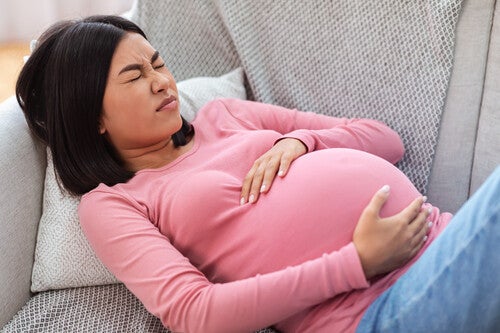
Know the difference! Round ligament pain is sharp and one-sided, while Braxton Hicks feels like your whole belly is tightening.
You might mix up two of the most common causes of stomach cramps during pregnancy: Braxton Hicks contractions and round ligament pain. If you’re not sure which is which, it helps to know their patterns, so you can tell them apart more easily.
Round ligament pain
If you’ve felt a sharp, sudden pain on one side of your lower belly, hip, or groin, you may be experiencing round ligament pain. This pain is most common during the second trimester, and tends to hit right after a quick movement—standing up fast, coughing, laughing, or rolling over in bed. But it usually eases up within a few seconds to a couple of minutes.
Braxton Hicks contractions
Braxton Hicks feels different. Instead of a sharp stab on one side, it feels like your whole belly is tightening and then releasing, almost like your bump is giving you a gentle squeeze. These contractions come and go without warning, and they never get intensely painful. They tend to ease up once you change position or take a short walk.
Here’s the easiest way to tell them apart: round ligament pain is sharp, one-sided, and shows up right after you move. Braxton Hicks is more of a whole-belly squeeze with no clear trigger, and it eases with rest. If what you’re feeling doesn’t quite fit either pattern, or it starts feeling more intense over time, that’s your cue to check in with your OB-GYN.
How to Relieve Cramps During Pregnancy

Staying hydrated and resting eases most everyday bloating, leg discomfort, and cramps during pregnancy.
The good news is that relief is usually simple, and Dr. Ong breaks it down by what you’re dealing with. For cramps and everyday aches in general, she keeps it straightforward: “Getting enough rest, staying well hydrated, and changing positions slowly can help reduce discomfort.”
For pelvic pressure and Braxton Hicks, she recommends resting and avoiding anything too strenuous or demanding. For leg cramps, a gentle calf stretch, a light massage, and plenty of water usually do the trick.
For bloating, heartburn, and constipation, a few small changes go a long way:
- Eat smaller, more frequent meals instead of a few big ones.
- Drink more water throughout the day.
- Load up on fiber-rich foods like fruits, vegetables, and whole grains.
- Stay active with light movement, like a short walk, if your pregnancy allows it.
- Skip spicy, fatty, or acidic food, and stay upright a while after eating, to ease heartburn specifically.
Warning Signs That Mean It's Time to Call Your Doctor
Most cramps during pregnancy are nothing to lose sleep over, but a few signs mean you shouldn’t wait it out. Dr. Ong is clear that you should call your OB-GYN right away if you notice:
- Watery vaginal discharge
- Vaginal bleeding
- Regular and painful contractions
- A noticeable drop in your baby's movement
- Severe or persistent abdominal pain
- Fever or chills
- Painful urination
- A severe headache or blurred vision
- Swelling in your face and hands
Knowing which signs are worth watching out for and when to pick up the phone can help you catch potential pregnancy complications early or get timely treatment.
Talk to Your OB-GYN About Any Pain That Worries You
Most cramps during pregnancy are due to your body stretching, adjusting, and making room for your baby. But if a cramp feels off, lingers longer than it should, or shows up alongside any of the warning signs mentioned earlier, call your OB-GYN.
A simple habit that helps? Write down when a cramp hits, how long it lasts, and what you were doing when it happened. This habit makes it easier for you to share what’s going on if you do need to call your doctor. Remember, no question is ever too small when it’s about keeping you and your baby safe.
Every pregnancy comes with its own set of surprises, and you don’t have to figure them all out on your own. Connect with other moms about cramps during pregnancy on the ParenTeam Moms and Dads Facebook group, and swap notes on what’s helped you feel better.
About Dr. Vicar Ong
Dr. Vicar Ong is an ob-gyn with 15 years of experience, subspecializing in Maternal and Fetal Medicine. She earned her medical degree from the University of Santo Tomas and completed her residency training at Chinese General Hospital and Medical Center. She is a Diplomate of the Philippine Obstetrical and Gynecological Society and holds subspecialty certification from the Philippine Society of Maternal and Fetal Medicine
References
American College of Obstetricians and Gynecologists. "Changes During Pregnancy." Accessed July 14, 2026. https://www.acog.org/womens-health/infographics/changes-during-pregnancy
American Pregnancy Association. "Round Ligament Pain During Pregnancy." Last revised April 10, 2026. Accessed July 14, 2026. https://americanpregnancy.org/pregnancy/round-ligament-pain-during-pregnancy
Cleveland Clinic. "Braxton Hicks Contractions." Last updated July 8, 2025. Accessed July 14, 2026. https://my.clevelandclinic.org/health/symptoms/22965-braxton-hicks
Cleveland Clinic. "Round Ligament Pain." Last updated March 29, 2024. Accessed July 14, 2026. https://my.clevelandclinic.org/health/symptoms/21642-round-ligament-pain
Cleveland Clinic. "Abdominal Pain During Pregnancy." Last updated June 23, 2026. Accessed July 14, 2026. https://my.clevelandclinic.org/health/symptoms/pregnancy-pains
Mayo Clinic Staff. "Leg Cramps During Pregnancy: Preventable?" Mayo Clinic. April 12, 2023. Accessed July 14, 2026. https://www.mayoclinic.org/healthy-lifestyle/pregnancy-week-by-week/expert-answers/leg-cramps-during-pregnancy/faq-20057766
Raines, Deborah A., and Danielle B. Cooper. "Braxton Hicks Contractions." Updated August 8, 2023. In StatPearls [Internet]. Treasure Island, FL: StatPearls Publishing, 2026. Accessed July 14, 2026. https://www.ncbi.nlm.nih.gov/books/NBK470546
Villines, Zawn. "Is Having Vaginal Pressure During Pregnancy Normal?" Medically reviewed by Valinda Riggins Nwadike. Medical News Today. Updated May 23, 2025. Accessed July 14, 2026. https://www.medicalnewstoday.com/articles/322304
Related articles

28 Weeks Pregnant: Baby Development, Symptoms, and Tips for Mommies
Your guide to being 28 weeks pregnant is here! Learn about key baby development milestones, how to manage new symptoms, and what you can do to stay comfortable.
6 mins to read

The Stages of Pregnancy: What to Expect for You and Baby
Get to know the stages of pregnancy! Learn about each trimester, track your baby's growth, and embrace your body’s changes.
5 mins to read

How to Track Ovulation Symptoms If You Have Irregular Periods
Tracking ovulation symptoms is key when your cycle changes. Learn how to read your body’s signs and spot your fertile window even with irregular periods.
10 mins to read

Ginger Tea in Pregnancy: Is It Safe for Morning Sickness?
Ginger tea in pregnancy can help ease morning sickness, but safe doesn’t mean unlimited. Here’s what your ob-gyn wants you to know about salabat and dosage.
7 mins to read

Does Milk Help You Sleep? How a Glass Before Bedtime Helps Kids Unwind
Does milk help you sleep? A pediatric nutrition specialist breaks down what’s true, what’s myth, and how bedtime milk fits your child’s routine.
6 mins to read

A Doctor Explains Baby Poop Color: What’s Typical and What’s Not
Baby poop color can change often, from mustard yellow to green to brown. Get a pediatrician’s take on every shade, and know exactly when to call your doctor.
10 mins to read

How a Pregnancy App Can Help You Track Your Baby’s Development
A pregnancy app can help you see how your baby grows each week. It’s a simple way to feel confident and ready for every new change.
7 mins to read

Your Complete Guide to the Types of Milk in the Grocery Aisle
Confused by the types of milk lining the grocery shelf? Here’s a clear way to compare full cream, fresh, fortified, and plant-based options for your family.
7 mins to read

Best Milk for Pregnant Women: What Nutrients to Look For
Not all milk for pregnant women is the same. Know the six nutrients that actually matter—and what to look for in nutrition labels for the best buy.
9 mins to read

A Derma’s Guide to Pregnancy Skin Care: What’s Safe and What to Avoid
Building a safe pregnancy skin care routine starts with checking the label. Discover the best ingredients for your skin and the chemicals you need to avoid right now.
8 mins to read

Early Pregnancy Pain Areas: A Dad’s Guide to Comforting His Partner
Learn how to help your partner manage early pregnancy pain areas. Small comforts like checking in, prepping light meals, and doing her chores make a huge difference.
6 mins to read

How to Deal with Pregnancy Hormones and Mood Swings
Pregnancy hormones can intensify your emotions. Learn simple ways you and your partner can handle those mood swings and get the support you need.
8 mins to read

Doctor-Approved Ways to Ease Acid Reflux in Pregnancy
Dealing with acid reflux in pregnancy is uncomfortable. Discover simple food tweaks, better sleep habits, and other doctor-approved tips to ease that sour burn today.
5 mins to read

A Doctor Explains Pregnancy Spotting Colors and Flow
Understanding your pregnancy spotting color and flow can help you spot warning signs early. Discover what to expect and when to call your doctor.
6 mins to read

Updated! 5 PhilHealth Benefits for You and Baby
Your PhilHealth benefits cover more than just delivery day. Here's everything you can claim under the 2026 expanded maternity benefits.
8 mins to read

5 Ways to Manage a Pregnancy Rash in the Hot Months
Treat a pregnancy rash by adjusting your daily hygiene habits. Discover how cool midday baths, gentle soaps, and loose clothing can soothe your skin now.
6 mins to read

1 Month Pregnant? A Guide to Symptoms, Baby Development, and Nutrition
Understand exactly what happens when you're 1 month pregnant! Explore common symptoms, how your baby starts growing, and vital nutrition tips for this crucial stage.
6 mins to read

Pregnancy Discharge? Your Guide to Staying Fresh and Comfortable
An increase in pregnancy discharge means your body is protecting your baby, but the extra moisture may feel uncomfortable. Learn how to stay fresh with simple habits.
5 mins to read

8 Examples of Light Exercises for Your 3rd Trimester
Discover safe and effective examples of light exercises for your third trimester. From walking to stretches, here's how to ease discomfort, and prepare for labor.
6 mins to read


