


Best Milk for Pregnant Women: What Nutrients to Look For
When you’re expecting, your nutritional needs increase significantly. Meeting those demands through meals alone can be difficult, which is why choosing the right pregnancy milk matters. The best milk for pregnant women is one that helps you meet key nutrient needs like folic acid, calcium, iron, Vitamin D, DHA, and protein.
A 2024 review in Maternal & Child Nutrition revealed that less than 1% of pregnant and lactating Filipinas meet their required iron intake from food sources alone. And it isn’t just iron. The Department of Science and Technology–Food and Nutrition Research Institute’s (DOST-FNRI) 2023 National Nutrition Survey (NNS) shows that most expecting moms are also falling short on everyday essentials like calcium, Vitamin A, and Vitamin C.
That’s where the right pregnancy milk comes in. It can serve as a nutritional bridge to fill those daily gaps. This guide helps you understand exactly what nutrients to look for, what ingredients to skip, and how to get the most out of every glass.
Why Pregnancy Milk Is Different from Regular Milk
Regular cow’s milk gives you calcium and protein, and that’s good. But it doesn’t provide the targeted doses of vitamins and minerals your body needs during pregnancy. Maternal milk is specially formulated to fill those gaps and support your changing nutritional needs, trimester by trimester.
That said, not all maternal milks are equal. That's why reading the nutrition label—not just the front of the pack—matters.
6 Nutrients That Matter in Pregnancy Milk

Checking the label ensures you get the exact amounts of folic acid, calcium, and iron you need.
Before you pick up any can or pouch off the shelf, check for these six nutrients you need for a healthy pregnancy (and baby!). These are based on the Philippine Dietary Reference Intakes (PDRI) set by the DOST-FNRI—the local standard for daily nutrient needs.
1. Folic acid: your baby’s first line of defense
Folic acid, also known as folate, protects against neural tube defects—serious conditions like spina bifida (where the spine fails to form properly) or anencephaly (where parts of the brain or skull are missing)—during the first few weeks of pregnancy, often before you know you’re pregnant.
According to the PDRI, pregnant women need 600 mcg DFE (dietary folate equivalent) daily. Because neural tube development begins very early in pregnancy, folic acid is often one of the first nutrients OB-GYNs recommend, even before the first trimester.
2. Calcium: for your baby’s bones and your own
Your baby draws calcium from you to build bones and teeth. During pregnancy, you need 750 to 800 mg daily, plus an additional 50 mg during the third trimester. Yet the NNS revealed that 86.7% of pregnant Filipinas fail to meet their calcium needs. Without enough calcium, your body may draw from its own bone stores to support your baby’s growth.
For populations with very low calcium intake, the World Health Organization (WHO) warns of a higher risk for pre-eclampsia (dangerously high blood pressure during pregnancy). To protect against this, the WHO recommends supplementing up to 1,500–2,000 mg a day. A calcium-rich maternal milk can help ensure you meet your daily needs and close that massive gap.
3. Iron: keeping you and your baby strong
During pregnancy, your blood volume increases dramatically. Iron is essential because it helps your body make hemoglobin, the protein in red blood cells that carries oxygen to your growing baby and keeps your own body strong enough to support you through labor.
According to the NNS, 99.7% of pregnant Filipinas don’t meet their daily iron requirement from food alone. On average, expecting moms are getting just 8.6 mg a day, which is far below the required 31.7 mg. Make sure your pregnancy milk is fortified with iron to ensure a healthy pregnancy.
4. Vitamin D: the calcium partner
Vitamin D helps your body absorb and use the calcium you take in. Without enough of it, even a high-calcium diet won’t deliver full benefits.
The PDRI sets the recommended intake at 200 IU (5 mcg) per day, with a tolerable upper limit of 2,000 IU (50 mcg). If you rely on sun exposure as your primary source, but you often spend most of the day indoors, then maternal milk with added Vitamin D helps close the gap.
5. DHA: building your baby's brain and eyes
DHA (an omega-3 fatty acid) directly supports fetal brain and eye development. It’s not found in regular milk, which makes it one of the clearest differentiators between standard dairy and a good maternal milk supplement. Check the label; if DHA isn’t listed, you may need to source it separately.
6. Protein: fueling growth from the inside
Protein fuels the rapid growth of your baby’s tissues and organs while supporting your expanding blood volume. While protein is found in everyday foods like meats and beans, many pregnant Filipinas still fall short of their daily protein needs, according to the NNS.
A glass of maternal milk provides an additional source of high-quality protein, making it easier to meet your daily needs. This is especially helpful on days when morning sickness makes eating heavy meals impossible.
What to Watch Out for on the Label
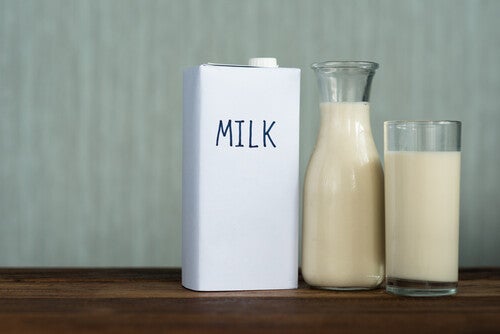
Choosing the best milk for pregnant women ensures you get more nutrients than fillers.
Knowing what to look for is half the battle—but knowing what to avoid matters just as much.
High sugar content
Some pregnancy milks are surprisingly sweet. Check the total sugars per serving and compare across brands. A milk drink that's more sugar than nutrients won’t support your pregnancy the way it should.
Artificial preservatives and fillers
If the ingredients list is longer than it needs to be, that’s worth a second look. Stick to options with clearly listed vitamins and minerals.
The "Per 100g" trap
Many labels show nutrients “per 100g of powder,”—but that's not what you actually drink in one serving. Always look at the “Per Serving” column instead. That’s the number that tells you what goes into one glass.
Foreign benchmarks
When labels show % Daily Values, those percentages may follow US or Australian standards, not Philippine ones. Cross-check against the DOST-FNRI PDRI to get an accurate picture of how much of your daily requirement each serving actually covers.
Flavor profile
Even the most nutrient-dense pregnancy milk won’t help much if you struggle to drink it regularly. Taste, texture, and digestibility matter because they affect whether you can make it part of your daily routine. When comparing products, consider which one you can comfortably consume throughout your pregnancy.
Drinking It Right: Tips to Get the Most Out of Every Glass
Once you’ve chosen a maternal milk that meets your nutritional needs, proper timing and preparation can help you get the most from every serving. Make sure you’re following the serving size recommended on the product label or by your OB-GYN. Nutrient levels vary across products, so the number of servings you need may differ.
Space it out from iron.
Calcium and iron compete for absorption. If you drink a glass of calcium-rich milk right before or after eating monggo, dinuguan, or taking an iron supplement, your body won’t absorb the iron as well. Give yourself at least a two-hour gap between your milk and your iron source.
Mix it up if you're dealing with morning sickness.
Nausea and food aversions are one of the main reasons moms skip meals and miss nutrients. Milk that blends easily into smoothies or oatmeal can help you stay nourished even on difficult mornings.
For example, Bonina Maternal Milk Supplement features a Triple Boost Formula containing nutrients for maternal support, fetal growth, and immunity. It's also proudly Philippine-made and specially formulated for expecting moms. You can easily mix it into simple recipes like smoothies and overnight oats.
The Right Choice Starts with You
No single milk works the same for every pregnancy. Your trimester, your diet, your health history, and any conditions your OB-GYN is monitoring all affect what you need. Always consult your doctor before settling on the right milk for you (or when adding any supplements to your routine).
Use the DOST-FNRI PDRI as your benchmark when comparing products. You can also check this guide on common micronutrient deficiencies during pregnancy to understand what’s at stake if certain nutrients stay low throughout your pregnancy.
What Goes into Every Glass Counts
When choosing the best milk for pregnant women, prioritize the nutrients discussed and compare products using Per Serving values and PDRI alignment. Then, pick an option you can comfortably drink every day. Once you’ve made your choice, proper timing and preparation can help you get the most from every serving.
Your baby’s building everything from scratch—bones, brain, eyes, organs. Every glass you choose helps give your little one a head start. Join the conversation on the ParenTeam Moms and Dads Facebook group and ask other parents which milk for pregnant women worked best for them.
References
Department of Science and Technology–Food and Nutrition Research Institute (DOST-FNRI). "DOST-FNRI Unveils 2023 Filipinos State of Health and Nutrition." July 3, 2025. Accessed June 11, 2026. https://www.dost.gov.ph/knowledge-resources/news/86-2025-news/4067-dost-fnri-unveils-2023-filipinos-state-of-health-and-nutrition.html
Department of Science and Technology–Food and Nutrition Research Institute. "2023 NNS Part 1 - Overview and Methodology, Nutritional Status, Anemia, Smoking & Alcohol Consumption, Physical Activity, Elevated BP." Department of Science and Technology. Accessed June 11, 2026. https://enutrition.fnri.dost.gov.ph/uploads/2024%20National%20Nutrition%20Summit_Part%201.pdf
Department of Science and Technology–Food and Nutrition Research Institute. "2023 NNS Part 2 - Food Environment, Food Consumption (Household & Individual Level), VAD, Iodine Deficiency, Use of Iodized Salt, Fasting Blood Glucose & Lipid Profile." Department of Science and Technology. Accessed June 11, 2026. https://enutrition.fnri.dost.gov.ph/uploads/2024%20National%20Nutrition%20Summit_Part%202.pdf
Department of Science and Technology–Food and Nutrition Research Institute. "Philippine Dietary Reference Intakes 2015: Summary Tables." Accessed June 16, 2026. https://www.fnri.dost.gov.ph/images/images/news/PDRI-2018.pdf
Omotayo, Moshood O., Katherine L. Dickin, Kimberly O. O'Brien, Lynnette M. Neufeld, Luz Maria De-Regil, and Rebecca J. Stoltzfus. "Calcium Supplementation to Prevent Preeclampsia: Translating Guidelines into Practice in Low-Income Countries." Advances in Nutrition 7, no. 2 (2016): 275-278. Accessed June 16, 2026. https://pubmed.ncbi.nlm.nih.gov/26980810
Leah, Cecile, Cecile Bayaga, Yasmin Janina, A. Serrano, Marietoni Pico, Demetria Bongga, and Alonzo Gabriel. "Sociodemographic Factors Associated with Nutrient Intake of Women Living in Urban Areas." ResearchGate (2020). Accessed June 16, 2026. https://www.researchgate.net/publication/341696604_Sociodemographic_factors_associated_with_nutrient_intake_of_women_living_in_urban_areas
Crider, Krista S., Yaping P. Qi, Lorraine F. Yeung, Cara T. Mai, Lauren Head Zauche, A. Wang, K. Daniels, and J. L. Williams. "Folic Acid and the Prevention of Birth Defects: 30 Years of Opportunity and Controversies." Annual Review of Nutrition 42 (2022): 423-452. Accessed June 16, 2026. https://pmc.ncbi.nlm.nih.gov/articles/PMC9875360
US Preventive Services Task Force. "Folic Acid Supplementation to Prevent Neural Tube Defects: US Preventive Services Task Force Reaffirmation Recommendation Statement." JAMA 330, no. 5 (2023): 454-459. Accessed June 16, 2026. https://jamanetwork.com/journals/jama/fullarticle/2807739
Mayo Clinic. "Pregnancy Diet: Focus on These Essential Nutrients." January 31, 2025. Accessed June 16, 2026. https://www.mayoclinic.org/healthy-lifestyle/pregnancy-week-by-week/in-depth/pregnancy-nutrition/art-20045082
Georgieff, Michael K., Nancy F. Krebs, and Sarah E. Cusick. "The Benefits and Risks of Iron Supplementation in Pregnancy and Childhood." Annual Review of Nutrition 39 (2019): 121-146. Accessed June 16, 2026. https://pmc.ncbi.nlm.nih.gov/articles/PMC7173188
Related articles

28 Weeks Pregnant: Baby Development, Symptoms, and Tips for Mommies
Your guide to being 28 weeks pregnant is here! Learn about key baby development milestones, how to manage new symptoms, and what you can do to stay comfortable.
6 mins to read

The Stages of Pregnancy: What to Expect for You and Baby
Get to know the stages of pregnancy! Learn about each trimester, track your baby's growth, and embrace your body’s changes.
5 mins to read

How to Track Ovulation Symptoms If You Have Irregular Periods
Tracking ovulation symptoms is key when your cycle changes. Learn how to read your body’s signs and spot your fertile window even with irregular periods.
10 mins to read

Ginger Tea in Pregnancy: Is It Safe for Morning Sickness?
Ginger tea in pregnancy can help ease morning sickness, but safe doesn’t mean unlimited. Here’s what your ob-gyn wants you to know about salabat and dosage.
7 mins to read

Does Milk Help You Sleep? How a Glass Before Bedtime Helps Kids Unwind
Does milk help you sleep? A pediatric nutrition specialist breaks down what’s true, what’s myth, and how bedtime milk fits your child’s routine.
6 mins to read

A Doctor Explains Baby Poop Color: What’s Typical and What’s Not
Baby poop color can change often, from mustard yellow to green to brown. Get a pediatrician’s take on every shade, and know exactly when to call your doctor.
10 mins to read

A Doctor Explains Cramps During Pregnancy and Other Discomforts
Experiencing cramps during pregnancy? A doctor explains what causes it, how to ease it, and when it’s worth a call to your OB to help bring you peace of mind.
7 mins to read

How a Pregnancy App Can Help You Track Your Baby’s Development
A pregnancy app can help you see how your baby grows each week. It’s a simple way to feel confident and ready for every new change.
7 mins to read

Your Complete Guide to the Types of Milk in the Grocery Aisle
Confused by the types of milk lining the grocery shelf? Here’s a clear way to compare full cream, fresh, fortified, and plant-based options for your family.
7 mins to read

A Derma’s Guide to Pregnancy Skin Care: What’s Safe and What to Avoid
Building a safe pregnancy skin care routine starts with checking the label. Discover the best ingredients for your skin and the chemicals you need to avoid right now.
8 mins to read

Early Pregnancy Pain Areas: A Dad’s Guide to Comforting His Partner
Learn how to help your partner manage early pregnancy pain areas. Small comforts like checking in, prepping light meals, and doing her chores make a huge difference.
6 mins to read

How to Deal with Pregnancy Hormones and Mood Swings
Pregnancy hormones can intensify your emotions. Learn simple ways you and your partner can handle those mood swings and get the support you need.
8 mins to read

Doctor-Approved Ways to Ease Acid Reflux in Pregnancy
Dealing with acid reflux in pregnancy is uncomfortable. Discover simple food tweaks, better sleep habits, and other doctor-approved tips to ease that sour burn today.
5 mins to read

A Doctor Explains Pregnancy Spotting Colors and Flow
Understanding your pregnancy spotting color and flow can help you spot warning signs early. Discover what to expect and when to call your doctor.
6 mins to read

Updated! 5 PhilHealth Benefits for You and Baby
Your PhilHealth benefits cover more than just delivery day. Here's everything you can claim under the 2026 expanded maternity benefits.
8 mins to read

5 Ways to Manage a Pregnancy Rash in the Hot Months
Treat a pregnancy rash by adjusting your daily hygiene habits. Discover how cool midday baths, gentle soaps, and loose clothing can soothe your skin now.
6 mins to read

1 Month Pregnant? A Guide to Symptoms, Baby Development, and Nutrition
Understand exactly what happens when you're 1 month pregnant! Explore common symptoms, how your baby starts growing, and vital nutrition tips for this crucial stage.
6 mins to read

Pregnancy Discharge? Your Guide to Staying Fresh and Comfortable
An increase in pregnancy discharge means your body is protecting your baby, but the extra moisture may feel uncomfortable. Learn how to stay fresh with simple habits.
5 mins to read

8 Examples of Light Exercises for Your 3rd Trimester
Discover safe and effective examples of light exercises for your third trimester. From walking to stretches, here's how to ease discomfort, and prepare for labor.
6 mins to read


