


Prenatal Checkup Guide: When to Go, What to Expect, What to Ask Your Ob-Gyn
You show your partner the pregnancy test, and the first thing they ask is, “Sigurado na ba?” Mommy, your first prenatal checkup is how you find out for sure. It’s also where your ob-gyn starts caring for your pregnancy, so you and your baby stay healthy all the way to delivery day.
If this is your first baby, you likely have a lot of questions. Here, board-certified ob-gyn Dr. Sheryl Santiago answers them, from when to schedule your first visit to the tests you’ll take and the warning signs to watch for. Plus, you’ll find questions to ask your doctor.
What Prenatal Care Means for You and Your Baby
So what do these checkups do for you? Prenatal care, also called antenatal care, is the health care you get while you’re pregnant. Dr. Santiago describes it as the foundation of your pregnancy. At your checkups, your ob-gyn sees how ready your body is to carry your baby. They also watch for possible complications and any condition that needs treatment. This way, if a problem comes up, your doctor can catch it early.
“The end goal for any prenatal consultation or checkup is for us to have a successful pregnancy outcome,” she says. In fact, the World Health Organization (WHO) states that prenatal care should look after your overall health and well-being, not only prevent illness. In short, your checkups aren’t only about your baby. They’re about you, too, momma.
When to Schedule Your First Prenatal Checkup
Once you see those two lines, try not to wait too long to schedule your visit. Dr. Santiago suggests seeing your ob-gyn about one to two weeks after a positive home pregnancy test. Why so soon? Two lines on a test “doesn’t necessarily mean it’s a viable pregnancy already,” she explains. That’s why your first ultrasound is there “to make sure that the pregnancy is inside of the womb.” Simply put, your doctor checks that your baby is growing where it should.
Your first prenatal visit also helps set your due date. Dr. Santiago asks for the first day of your last period, then checks it against your ultrasound. She aims to confirm how far along you are and your due date as soon as possible, usually within your first and second visits.
Curious before your appointment, Mommy? Enter the first day of your last period in this pregnancy due date calculator for an estimate, then let your ob-gyn confirm it.
How Often You’ll See Your Ob-Gyn
After your first visit, your prenatal checkup schedule picks up as your due date gets closer, giving your ob-gyn more chances to check on you and your baby.
Below is the schedule Dr. Santiago follows for low-risk pregnancies. Your own ob-gyn may adjust it based on your health, and if you have a high-risk pregnancy, expect to come in more often.
Up to 28 weeks: once a month
For the first 28 weeks, you’ll usually see your ob-gyn once a month. Dr. Santiago says your early visits are crucial, since they record your baseline weight and blood pressure. This means your doctor has numbers to compare against at every checkup after.
By your second trimester, you’ll start to feel your baby move. Dr. Santiago encourages you to take part in your care by paying attention to these movements, since they’re one sign your baby is doing okay. So if you notice your baby moving less than usual, mom, tell your doctor right away.
From 20 weeks onward, she says your risk of high blood pressure and high blood sugar goes up, so your doctor will keep a close eye on both from here.
28 to 36 weeks: every two weeks
At 28 weeks, your checkups move to every two weeks. Dr. Santiago explains that this is when your body starts preparing for birth. Your visits now focus more on how your baby is doing, along with your own health. Your ob-gyn may also check the amniotic fluid around your baby through ultrasound.
36 weeks to delivery: every week
From Week 36 to 40, you’ll see your ob-gyn every week. Week 40 is your due date. If you haven’t gone into labor by then, Dr. Santiago says you’ll come in every three days.
What Happens During a Prenatal Checkup
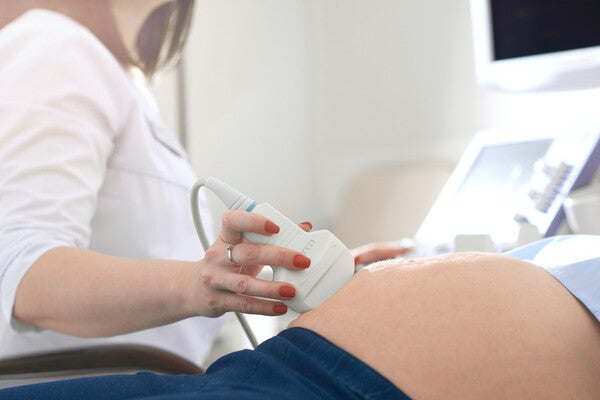
Expect at least three ultrasounds, from an early transvaginal scan that dates your pregnancy to a final check before birth.
Your first visits are the most detailed, since they give your ob-gyn a clear picture of your health from the start. Here’s what to expect.
A detailed talk about your health
According to Dr. Santiago, your ob-gyn will ask a lot of questions at your first pregnancy checkup, such as:
- The first day of your last period, and whether your cycles are regular
- Whether you’ve been trying to get pregnant
- Any supplements or maintenance meds you take
- Anything you’ve been exposed to in the past month, like alcohol or heavy smoke
- Your medical and family history, including past surgeries
- Any past sexually transmitted infections (STIs)
- Your vaccinations
- Your work and lifestyle
- Your pre-pregnancy weight
- Who’s with you at home
Maybe you went to a few parties or had a drink before you found out you were pregnant. That’s exactly why Dr. Santiago asks about recent exposures, so be open with your ob-gyn. Your pre-pregnancy weight matters too, since it helps your doctor guide you on nutrition and how much weight to gain.
The question about who’s with you at home matters as well. “So we also want to ask who’s going to be with her, who’s going to take care of her, sinong kasama niya sa bahay, for us to know how she can cope,” she says. After all, “not all pregnant naman would have partners.” In other words, your care covers your support system, not just your body.
If you’re raising your baby on your own, look into the solo parent benefits you may qualify for.
A gentle physical exam
Some first-time moms feel nervous about the physical exam, worried it might include a Pap smear or other procedures. Dr. Santiago understands, but she reminds you that “no visit is complete if you weren’t checked physically.”
“Hindi lang naman ‘yan kwentuhan na history-taking lang. We have to do examinations,” she says. In other words, your checkup is more than a chat. Even early on, the exam can show signs of pregnancy, like changes in your cervix.
Don’t worry, momma. “We are gentle when we do the exams,” Dr. Santiago assures.
Lab tests that set your baseline
Once your ultrasound confirms your pregnancy, your ob-gyn will request your first pregnancy lab tests. These give your doctor a baseline, so they can spot changes later on. According to Dr. Santiago, these usually include:
- Complete blood count (CBC), which includes your hemoglobin and hematocrit—two measures that help check for anemia
- Blood typing
- Urinalysis
- Syphilis screening (VDRL or RPR)
- Hepatitis B screening
- HIV screening
- Fasting blood sugar (FBS)
For the urine test, she explains that the “gold standard is urine culture and sensitivity. But in our setting, most of the time urinalysis is the one that is requested.” So the urinalysis is the urine test you’ll most likely get.
Dr. Santiago stresses the sugar test for local moms. “Since we are all Filipinos, it’s very important to check FBS or fasting blood sugar to rule out gestational diabetes or overt diabetes,” she says. If your FBS during your first trimester comes back fine, you’ll take a 75-gram oral glucose tolerance test (OGTT) between 24 and 28 weeks to check again for gestational diabetes mellitus (GDM).
Your doctor will also start you on folic acid if you aren’t taking it yet. Dr. Santiago says it’s ideally started at least three months before pregnancy, but if you haven’t, now’s the best time.
The good news? You won’t repeat most of these tests. Your blood type, hepatitis B, HIV, and syphilis tests are usually done just once. Your ob-gyn may repeat:
- Your CBC in your second trimester, if your first results showed signs of anemia
- Your CBC again before delivery, in case you need blood
- Your urinalysis or urine culture, if you have UTI symptoms
“Kasi, syempre, gastos na naman. But you know, we only request labs that are needed,” she adds.
Ultrasounds at each stage
Dr. Santiago recommends at least three ultrasounds during pregnancy, though you may need more depending on your situation.
- First trimester: A transvaginal ultrasound—since your womb is still small—to confirm that your pregnancy is inside your womb and to help date it.
- Second trimester: A pelvic ultrasound that measures your baby and checks that your baby and placenta are growing well. Your ob-gyn may also recommend an anatomy scan, a more detailed ultrasound that checks your baby’s organs.
- Before delivery: An ultrasound to check on your baby’s well-being, which may include a biophysical score.
If you want to learn more about these scans, read this guide on the types of ultrasounds in pregnancy. You can also see how big your baby is each month as your pregnancy goes on.
What PhilHealth Covers for Your Prenatal Checkups
All these visits and tests can add up. If you’re a PhilHealth member, your benefits can help cover many of them.
Under PhilHealth’s Expanded Maternity Care Benefit (EMCB), you can get your prenatal care at accredited lying-in clinics, birthing homes, hospital outpatient departments, primary care facilities like YAKAP clinics, and diagnostic labs. The package covers:
- Eight checkups with physical exams, following DOH policy
- Monitoring of your baby’s growth
- Iron and folic acid (or multiple micronutrient) supplements, plus calcium
- Tetanus vaccination, if you need it
- Lab tests like CBC, blood typing, urinalysis, OGTT, and screenings for hepatitis B, HIV, and syphilis
- One transvaginal ultrasound in your first trimester, and one pelvic ultrasound in your second or third trimester
Your eight covered checkups are spread out as one in your first trimester, two in your second, and five in your third. This follows the WHO’s recommendation of at least eight prenatal care contacts. As long as you use basic accommodation when you give birth, you don’t pay for any of these covered services.
What if your ob-gyn wants to see you more often? Accredited private facilities can charge you no more than ₱900 in total for extra checkups per pregnancy, no matter how many you add. Lab tests outside the package may still cost extra.
You’ll also get a care coordinator to guide you through your visits. They’ll tell you whether your pregnancy is low-risk or high-risk, and which PhilHealth benefits fit your needs. For the full rundown, check out this guide to the updated PhilHealth maternity and newborn benefits.
Questions to Ask Your Ob-Gyn

Prep for your prenatal checkup by writing down your last period, meds, and any questions for your ob-gyn.
Checkups can go by fast, especially when the clinic is full. Coming in with your questions ready helps you get the most out of each visit. Here are some to start with:
- Due date and growth: “When is my due date, and how is my baby growing right now?”
- Vitamins and food: “Which vitamins should I take, and are there foods or drinks I should avoid?”
- Daily activities: “Is it safe to keep working, doing chores, or exercising?”
- Morning sickness: “What can I safely do or take for nausea and vomiting?”
- Medicines and beauty treatments: “Which over-the-counter medicines are safe? Can I still have my hair dyed or rebonded?”
- Tests and ultrasounds: “Which tests do I need next, and when is my next ultrasound?”
- Getting in touch: “How can I reach you if something feels off between checkups?”
- Birth plan: “Where will I give birth, and what are my options for pain relief during labor?”
- Costs: “How much should I prepare, and is your clinic or hospital PhilHealth-accredited?”
Save these on your phone so they’re ready when it’s your turn. If your partner comes along, they can ask questions too.
Pregnancy Warning Signs That Mean You Should See Your Doctor Right Away
Your checkups follow a schedule, but some symptoms can’t wait. Knowing them helps you get care fast, for you and your baby.
If your ob-gyn or health center gives you a Mother and Child Book, it has a page on these pregnancy warning signs, and Dr. Santiago always reminds her patients about them. Whatever trimester you’re in, go to your ob-gyn or the nearest hospital right away if you have:
- Vaginal bleeding
- Severe abdominal pain
- Severe headache
- Blurred vision
- Swelling of your face and hands
- Convulsions or loss of consciousness
- Fever or chills
- Difficulty breathing
- Water or fluid leaking from your vagina
- Fewer baby movements than usual, or none at all
Dr. Santiago stresses that bleeding isn’t expected in any trimester, except when you’re about to give birth. Headaches can be common in pregnancy, but she says a “severe headache is different.” Along with blurred vision or swelling of your face and hands, it may be a sign of high blood pressure conditions in pregnancy. Leaking fluid is a danger sign too, she adds, especially early in your pregnancy.
When something feels off, Mommy, trust yourself and call your doctor. To know what to expect as your pregnancy goes on, follow along with the pregnancy weekly calendar.
Make Every Prenatal Checkup Count
Dr. Santiago’s biggest advice for moms is simple: “make it a habit to show up talaga.” Being present matters, she adds, and “not just literally.” This means listening to your ob-gyn’s advice and taking part in your own care. As she puts it, “this prenatal checkup would prevent complications.”
So schedule your first visit one to two weeks after a positive test, and keep showing up as your visits pick up. Bring your questions, use your PhilHealth-covered checkups, and don’t wait for your next appointment if you notice a warning sign. From that first positive test to Week 40, every prenatal checkup keeps you and your baby on track until the day you finally meet. Kaya mo ’yan, momma.
Still have questions about your prenatal care? Ask moms who’ve been there in the ParenTeam Moms and Dads Facebook group, and share what your first prenatal checkup was like.
About Dr. Sheryl Santiago, OB-GYN
Dr. Sheryl Santiago is a board-certified ob-gyn and women’s health advocate. She shares reproductive health education on TikTok, Instagram, and Facebook.
Disclaimer: This article is for general information only and isn’t a substitute for personalized medical advice. Always check with your doctor about what’s right for your pregnancy and prenatal care. The views and opinions expressed by the medical professional featured in this article are their own and don’t necessarily reflect the views of ParenTeam.
References
Philippine Health Insurance Corporation. “Tamang Sagot (TS): Expansion of Maternity Care Benefits for Nonhospital and Outpatient Facilities, PhilHealth Circular No. 2026-0006 (Revision 1).” n.d. Accessed October 8, 2026. https://www.philhealth.gov.ph/circulars/2026/TS-PC-2026-0006-English.pdf
World Health Organization. WHO Recommendations on Antenatal Care for a Positive Pregnancy Experience. Geneva: World Health Organization, 2016. Accessed October 8, 2026. https://www.who.int/publications/i/item/9789241549912
Related articles

The Complete Birth Plan Guide for Filipino Moms: An Ob-Gyn Weighs In
Your birth plan is your voice in the delivery room. Here’s how to build one with real ob-gyn advice and two moms’ true stories.
11 mins to read

28 Weeks Pregnant: Baby Development, Symptoms, and Tips for Mommies
Your guide to being 28 weeks pregnant is here! Learn about key baby development milestones, how to manage new symptoms, and what you can do to stay comfortable.
6 mins to read

The Stages of Pregnancy: What to Expect for You and Baby
Get to know the stages of pregnancy! Learn about each trimester, track your baby's growth, and embrace your body’s changes.
5 mins to read

How to Track Ovulation Symptoms If You Have Irregular Periods
Tracking ovulation symptoms is key when your cycle changes. Learn how to read your body’s signs and spot your fertile window even with irregular periods.
10 mins to read

Ginger Tea in Pregnancy: Is It Safe for Morning Sickness?
Ginger tea in pregnancy can help ease morning sickness, but safe doesn’t mean unlimited. Here’s what your ob-gyn wants you to know about salabat and dosage.
7 mins to read

Does Milk Help You Sleep? How a Glass Before Bedtime Helps Kids Unwind
Does milk help you sleep? A pediatric nutrition specialist breaks down what’s true, what’s myth, and how bedtime milk fits your child’s routine.
6 mins to read

A Doctor Explains Baby Poop Color: What’s Typical and What’s Not
Baby poop color can change often, from mustard yellow to green to brown. Get a pediatrician’s take on every shade, and know exactly when to call your doctor.
10 mins to read

A Doctor Explains Cramps During Pregnancy and Other Discomforts
Experiencing cramps during pregnancy? A doctor explains what causes it, how to ease it, and when it’s worth a call to your OB to help bring you peace of mind.
7 mins to read

How a Pregnancy App Can Help You Track Your Baby’s Development
A pregnancy app can help you see how your baby grows each week. It’s a simple way to feel confident and ready for every new change.
7 mins to read

Your Complete Guide to the Types of Milk in the Grocery Aisle
Confused by the types of milk lining the grocery shelf? Here’s a clear way to compare full cream, fresh, fortified, and plant-based options for your family.
7 mins to read

Best Milk for Pregnant Women: What Nutrients to Look For
Not all milk for pregnant women is the same. Know the six nutrients that actually matter—and what to look for in nutrition labels for the best buy.
9 mins to read

A Derma’s Guide to Pregnancy Skin Care: What’s Safe and What to Avoid
Building a safe pregnancy skin care routine starts with checking the label. Discover the best ingredients for your skin and the chemicals you need to avoid right now.
8 mins to read

Early Pregnancy Pain Areas: A Dad’s Guide to Comforting His Partner
Learn how to help your partner manage early pregnancy pain areas. Small comforts like checking in, prepping light meals, and doing her chores make a huge difference.
6 mins to read

How to Deal with Pregnancy Hormones and Mood Swings
Pregnancy hormones can intensify your emotions. Learn simple ways you and your partner can handle those mood swings and get the support you need.
8 mins to read

Doctor-Approved Ways to Ease Acid Reflux in Pregnancy
Dealing with acid reflux in pregnancy is uncomfortable. Discover simple food tweaks, better sleep habits, and other doctor-approved tips to ease that sour burn today.
5 mins to read

A Doctor Explains Pregnancy Spotting Colors and Flow
Understanding your pregnancy spotting color and flow can help you spot warning signs early. Discover what to expect and when to call your doctor.
6 mins to read

Updated! 5 PhilHealth Benefits for You and Baby
Your PhilHealth benefits cover more than just delivery day. Here's everything you can claim under the 2026 expanded maternity benefits.
8 mins to read

5 Ways to Manage a Pregnancy Rash in the Hot Months
Treat a pregnancy rash by adjusting your daily hygiene habits. Discover how cool midday baths, gentle soaps, and loose clothing can soothe your skin now.
6 mins to read

1 Month Pregnant? A Guide to Symptoms, Baby Development, and Nutrition
Understand exactly what happens when you're 1 month pregnant! Explore common symptoms, how your baby starts growing, and vital nutrition tips for this crucial stage.
6 mins to read


