


A Derma’s Guide to Pregnancy Skin Care: What’s Safe and What to Avoid
Pregnancy skin care can often feel complicated. Your hormones are changing rapidly, and your skin is responding—sometimes with breakouts, dark spots, or dryness you've never dealt with before. The products that worked before may not be safe anymore, and making sense of an ingredient list can feel like reading a foreign language.
The good news: you don't need to throw out your entire skin care routine. You just need to know what's on the label. Board-certified dermatologist Dr. Hazel Hao-Dy explains which ingredients are safe to keep, which ones to swap, and which to drop entirely during pregnancy.
But before you start swapping products, it helps to understand what's actually going on with your skin.
Typical Skin Changes You Might Experience
Your skin does a lot of adjusting when you’re pregnant. Hormonal shifts, physical changes, and increased sensitivity can all show up on your face and body—sometimes all at once. Here are the most common pregnancy skin problems and why they happen.
Acne breakouts happen.
If your skin is suddenly breaking out, hormones are likely the cause. “One of the most common skin issues in pregnancy is acne,” says Dr. Hao-Dy. “The increase in progesterone causes more sebum production, which leads to clogging and breakouts—even if you've never had acne-prone skin before.”
Dark spots and melasma appear.
Hormonal changes don’t just affect oil production—they also trigger hyperpigmentation. Dr. Hao-Dy notes that patients often experience a flare-up in melasma or increased dark spots, commonly appearing on the face, neck, or belly.
Sun exposure makes it worse, which is why sunscreen becomes especially important during this time—and according to Harvard Health Publishing, it’s the major exacerbating factor regardless of the underlying cause.
Stretch marks develop.
As your body grows, your skin stretches—and it can't always keep up. Physical stretching combined with hormonal changes disrupts collagen production, explains Dr. Hao-Dy. The result is stretch marks, most commonly on the stomach, breasts, and thighs. They’re not a sign that anything is wrong; they're just your skin responding to rapid change.
Safe Ingredients for Your Daily Routine
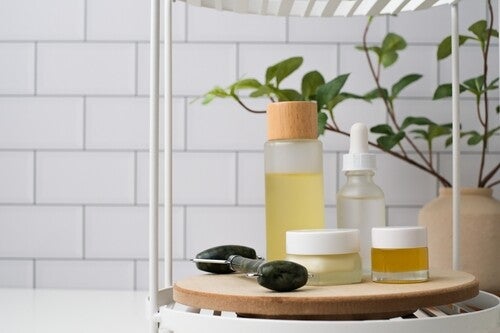
Safe ingredients like Vitamin C, Azelaic Acid, and Niacinamide help manage dark spots and pregnancy hyperpigmentation.
Not every product needs to go. Many effective skin care ingredients are completely safe to use while carrying your baby; you just need to know which ones to reach for. Here’s what Dr. Hao-Dy recommends, grouped by what your skin actually needs.
For dark spots and hyperpigmentation
If skin darkening during pregnancy or melasma is your main concern, Dr. Hao-Dy suggests three pregnancy-safe options: Vitamin C, Azelaic Acid, and Niacinamide. These ingredients brighten and even out skin tone safely. Vitamin C also doubles as an antioxidant, giving your skin added protection against environmental damage.
For Anti-Aging and Gentle Exfoliation
Retinoids are strictly prohibited throughout your pregnancy (more on that later!), but that doesn’t mean you have to give up on smooth, healthy skin. Dr. Hao-Dy recommends AHAs—specifically glycolic acid and lactic acid—for gentle exfoliation. They help with cell turnover, keep dry skin during pregnancy in check, and support an even pregnancy glow without irritating sensitive skin.
For Acne
Salicylic acid isn't completely off-limits—concentration is what matters. Dr. Hao-Dy clarifies that low-dose salicylic acid under 2% is considered safe for managing breakouts during pregnancy.
If you want one ingredient that works harder, Azelaic Acid is also a strong option. It targets acne and hyperpigmentation at the same time, making it especially useful if you're dealing with both.
For Sun Protection
No pregnancy-safe beauty products list is complete without a reliable sunscreen, and mineral formulas are the way to go.
Dr. Hao-Dy recommends sunscreens containing zinc oxide or titanium dioxide. Unlike chemical sunscreens, these sit on top of the skin and physically block UV rays rather than being absorbed into the skin—an important distinction when you’re expecting. Daily sunscreen use helps protect against UV damage and supports a more even skin tone throughout pregnancy.
Skin Care Ingredients to Drop During Pregnancy
Reading the back of the label matters more now than ever. Some ingredients that are perfectly fine outside of pregnancy carry real risks to your little one. Don't use the following ingredients during pregnancy.
Retinoids aren’t safe for your baby.
Dr. Hao-Dy is direct on this one: “Avoid all retinoids—retinol, adapalene, tretinoin.” For pregnant women.
According to the American College of Obstetricians and Gynecologists (ACOG), topical retinoids are a form of vitamin A and belong to the same drug family as isotretinoin. Isotretonoin is a known teratogen that causes severe birth defects, including intellectual disabilities, life-threating heart and brain defects, and other physical deformities.
While topical retinoids are applied to the skin and have lower absorption rates, ACOG recommends avoiding them entirely during pregnancy due to these severe risks. Because these teratogenic chemicals can be found in both prescription treatments and over-the-counter (OTC) products, you must read all skin care labels carefully.
Steer clear of hydroquinone for skin lightening.
Hydroquinone is a common treatment for melasma and dark spots, but it’s unsafe for pregnancy. A 2022 review in The Journal of Clinical and Aesthetic Dermatology notes that your body absorbs hydroquinone at a high systemic rate, exposing the fetus to the chemical. So, you need to remove this from your routine while you’re pregnant.
Drop high-dose acne treatments.
Not all acne ingredients are off-limits, but strong chemical formulations are unsafe. The American Academy of Dermatology (AAD) states that salicylic acid at concentrations greater than 2% and benzoyl peroxide are ingredients you should avoid—as their safety hasn’t been fully established.
This lines up with Dr. Hao-Dy’s guidance: low-dose salicylic acid under 2% is considered safe for managing breakouts, but stronger formulations like peels or high-percentage spot treatments shouldn’t be used during pregnancy.
Stop using chemical sunscreens.
Chemical sunscreens aren’t definitively dangerous, but they’re not without debate either. A 2020 randomized clinical trial published in JAMA found that six chemical sunscreen ingredients—including avobenzone and oxybenzone—were absorbed into the bloodstream at concentrations that exceeded the FDA's safety threshold after just a single day of use. The study’s authors were clear that this doesn’t mean sunscreens are unsafe—but it does mean more research is needed.
Dr. Hao-Dy recommends erring on the side of caution and switching to a mineral sunscreen in the meantime. When in doubt, check with your OB-GYN or dermatologist before continuing use.
Where to Start if Your Routine Needs an Overhaul

Start your pregnancy skin care overhaul slowly. Swap out your harsh cleansers for gentle, doctor-approved options.
You don’t need to replace everything at once—only those that are harmful to your baby. Then build your pregnancy-safe skin care routine from there.
Identify Your Main Skin Concern First
Is it acne? Dry skin during pregnancy? Dark spots? “It really depends on your skin concern,” says Dr. Hao-Dy. Her advice: identify your biggest issue first, then make one or two targeted swaps from there.
Switch to a Gentle or Hydrating Cleanser
If your skin is getting drier or more sensitive, start here. Swap out any medicated or exfoliating cleanser for a gentle, fragrance-free formula.
Replace Retinoids with a Pregnancy-Safe Alternative
Drop retinoids immediately and replace with one targeted alternative—Vitamin C or Niacinamide for dark spots, AHAs like Glycolic or Lactic Acid help with texture and itchy skin during pregnancy, or Azelaic Acid for acne and hyperpigmentation.
Make Mineral Sunscreen Non-Negotiable
Apply broad-spectrum mineral sunscreen with zinc oxide or titanium dioxide every morning—even indoors. Daily sun protection is especially important because pregnancy can make your skin more prone to discoloration.
When to Call Your Doctor
A good rule of thumb: if you’re unsure about a product, don’t guess. Bring a list of your current skin care products to your next prenatal checkup and go through them with your OB-GYN or dermatologist. This is especially important if you were managing an existing skin condition like melasma or acne that required prescription treatments before pregnancy.
Your doctor can tell you what’s safe to continue and what to change or stop—based on your specific situation, not general advice.
Your Skin Is Changing—Your Routine Should Too
Building a safe pregnancy skin care routine simply means checking your labels and swapping out harsh chemicals for gentle, doctor-approved options. Your skin is adjusting to new hormone levels, so giving it the right support keeps both you and your baby safe.
If updating your bathroom cabinet feels overwhelming, start small. Switch to a mild, fragrance-free cleanser today to soothe any new sensitivities, and review your remaining products during your next prenatal checkup.
Already found pregnancy skin care that works for you? Share your go-to products and tips with other expecting moms in the ParenTeam Moms and Dads Facebook group—your experience might be exactly what another mom needs to hear.
About Dr. Hazel Hao-Dy
Dr. Hazel Hao-Dy is a board-certified dermatologist dedicated to helping patients safely manage their skin health. She is an active member of the Philippine Dermatological Society and the Philippine Academy of Dermatologic Surgery Foundation, Inc. Backed by extensive local and international training in clinical and laser surgery, Dr. Hao-Dy currently practices and holds clinic hours at dermHQ and Yssabelle Aesthetics and Wellness.
References
Bozzo, P., A. Chua-Gocheco, and A. Einarson. "Safety of Skin Care Products During Pregnancy." Canadian Family Physician 57, no. 6 (2011): 665–667. Accessed June 8, 2026. https://pmc.ncbi.nlm.nih.gov/articles/PMC3114665/
Harvard Health Publishing. "Why Is Topical Vitamin C Important for Skin Health?" Harvard Medical School. November 10, 2021. Accessed June 8, 2026. https://www.health.harvard.edu/blog/why-is-topical-vitamin-c-important-for-skin-health-202111102635
Putra, I. B., N. K. Jusuf, and N. K. Dewi. "Skin Changes and Safety Profile of Topical Products During Pregnancy." The Journal of Clinical and Aesthetic Dermatology 15, no. 2 (2022): 49–57. Accessed June 8, 2026. https://pmc.ncbi.nlm.nih.gov/articles/PMC8884185/
Sauer, N., M. Oślizło, M. Brzostek, J. Wolska, K. Lubaszka, and K. Karłowicz-Bodalska. "The Multiple Uses of Azelaic Acid in Dermatology: Mechanism of Action, Preparations, and Potential Therapeutic Applications." Postępy Dermatologii i Alergologii 40, no. 6 (2023): 716–724. Accessed June 8, 2026. https://pmc.ncbi.nlm.nih.gov/articles/PMC10809820/
Related articles

28 Weeks Pregnant: Baby Development, Symptoms, and Tips for Mommies
Your guide to being 28 weeks pregnant is here! Learn about key baby development milestones, how to manage new symptoms, and what you can do to stay comfortable.
6 mins to read

The Stages of Pregnancy: What to Expect for You and Baby
Get to know the stages of pregnancy! Learn about each trimester, track your baby's growth, and embrace your body’s changes.
5 mins to read

How to Track Ovulation Symptoms If You Have Irregular Periods
Tracking ovulation symptoms is key when your cycle changes. Learn how to read your body’s signs and spot your fertile window even with irregular periods.
10 mins to read

Ginger Tea in Pregnancy: Is It Safe for Morning Sickness?
Ginger tea in pregnancy can help ease morning sickness, but safe doesn’t mean unlimited. Here’s what your ob-gyn wants you to know about salabat and dosage.
7 mins to read

Does Milk Help You Sleep? How a Glass Before Bedtime Helps Kids Unwind
Does milk help you sleep? A pediatric nutrition specialist breaks down what’s true, what’s myth, and how bedtime milk fits your child’s routine.
6 mins to read

A Doctor Explains Baby Poop Color: What’s Typical and What’s Not
Baby poop color can change often, from mustard yellow to green to brown. Get a pediatrician’s take on every shade, and know exactly when to call your doctor.
10 mins to read

A Doctor Explains Cramps During Pregnancy and Other Discomforts
Experiencing cramps during pregnancy? A doctor explains what causes it, how to ease it, and when it’s worth a call to your OB to help bring you peace of mind.
7 mins to read

How a Pregnancy App Can Help You Track Your Baby’s Development
A pregnancy app can help you see how your baby grows each week. It’s a simple way to feel confident and ready for every new change.
7 mins to read

Your Complete Guide to the Types of Milk in the Grocery Aisle
Confused by the types of milk lining the grocery shelf? Here’s a clear way to compare full cream, fresh, fortified, and plant-based options for your family.
7 mins to read

Best Milk for Pregnant Women: What Nutrients to Look For
Not all milk for pregnant women is the same. Know the six nutrients that actually matter—and what to look for in nutrition labels for the best buy.
9 mins to read

Early Pregnancy Pain Areas: A Dad’s Guide to Comforting His Partner
Learn how to help your partner manage early pregnancy pain areas. Small comforts like checking in, prepping light meals, and doing her chores make a huge difference.
6 mins to read

How to Deal with Pregnancy Hormones and Mood Swings
Pregnancy hormones can intensify your emotions. Learn simple ways you and your partner can handle those mood swings and get the support you need.
8 mins to read

Doctor-Approved Ways to Ease Acid Reflux in Pregnancy
Dealing with acid reflux in pregnancy is uncomfortable. Discover simple food tweaks, better sleep habits, and other doctor-approved tips to ease that sour burn today.
5 mins to read

A Doctor Explains Pregnancy Spotting Colors and Flow
Understanding your pregnancy spotting color and flow can help you spot warning signs early. Discover what to expect and when to call your doctor.
6 mins to read

Updated! 5 PhilHealth Benefits for You and Baby
Your PhilHealth benefits cover more than just delivery day. Here's everything you can claim under the 2026 expanded maternity benefits.
8 mins to read

5 Ways to Manage a Pregnancy Rash in the Hot Months
Treat a pregnancy rash by adjusting your daily hygiene habits. Discover how cool midday baths, gentle soaps, and loose clothing can soothe your skin now.
6 mins to read

1 Month Pregnant? A Guide to Symptoms, Baby Development, and Nutrition
Understand exactly what happens when you're 1 month pregnant! Explore common symptoms, how your baby starts growing, and vital nutrition tips for this crucial stage.
6 mins to read

Pregnancy Discharge? Your Guide to Staying Fresh and Comfortable
An increase in pregnancy discharge means your body is protecting your baby, but the extra moisture may feel uncomfortable. Learn how to stay fresh with simple habits.
5 mins to read

8 Examples of Light Exercises for Your 3rd Trimester
Discover safe and effective examples of light exercises for your third trimester. From walking to stretches, here's how to ease discomfort, and prepare for labor.
6 mins to read


