


A Doctor Explains Pregnancy Spotting Colors and Flow
You notice a spot of blood on your underwear, and now your heart is racing. Before you panic, take a breath—not every change in pregnancy spotting color and flow means something is wrong. Some light streaks are a typical part of early pregnancy. Others are your body's way of telling you to call your doctor right away.
To help you protect your health, this guide features expert insights from board-certified obstetrician and gynecologist, Dr. Roma Ramones Guevara. She breaks down exactly what your discharge means so you know when to rest at home and when to act. For more tips, read an early pregnancy guide.
Spotting Versus Bleeding: What Your Pregnancy Spotting Color Means
People often use the terms spotting and bleeding interchangeably, but they mean very different things. "Spotting is a form of bleeding which is like a light spot, blemish, or mild streaks upon wiping the vaginal area," Dr. Guevara explains. She notes that this light discharge can look pink, red, or brown, and it’s highly comparable to the last few spots of an ending menstrual cycle.
Bleeding is much heavier and more noticeable. Dr. Guevara clarifies that if your spots or streaks increase and double in amount, you can consider it bleeding. This heavier flow is comparable to the first day of regular menstruation. It usually appears bright red or dark red, almost brownish in color, with or without clots. This physical difference in your pregnancy discharge is the first clue you need to figure out your next steps.
Typical Causes of Early Pregnancy Spotting
You may be asking, "Is spotting normal in pregnancy?" The short answer is yes, especially in the very early stages. The most common reason for this is implantation. Very early in your journey, the embryo attaches itself to your uterine lining so it can grow.
Dr. Guevara points out that this is entirely typical. "Most women will not notice this and not consider this significant, as this will happen even before they confirm that they’re actually pregnant," she shares. If you do notice it, it usually presents as a mild streak on your underwear. The most common pregnancy spotting color is pink, light red, or brown. The flow should never become heavy, and any mild cramping should go away quickly.
According to the American College of Obstetricians and Gynecologists (ACOG), this is a standard process, and many women may never experience implantation streaks at all and still have safe deliveries. The ACOG also explains that pregnancy increases blood flow to your cervix, making it more sensitive. Because of this, you may notice light spotting after intimacy or a routine pelvic exam.
Spotting Colors and Warning Signs You Should Never Ignore
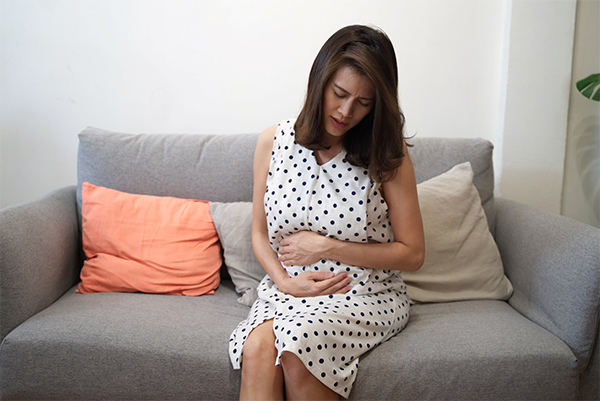
Sharp belly pain or spotting that lasts over six hours means you need urgent care. Call your doctor right away.
While light streaks early on are rarely a cause for panic, certain symptoms always require a visit to your obstetrician. You should always take bleeding during pregnancy seriously. Most cases of light spotting still turn out to be manageable, but it’s always safest to check with your OB-GYN.
Dr. Guevara also stresses that the timing of bleeding matters. While light spotting can happen during early pregnancy, bleeding during the second trimester isn’t considered typical and needs immediate medical evaluation because it may affect both you and your growing baby.
In the third trimester, bleeding may sometimes signal the start of labor if your pregnancy is already full term. Contact your OB-GYN right away for proper assessment. Knowing exactly which physical symptoms to watch out for helps you react quickly and get the right medical care.
1. Spotting accompanied by sharp lower abdominal pain
If you feel severe pain with your spotting, see your doctor immediately. Dr. Guevara explains that this can sometimes point to an ectopic pregnancy, where the fertilized egg implants outside your uterus.
"This is dangerous because it can rupture and cause bleeding inside the abdomen, thereby causing loss of blood and irritation of the other organs," she warns. Seeking medical care right away allows your doctor to determine what’s happening through a transvaginal ultrasound.
2. Bleeding that requires you to use a sanitary pad
If your spots increase to a heavy flow, consider it a warning sign. "A very worrisome kind of spotting is bleeding, which can persist and can increase in amount. This usually can pertain to a miscarriage," Dr. Guevara states.
She adds that heavy flow can also happen due to a subchorionic hemorrhage, where blood gathers alongside the fetal membrane. Only your OB-GYN can determine the right treatment and monitoring plan. Understanding these causes of bleeding in pregnancy shows exactly why an urgent clinic visit is necessary.
3. Any type of spotting that lasts for more than six hours
You should report all kinds of spotting to your OB-GYN, no matter your trimester. Dr. Guevara stresses a very specific rule: if any spotting lasts for more than six hours, especially with cramps or an increasing flow, you should call your doctor or head to the nearest emergency room immediately. Prompt medical evaluation helps rule out serious complications and protect both you and your baby.
Your First Steps if You Notice a Change in Your Discharge

Rest in bed and avoid lifting heavy objects if you notice unusual spotting, and contact your doctor right away.
If you suddenly notice a change in your daily discharge, Dr. Guevara recommends following these steps to manage the situation:
- Note the exact color and amount of your discharge immediately.
- Contact your OB-GYN directly to report your symptoms and ask for instructions.
- Inform your partner or guardian right away so they can support you.
- Place yourself on complete bed rest if you’re waiting for your doctor to reply.
- Stop any kind of bending or straining activity around the house.
- Don’t carry any heavy objects, including your older children.
If your discharge is clearly heavy and persistent, get evaluated immediately at your doctor’s clinic or the nearest emergency room.
Protecting Your Peace of Mind During Pregnancy
Doctors often look at your pregnancy spotting color alongside flow, timing, and other symptoms to check if your body is progressing safely. Logging these details on your phone or in a notebook can help you monitor changes and give your OB-GYN clearer information. If you feel unsure about any spotting or bleeding, don’t hesitate to seek medical advice. Your health and your baby's safety always come first.
Chatting with other parents who have gone through the same thing can also make a huge difference. Head on over to the ParenTeam Moms and Dads Facebook group to swap stories and share your own experiences in understanding pregnancy spotting color changes.
About Dr. Roma Ramones Guevara
Roma Ramones Guevara, MD, FPOGS, is a board-certified Obstetrician and Gynecologist with a deep commitment to maternal health and wellness. Dr. Guevara currently serves as an active consultant at La Consolacion University General Hospital and Dr. Yanga’s Hospital, while also maintaining a thriving private practice across North Caloocan and key areas in Bulacan, including Plaridel, Bocaue, Marilao, Malolos, and Calumpit. With her extensive clinical experience and compassionate approach, she provides high-quality care to Filipina moms, ensuring they feel supported and informed throughout their pregnancy journey.
Reference
Cleveland Clinic. "Bleeding During Pregnancy." Last modified August 27, 2024. Accessed April 29, 2026. https://my.clevelandclinic.org/health/symptoms/22044-bleeding-during-pregnancy
HSE. "Spotting during early pregnancy." Last modified August 5, 2024. Accessed April 29, 2026. https://www2.hse.ie/conditions/spotting/
Mayo Clinic. "Is implantation bleeding common in early pregnancy?" May 10, 2025. Accessed April 29, 2026. https://www.mayoclinic.org/healthy-lifestyle/pregnancy-week-by-week/expert-answers/implantation-bleeding/faq-20058257
Tommy’s. "Bleeding in pregnancy." n.d. Accessed April 29, 2026. https://www.tommys.org/pregnancy-information/pregnancy-symptom-checker/bleeding-pregnancy
Related articles

The Complete Birth Plan Guide for Filipino Moms: An Ob-Gyn Weighs In
Your birth plan is your voice in the delivery room. Here’s how to build one with real ob-gyn advice and two moms’ true stories.
11 mins to read

28 Weeks Pregnant: Baby Development, Symptoms, and Tips for Mommies
Your guide to being 28 weeks pregnant is here! Learn about key baby development milestones, how to manage new symptoms, and what you can do to stay comfortable.
6 mins to read

The Stages of Pregnancy: What to Expect for You and Baby
Get to know the stages of pregnancy! Learn about each trimester, track your baby's growth, and embrace your body’s changes.
5 mins to read

How to Track Ovulation Symptoms If You Have Irregular Periods
Tracking ovulation symptoms is key when your cycle changes. Learn how to read your body’s signs and spot your fertile window even with irregular periods.
10 mins to read

Ginger Tea in Pregnancy: Is It Safe for Morning Sickness?
Ginger tea in pregnancy can help ease morning sickness, but safe doesn’t mean unlimited. Here’s what your ob-gyn wants you to know about salabat and dosage.
7 mins to read

Does Milk Help You Sleep? How a Glass Before Bedtime Helps Kids Unwind
Does milk help you sleep? A pediatric nutrition specialist breaks down what’s true, what’s myth, and how bedtime milk fits your child’s routine.
6 mins to read

A Doctor Explains Baby Poop Color: What’s Typical and What’s Not
Baby poop color can change often, from mustard yellow to green to brown. Get a pediatrician’s take on every shade, and know exactly when to call your doctor.
10 mins to read

A Doctor Explains Cramps During Pregnancy and Other Discomforts
Experiencing cramps during pregnancy? A doctor explains what causes it, how to ease it, and when it’s worth a call to your OB to help bring you peace of mind.
7 mins to read

How a Pregnancy App Can Help You Track Your Baby’s Development
A pregnancy app can help you see how your baby grows each week. It’s a simple way to feel confident and ready for every new change.
7 mins to read

Your Complete Guide to the Types of Milk in the Grocery Aisle
Confused by the types of milk lining the grocery shelf? Here’s a clear way to compare full cream, fresh, fortified, and plant-based options for your family.
7 mins to read

Best Milk for Pregnant Women: What Nutrients to Look For
Not all milk for pregnant women is the same. Know the six nutrients that actually matter—and what to look for in nutrition labels for the best buy.
9 mins to read

A Derma’s Guide to Pregnancy Skin Care: What’s Safe and What to Avoid
Building a safe pregnancy skin care routine starts with checking the label. Discover the best ingredients for your skin and the chemicals you need to avoid right now.
8 mins to read

Early Pregnancy Pain Areas: A Dad’s Guide to Comforting His Partner
Learn how to help your partner manage early pregnancy pain areas. Small comforts like checking in, prepping light meals, and doing her chores make a huge difference.
6 mins to read

How to Deal with Pregnancy Hormones and Mood Swings
Pregnancy hormones can intensify your emotions. Learn simple ways you and your partner can handle those mood swings and get the support you need.
8 mins to read

Doctor-Approved Ways to Ease Acid Reflux in Pregnancy
Dealing with acid reflux in pregnancy is uncomfortable. Discover simple food tweaks, better sleep habits, and other doctor-approved tips to ease that sour burn today.
5 mins to read

Updated! 5 PhilHealth Benefits for You and Baby
Your PhilHealth benefits cover more than just delivery day. Here's everything you can claim under the 2026 expanded maternity benefits.
8 mins to read

5 Ways to Manage a Pregnancy Rash in the Hot Months
Treat a pregnancy rash by adjusting your daily hygiene habits. Discover how cool midday baths, gentle soaps, and loose clothing can soothe your skin now.
6 mins to read

1 Month Pregnant? A Guide to Symptoms, Baby Development, and Nutrition
Understand exactly what happens when you're 1 month pregnant! Explore common symptoms, how your baby starts growing, and vital nutrition tips for this crucial stage.
6 mins to read

Pregnancy Discharge? Your Guide to Staying Fresh and Comfortable
An increase in pregnancy discharge means your body is protecting your baby, but the extra moisture may feel uncomfortable. Learn how to stay fresh with simple habits.
5 mins to read


