


Discovering you’re pregnant is exciting, but it also brings conflicting feelings when you're part of a blended family—one where you and your partner are raising children from previous relationships together. You may worry about how your stepkids will react or if the family dynamic will change.
Going through this transition takes patience, open communication, and a few practical strategies. This guide can help prepare your family for a smooth adjustment with insights from parents in the ParenTeam Moms and Dads Facebook group.
1. Make Your Stepkids Feel Like Part of the Journey
When you tell your stepchildren about your pregnancy, make sure they feel included.
Share the news as a family event.
According to the American Academy of Pediatrics (AAP), it’s crucial to tell your preschooler or older kids about the pregnancy before they hear it from others. In a blended family, this is especially important to ensure your stepchildren feel like they’re part of the core family unit.
In a post shared on the ParenTeam FB group, Mommy Jessica advises telling your stepkids "na big ate o kuya na sila. Usually proud sila dun pag nararamdaman nilang trusted sila."
Lice, another mom from the ParenTeam FB group, encouraged: "Maiintindihan naman nila yan" as long as you explain it carefully. Plan to tell the kids together with your partner to show a united front.
Provide regular updates.
Involvement shouldn't stop at the announcement. Bring your stepchildren along to an ultrasound appointment if possible, or let them see the sonogram photos.
If you have a stepchild who’s a toddler, an ultrasound might be confusing. Instead, the AAP suggests looking at picture books about new babies to familiarize them with words like "brother," "sister," and "new baby."
Coordinate across households.
If your stepchildren move between two homes, keep your messaging consistent with the other parent. Kids adjust more smoothly when the adults in their lives share clear, aligned explanations about the pregnancy and what might change.
Even simply agreeing on when to share the news helps reduce confusion and reassures your stepchildren that they’re supported in both households.
2. Give Your Stepchild a Meaningful Role

Encouraging small acts of care helps them feel useful and builds their confidence as a capable big brother or sister.
Give them small tasks, like choosing baby clothes or helping with the baby name. The AAP found that involving young children in these preparations helps reduce jealousy. Mommy Jessica agrees, "Pag may involvement sila, mas konti ang selos."
You can also include your stepkids in nursery planning. Ask them, "Do you think the baby would like the blue blanket or the yellow one?" or "Where should we put the crib?"
If you plan to reuse your stepchildren’s old items, let them play with them first before getting them ready for the new baby. This helps them feel generous rather than feel like their things are being taken away.
3. Prioritize One-on-One Time
Perhaps the most critical piece of advice from mommy Jessica is to "make sure may moments pa rin kayo individually."
Maintain your rituals.
If you have a Saturday night movie tradition or a Sunday morning walk, try your best to keep those bonding moments sacred. This consistency offers a safety net and reassures them that "hindi nagbabago ang love,"shares mommy Jessica.
Build bridges through shared interests.
Pregnancy is a time of major change, and the AAP notes that children often test boundaries or become distant from stepparents during family transitions. If you notice your stepchild pulling away, try not to take it personally. Instead, focus on building bridges. Find a shared interest that you can do together, such as a video game, a sport, or a craft.
Strengthening your connection now helps them feel secure before the baby arrives. A 2022 systematic review in the Journal of Family Nursing found that a high-quality relationship with a stepparent is strongly linked to fewer behavioral problems and better mental health in children.
Watch for attention-seeking behaviors.
You might notice regressive behaviors, like a potty-trained stepchild having accidents or demanding a bottle. According to the Child Mind Institute, this is a completely typical reaction, even for well-prepared kids.
This is especially common in school-aged children, who develop a strong sense of fairness. They might not fully grasp why the baby gets different treatment, leading to feelings of inequality—a feeling that can be amplified in a blended family. These attention-seeking actions aren't signs of a "bad kid"; they're signs of a child asking, "Do you still see me?"
4. Validate Your Stepchild’s Feelings
It's natural to want everyone to be happy, but you have to make space for the big feelings, too.
Acknowledge jealousy.
The AAP notes that anger and jealousy can also stem from changes in personal space, a major issue for stepsiblings. If the new baby means giving up a room or sharing space, your stepchild might feel displaced. So, ensure they have their own special toys or possessions that stay theirs and don't have to be shared with the baby.
Be prepared for mixed emotions.
Your stepchildren might also feel angry, anxious, or resentful for many reasons. For instance, they might feel loyal to their biological parent and worry that they won't belong in the same way as the new baby, who is biologically related to both of you.
If they act out or become distant, avoid scolding them. "Sabihin mo na normal ang mixed emotions at andyan ka lang,” shares mommy Jessica.
So, regularly check in with your child to help them understand that your love for all of them is equal, says mommy Lice.
5. Emphasize Family Unity
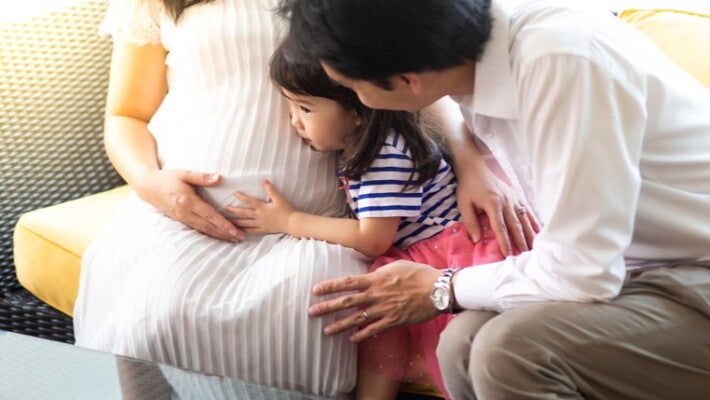
Let your stepchild know that they’re still a priority, and that love grows instead of lessens with the new baby.
As mommy Jessica shared, the goal is to "emphasize na family kayo."
- Setting expectations: Explain that the baby will need a lot of help, but even so, your stepkids are just as important to the family.
- Multiplying love: Use the candle analogy to show that sharing love doesn't shrink their spot in your heart; it just makes the whole room brighter.
When to Seek Extra Help
The American Psychological Association (APA) says that even in the best situations, it can take two to four years for a stepfamily to fully adjust to living together.
If you find that your stepchild is withdrawing significantly, acting out aggressively, or seems persistently sad despite your best efforts, it might be time to consider family counseling. The APA notes that seeing a psychologist can help this process go more smoothly, providing a safe space for everyone to express their feelings.
You’ve Got This
Preparing your blended family for a new baby takes time and effort. There may be bumps on the road, but with open communication, patience, and a lot of love, everyone will settle into their new roles. You're building a bigger, loving family, and that is a beautiful thing.
Welcoming a new baby into a blended family? Ask questions or share your tips with other parents on the ParentTeam Moms and Dads Facebook group.
References
American Academy of Pediatrics. "Becoming a Stepfamily." HealthyChildren.org. Last updated November 21, 2015. Accessed November 24, 2025. https://www.healthychildren.org/English/family-life/family-dynamics/types-of-families/Pages/Becoming-a-Stepfamily.aspx
Cleveland Clinic. "Baby on the Way? Here’s How To Prepare Siblings for Their Arrival." Health Essentials. January 25, 2024. Accessed November 24, 2025. https://health.clevelandclinic.org/how-to-prepare-toddler-for-new-baby
Family Lives. "New Baby in a Stepfamily." Last updated February 2025. Accessed November 24, 2025. https://www.familylives.org.uk/advice/your-family/stepfamilies/new-baby-in-a-stepfamily
Marriage.com. "How to Prep Your Children for a Pregnancy With a New Partner." Last updated June 6, 2023. Accessed November 24, 2025. https://www.marriage.com/advice/parenting/prep-your-children-for-a-pregnancy-with-a-new-partner/
Pregnancy, Birth and Baby. "Blended Families and Step-Parents." Last reviewed May 2023. Accessed November 24, 2025. https://www.pregnancybirthbaby.org.au/blended-families
Related articles

Do You Need a Pacifier for Your Baby? What to Know Before Deciding
Here’s what a pediatrician wants you to know about using a pacifier.
9 mins to read

Baby Toothpaste Guide: What to Use from First Tooth to Toddler Years
Baby toothpaste matters more than you’d think. Know how to pick the right one, use the right amount, and the right time to start, from that very first tooth.
7 mins to read

A Doctor Explains How to Use a Nasal Aspirator on Your Baby
A nasal aspirator can help your congested baby breathe easier, sleep better, and feed without a fight. Here’s how to use one safely, according to a pediatrician.
8 mins to read

Newborn Essentials: A Real-Parent Guide for the First 90 Days
Overwhelmed by baby shopping? Check out this no-hype guide for Filipino parents that break down the true newborn essentials—plus which items to skip or splurge on.
7 mins to read

Bakit Nagugulat si Baby? A Doctor Explains the Moro Reflex in Newborns
The Moro reflex makes your baby suddenly throw their arms out. Learn what triggers this typical infant reaction and discover simple ways to soothe your startled newborn.
6 mins to read

Bringing Your Premature Baby Home: A Doctor’s Practical Care Guide
Your premature baby needs special care at home. Discover how to create a safe space, stick to feeding plans, and manage your emotions with this guide.
9 mins to read

Bakit Umuungol Si Baby? Understanding Newborn Grunting Noises
Hearing newborn grunting can worry any parent. Find out why your little one makes these noises and learn exactly when you should call your pediatrician.
5 mins to read

5 Key Baby Milestones and Health Terms to Know (Plus, a Fun Game!)
Understanding baby milestones gives you peace of mind as your little one grows. Explore five key health and development terms, and check your knowledge with a fun, stress-free game at the end!
5 mins to read

9 Ways to Turn Baby Talk into Your Little One's First Words
Excited to hear your baby talk? Learn tried and tested strategies to get them speaking their first words.
5 mins to read

First-Time Parents, 8 Ways to Make the Christmas Season Extra Special
Make your first Christmas season as parents unforgettable. Here are simple tips for creating cozy new traditions and making memories that will last a lifetime.
6 mins to read

A Ninang and Ninong's Guide to Gifting Educational Toys
Looking for great educational toys? Find the perfect present for your inaanak, from sensory items for toddlers to STEM kits for big kids.
6 mins to read

Have Your Camera Ready! A List of Your 1-Year-Old Baby's Milestones
Your 1-year-old baby may start to stand up on their own and take their first steps! Check out all the developmental milestones to expect in this guide.
6 mins to read

9 Free Family Bonding Moments Your Kids Will Treasure Forever
Discover zero-cost family bonding moments you can do at home. From forts to mini cook-offs, these ideas will create memories your kids will carry for life.
7 mins to read

Not Just Photos! 8 Meaningful Baby Monthly Milestone Ideas
These baby monthly milestone ideas capture every adorable phase and make those memories stick for good.
6 mins to read

Traveling with a Baby in the Philippines: Packing, Safety, and Prep Guide
Traveling with a baby doesn’t have to feel overwhelming. Get a packing checklist plus car, ferry, and flight prep made for Filipino families.
8 mins to read

Iba ang Pambata: Why Age-Appropriate Milk Matters
You wouldn’t let your youngest child wear ate or kuya’s shoes—so why give them milk that isn’t made for their age? Milk is not one-size-fits-all.
5 mins to read

Wais Pag Sakto sa Edad: Why Age-Appropriate Milk Matters
Milk comes in many forms, but not all milk is made equal. Learn why kids need age-appropriate nutrition during their most critical years of growth.
6 mins to read

15 Filipino Parenting Myths: What to Keep or Let Go, According to Stage
Cravings and pwera usog? Filipino myths are part and parcel of parenting. Here’s what’s sentimental, what’s outdated, and what modern medicine actually says.
14 mins to read

PhilHealth Contribution for Self-Employed Parents: Requirements and Rates
How much is the PhilHealth contribution for self-employed parents? It depends on your declared income. Learn the rates, the requirements, and how to pay it correctly.
4 mins to read


