


The end of your maternity (or paternity) leave is approaching, and you feel a heavy knot in your stomach. If you find yourself constantly checking on your baby or feeling guilty about leaving, you might be dealing with separation anxiety.
Parental separation anxiety often shows up as excessive worry or an inability to concentrate when you’re away from your baby. For parents returning to work, it can feel like a deep, uncomfortable sadness as if you’re missing a piece of yourself. It’s a typical struggle, but understanding these feelings helps you prepare for the changes ahead.
Recognizing Your Anxiety
Aside from feeling a deep ache or emptiness, separation anxiety can also create intrusive thoughts that make it hard for you to focus on anything else. These feelings aren’t limited to moms—many dads and non-birthing parents experience the same anxiety when going back to work.
The anxiety is driven by your protective instincts and can trigger irrational worries, such as:
• Will yaya or lola know how to soothe the baby like I do?
• Will the baby cry until they throw up?
• Will my baby forget who I am?
5 Ways to Cope When You Return to Work
As a parent, you’ll always worry a little bit. The goal isn’t to turn off your feelings, but to manage the anxiety so you can function at work and be present when you’re at home.
1. Acknowledge and validate your guilt.
First, stop beating yourself up for feeling sad. Leaving your child with a caregiver does not make you a failure.
Allow yourself to grieve the end of your leave. It’s okay to cry in the shower or feel weird sitting at your work desk. UNICEF Parenting recommends acknowledging these feelings rather than fighting them.
Remind yourself why you’re working. Whether it’s to provide a better future for your family or to fulfill your own career dreams, your reasons are valid.
2. Build trust with your caregivers.
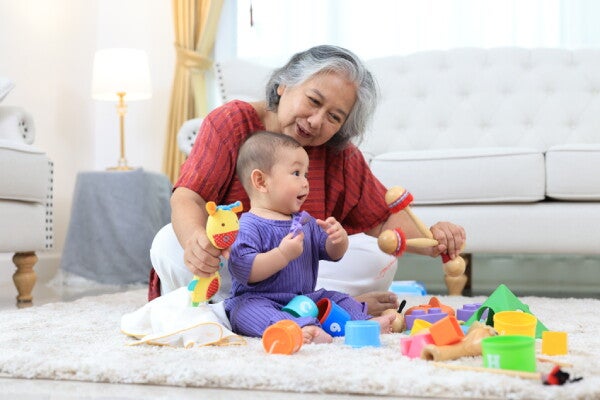
Building a strong relationship with your child's caregiver, whether it is a lola or a yaya, gives you the peace of mind to focus on work.
Your anxiety can also stem from the fear that no one can take care of your baby as well as you can. While no one can replace you, a trusted caregiver can still provide excellent care.
Whether it’s a yaya or your child’s lola (grandmother), spend a few days doing dry runs and "shadowing" them before you go back to work. Watch them feed and play with your baby. Seeing your baby smile at them will do wonders for your peace of mind.
Find helpful tips in this guide on what to look for in a babysitter to help put your mind at ease. When you trust your caregiver, you carry less worry to the office.
3. Practice the clean exit.
One of the hardest things to witness is your baby crying as you walk out the door. The American Academy of Pediatrics (AAP) recommends establishing a short, consistent ritual to ease the transition. Give a kiss, say "I’ll be back," and make a quick exit.
Don't hesitate or run back, as this can show your baby that there’s a reason to be afraid. Avoiding a long goodbye provides clear cues that it’s time to go, which helps build child independence. Finally, never sneak out when they aren't looking—disappearing breaks trust and can increase anxiety.
4. Check in without spiraling.
Thanks to technology, you can see your baby anytime via video calls or smart cameras. But be careful. Constant surveillance may end up feeding your anxiety rather than relieving it.
If you spend your day refreshing the camera feed, you’re never fully present at work. Set boundaries for yourself. Ask your caregiver for scheduled updates or photos only at specific times (like lunch). This allows you to focus on your tasks so you can finish work on time and get home to your baby sooner.
5. Focus on quality over quantity.

It’s typical to miss your baby! Coping with separation anxiety involves managing your own guilt and focusing on quality time.
Maybe you’re afraid that being away will damage your bond or that your baby will forget you.
Rest assured, this isn't true. The landmark NICHD Study of Early Child Care found that your family environment matters much more than your child care arrangements. Specifically, the study showed that a parent's sensitivity—how loving and responsive you are—matters more than the hours spent apart. What matters most is not the hours you’re apart, but how you connect when you’re together.
When you walk through the door, put the phone away. Play, cuddle, and engage. Learn more about your 1-year-old’s milestones so you know exactly what fun activity will make them light up. Knowing that your connection is strong—even when you are apart—is the best way to quiet your anxiety.
When to Seek Help
Feeling sad about returning to work is expected. However, if your anxiety is so high that you can’t concentrate, you’re having panic attacks, or you feel unable to function, it might be more than just standard separation anxiety.
If your worry feels consuming, it could be a sign of postpartum anxiety, which falls under the category of Perinatal Mood and Anxiety Disorders (PMADs). If you’re struggling, talk to your doctor. They can help you with grounding exercises to do at home to start.
When it comes to dealing with separation anxiety, the first week can be the hardest. The anticipation is often worse than the reality. Eventually, you’ll find a rhythm, your baby will adjust, and you’ll realize that your bond is strong enough to handle the distance. You can check out these strategies for working moms to help you get started on the right foot. You’ve got this!
You don't have to do this alone. Join the ParenTeam Moms and Dads Facebook group to find your community, swap back-to-work tips, and get the support you need when you have separation anxiety.
References
Braun, Amy. "9 Tips to Cope with Postpartum Separation Anxiety." Mental Health Match. n.d. Accessed January 20, 2026. https://mentalhealthmatch.com/articles/postpartum-separation-anxiety
Cleveland Clinic. "Separation Anxiety in Babies." Last reviewed August 28, 2024. Accessed January 20, 2026. https://my.clevelandclinic.org/health/articles/separation-anxiety-in-babies
HelpGuide.org. "Separation Anxiety and Separation Anxiety Disorder." Last updated August 21, 2024. Accessed January 20, 2026. https://www.helpguide.org/family/parenting/separation-anxiety-and-separation-anxiety-disorder
Knapp, Brendan. "Are You Overusing Baby Monitors? Experts Share Why Less Is More." Parents. Updated November 17, 2025. Accessed January 20, 2026. https://www.parents.com/toddlers-preschoolers/safety/i-can-t-stop-using-the-baby-monitor-to-check-up-on-my-toddlers-here-s-what-experts-say/
Matrescence Therapy. "Postpartum Separation Anxiety: How to Cope." n.d. Accessed January 20, 2026. https://matrescence-therapy.com/postpartum-separation-anxiety/
Milkie, Melissa A., Kei M. Nomaguchi, and Kathleen E. Denny. "Does the Amount of Time Mothers Spend With Children or Adolescents Matter?" Journal of Marriage and Family 77, no. 2 (2015): 355–372. Accessed January 20, 2026. https://doi.org/10.1111/jomf.12170
Olsson, Regan. "Do I Have Parental Separation Anxiety?" Banner Health. October 20, 2021. Accessed January 20, 2026. https://www.bannerhealth.com/healthcareblog/teach-me/do-i-have-parental-separation-anxiety
UNICEF. "What is anxiety? Ways to help your child cope." UNICEF Parenting. n.d. Accessed January 20, 2026. https://www.unicef.org/parenting/mental-health/what-is-anxiety
Related articles

How to Manage Postpartum Hair Loss: Expert Tips from a Dermatologist
Don't panic over postpartum hair loss! Learn why your hair is shedding and how to care for your delicate strands with these expert dermatologist tips.
7 mins to read

What Is Stunted Growth? A Pediatrician’s Guide for Parents
Worried people think your child is bansot or pandak, Mommy? Behind that teasing is a real concern: stunted growth. Here’s how pediatricians check for it.
4 mins to read

PhilHealth Contribution for Self-Employed Parents: Requirements and Rates
How much is the PhilHealth contribution for self-employed parents? It depends on your declared income. Learn the rates, the requirements, and how to pay it correctly.
4 mins to read

Newborn Essentials: A Real-Parent Guide for the First 90 Days
Overwhelmed by baby shopping? Check out this no-hype guide for Filipino parents that break down the true newborn essentials—plus which items to skip or splurge on.
7 mins to read

Baptism and Christening Costs in the Philippines: What to Expect
Baptism and christening costs in the Philippines add up fast. See where the money goes, and where you can spend less without losing the meaning.
8 mins to read

How to Claim 14 Days of Paternity Leave: A Dad’s HR Filing Guide
Paternity leave gives you seven paid days to support your wife and bond with your baby. Learn how to qualify, file with HR, and claim up to 14 days total.
7 mins to read

A Parent’s Guide to Caring for Cradle Cap in Babies
Cradle cap in babies is common, harmless, and easy to manage with the right daily routine. Here’s what actually works, according to a pediatrician.
6 mins to read

15 Time-Saving Mother's Day Gift Ideas New and Toddler Moms
These useful gifts for new moms will make them feel supported, loved, and more like themselves again.
6 mins to read

How to Spot and Manage Your Baby’s Eczema at Home
Spotting baby eczema early helps you treat it fast. Learn to tell it apart from typical dry skin and explore easy routines to soothe their skin.
6 mins to read

6 DIY Montessori Toys You Can Make for Every Development Stage
Montessori toys built from household scraps? You can do it, too, Mom! Discover six DIY ideas that sharpen your child’s skills without the hefty price tag.
9 mins to read

Hooked on K-Dramas? 9 Korean Boy Names Inspired by Beloved Characters
These Korean boy names from popular K-dramas are perfect for your little one. Find a name with a beautiful meaning and strong character traits today.
9 mins to read

How Much Do You Need to Save for Your Child’s College Tuition Fees
It's never too early to think and plan for college tuition fees, which increase yearly. Here's how much they cost now and how to calculate future costs.
5 mins to read

Bakit Nagugulat si Baby? A Doctor Explains the Moro Reflex in Newborns
The Moro reflex makes your baby suddenly throw their arms out. Learn what triggers this typical infant reaction and discover simple ways to soothe your startled newborn.
6 mins to read

How to Take a Clear Baby Picture for Visas and Passports
Getting a proper baby picture is tricky. Here's how to set up your background, time the session, and finally nail that open-eyed shot at home.
8 mins to read

How to Choose Unique Girl Names That Are Meaningful and Special
Looking for unique girl names? Skip the usual top-10 lists and use these creative strategies to choose a meaningful, one-of-a-kind name for your daughter.
7 mins to read

10 Travel Essentials You’ll Actually Need When Flying with a Baby or Toddler
Turn your carry-on into the ultimate Mary Poppins bag. Bringing the right travel essentials can make family trips much more rewarding for everyone.
5 mins to read

Bringing Your Premature Baby Home: A Doctor’s Practical Care Guide
Your premature baby needs special care at home. Discover how to create a safe space, stick to feeding plans, and manage your emotions with this guide.
9 mins to read

15 Strong Baby Boy Names with Meaning for Your Little One
Explore baby boy names with meaning that fit your family’s style. Discover Tagalog names, Spanish-Christian picks, and modern choices that are meaningful and timeless.
6 mins to read

Bakit Umuungol Si Baby? Understanding Newborn Grunting Noises
Hearing newborn grunting can worry any parent. Find out why your little one makes these noises and learn exactly when you should call your pediatrician.
5 mins to read


