


The Joy of Parenting: 5 Tips for Spending Quality Time with Your Baby
Being a parent is hard work. Between cleaning the house, cooking meals, and managing your baby’s daily needs, it’s easy to feel like a robot just going through the motions. When you catch yourself thinking, pagod na si Mommy (or Daddy!), spending quality time with your little one might feel like just another impossible task on your to-do list.
But finding joy in time spent with your baby doesn't mean waiting for a clear schedule or planning a big family trip. Real happiness hides in the everyday mess—like your baby’s sudden giggle during a diaper change or a quiet cuddle after a bath.
Experiencing these moments is much easier when you realize you don’t need to have it all together. Whether you have a newborn, a wiggly 6-month-old, or a curious toddler just learning to walk, these small shifts can help you enjoy your time together more.
1. Choose Your Baby Over a Perfect House
You might feel pressured to keep your house spotless just in case a relative or kumare drops by. But worrying about what others think only drains your energy. A messy home simply means you have a busy, growing family.
It’s okay to leave the dirty dishes in the sink for another ten minutes so you can sit on the play mat and make your baby smile. You might pause mid-laundry to laugh during tummy time or delay tidying up to dance together in the living room. Choosing your little one over perfection strengthens your emotional bond.
2. Practice the 15-Minute Phone-Free Rule
Screens can easily distract you from the present moment. Try putting your phone in another room for just 15 minutes each day to give your baby your full, undivided attention.
The American Academy of Pediatrics (AAP) warns parents about technoference, which happens when looking at your screen makes you miss your baby's subtle signals, like reaching out. When you put the phone down, you can easily catch these non-verbal cues. If they babble or wave—a part of healthy child development—you can smile and interact right away.
When you respond consistently, you also support early language development, because babies learn to communicate through back-and-forth interaction. Setting your devices aside helps ensure you spend uninterrupted quality time together.
3. Share a Common Focus During Playtime
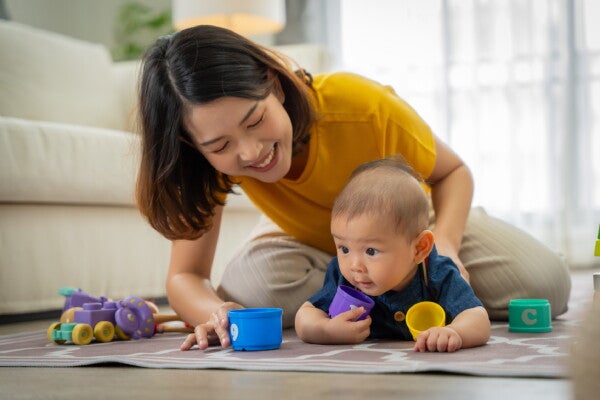
Get on your baby’s level! Focusing on the same toy is a key part of communication and helps build social skills.
The AAP notes that 80% of a child's brain development happens by the time they turn three years old, making simple, face-to-face play vital for helping your baby's mind grow.
Instead of just watching them on the mat, get down on their level and share a common focus. Look at the same colorful toy together, or point at the pictures in a simple board book. You can also do this during bath time by naming body parts as you wash them.
When you focus on what your baby is looking at, you show genuine interest in their world, while helping build social skills. A shared activity—like peek-a-boo, blowing kisses, or cheering them on as they play—also boosts their confidence and creates precious lambingan time.
4. Cuddle Your Baby When They’re Fussy
When the late afternoon hits and your baby starts getting fussy, words aren't always enough to offer comfort. However, cuddling them can work wonders.
A warm hug can calm your baby, ease your stress, and turn a chore into a sweet moment of connection. Over time, these comforting moments teach your baby how to regulate big feelings and build a secure attachment with you.
5. End the Day with Bedtime Lullabies
Instead of rushing through the bedtime routine so you can finally rest, treat those last few minutes before sleep as bonding time. Even simple routines like changing into pajamas or dimming the lights can become gentle moments of eye contact, soft touches, and reassurance.
Quiet nighttime lullabies signal to your baby's brain that the day is done. Hum your favorite cradlesong or softly talk about your day together. The quiet, repetitive sound of your voice is comforting, helping them drift off to sleep.
Fill Your Own Cup to Fuel Quality Time

Taking a short break to recharge allows you to give more meaningful attention when you spend quality time with your baby.
To fully enjoy spending quality time with your little one, you also need to take care of yourself. Trying to do everything entirely on your own quickly leads to parental burnout. It’s okay to ask Lolo, Lola, your partner, or a trusted yaya to watch your baby for a few minutes or even help out with chores. Getting help gives you the space to breathe.
You can also take frequent micro-breaks. The American Psychological Association (APA) notes that stepping away for just a few minutes restores your mental energy and prevents long-term exhaustion. Take three slow, deep breaths in the shower, or try to drink your morning coffee while it’s still hot.
When you take these short breaks, you return to your baby with more energy and a much happier attitude.
Discover the Real Joys of Parenthood
Parenting takes energy, but building a strong bond doesn't require a picture-perfect schedule. Whether you're putting your phone away to play peek-a-boo or swaying your baby to gentle music to calm fussiness, being present in the moment helps you experience the joys of parenthood.
By turning your normal routines into moments of connection, you guarantee that every single day is filled with meaningful quality time.
What’s your favorite way to spend quality time with your baby when the day feels extra busy? Connect with other parents on the ParenTeam Moms and Dads Facebook group and tell the community!
References
Cameron, Katie. "What Is the Baby Witching Hour?" WebMD. Last modified July 9, 2025. Accessed February 16, 2026. https://www.webmd.com/baby/what-is-the-baby-witching-hour
Dolev-Cohen, M., and T. Ricon. "The Associations Between Parents’ Technoference, Their Problematic Use of Digital Technology, and the Psychological State of Their Children." Psychology of Popular Media 13, no. 2 (2024): 171–179. Accessed February 16, 2026. https://doi.org/10.1037/ppm0000444
McDaniel, B. T., and J. S. Radesky. "Technoference: Parent Distraction With Technology and Associations With Child Behavior Problems." Child Development 89, no. 1 (2018): 100–109. Accessed February 16, 2026. https://doi.org/10.1111/cdev.12822
Robinson, Holly. "Afternoon Angst: Getting Through Your Baby's 'Witching' Hour." Parents. Last modified December 4, 2023. Accessed February 16, 2026. https://www.parents.com/baby/care/crying/afternoon-angst/
Related articles

15 Filipino Parenting Myths: What to Keep or Let Go, According to Stage
Cravings and pwera usog? Filipino myths are part and parcel of parenting. Here’s what’s sentimental, what’s outdated, and what modern medicine actually says.
14 mins to read

Baptism and Christening Costs in the Philippines: What to Expect
Baptism and christening costs in the Philippines add up fast. See where the money goes, and where you can spend less without losing the meaning.
8 mins to read

15 Time-Saving Mother's Day Gift Ideas New and Toddler Moms
These useful gifts for new moms will make them feel supported, loved, and more like themselves again.
6 mins to read

6 DIY Montessori Toys You Can Make for Every Development Stage
Montessori toys built from household scraps? You can do it, too, Mom! Discover six DIY ideas that sharpen your child’s skills without the hefty price tag.
9 mins to read

Hooked on K-Dramas? 9 Korean Boy Names Inspired by Beloved Characters
These Korean boy names from popular K-dramas are perfect for your little one. Find a name with a beautiful meaning and strong character traits today.
9 mins to read

How to Choose Unique Girl Names That Are Meaningful and Special
Looking for unique girl names? Skip the usual top-10 lists and use these creative strategies to choose a meaningful, one-of-a-kind name for your daughter.
7 mins to read

15 Strong Baby Boy Names with Meaning for Your Little One
Explore baby boy names with meaning that fit your family’s style. Discover Tagalog names, Spanish-Christian picks, and modern choices that are meaningful and timeless.
6 mins to read

15 Work-Life Balance Hacks Every Mom Needs in Her Life Right Now
Time to build your version of work-life balance! Use these tips to learn what to let go and how to reclaim time for yourself without the guilt.
6 mins to read

Christening or Baptism: When to Schedule and What to Prepare
Your baby's christening or baptism marks a beautiful milestone for your family! Here's everything you need to know to plan for this important religious ceremony.
7 mins to read

10 '90s-Themed Birthday Party Ideas for Your 1-Year-Old
This '90s birthday party guide gives you 10 themes for a fun toddler party, from cartoon vibes to sensory play.
7 mins to read

New Mom? Here’s a Self-Care Plan for Your First Month
This self-care plan helps you manage your first month as a new mom. Learn how to handle sleep, healing, and home life with your little one.
7 mins to read

When and How to Get a PSA Birth Certificate for Your Baby
Knowing how to get a PSA birth certificate and when it becomes available can save you from unnecessary trips and delays.
6 mins to read

10 Ways Working Moms Can Simplify Life After Having a Baby
The early months after maternity leave are usually the hardest for a working mom. Here are a few practical tips to make the transition smoother.
6 mins to read

How to Create a Healthy Environment at Home for Your Newborn
Building a healthy environment at home helps your newborn thrive. Discover simple, affordable ways to keep your space safe, clean, and comfortable for your little one.
6 mins to read

Trending or Timeless? 20 Common Filipino Names from PSA Records
We looked at all the available PSA top 10 lists to come up with the common Filipino names over time. And guess what? You won't see any creative spellings!
5 mins to read

Traveling with a Baby in the Philippines: Packing, Safety, and Prep Guide
Traveling with a baby doesn’t have to feel overwhelming. Get a packing checklist plus car, ferry, and flight prep made for Filipino families.
8 mins to read

Do You Need a Pacifier for Your Baby? What to Know Before Deciding
Here’s what a pediatrician wants you to know about using a pacifier.
9 mins to read

Iba ang Pambata: Why Age-Appropriate Milk Matters
You wouldn’t let your youngest child wear ate or kuya’s shoes—so why give them milk that isn’t made for their age? Milk is not one-size-fits-all.
5 mins to read

Wais Pag Sakto sa Edad: Why Age-Appropriate Milk Matters
Milk comes in many forms, but not all milk is made equal. Learn why kids need age-appropriate nutrition during their most critical years of growth.
6 mins to read


