


Are you a new mom? You’re probably feeling like a "mombie" after your first few nights at home with your newborn. Between the late-night cries and the constant diaper changes, it’s easy to feel overwhelmed. That’s why you need a self-care plan to survive this first month.
Self-care isn't about expensive spa days or luxury treats. It’s the daily practice of managing your physical and mental health so you can cope with caring for a newborn. Daily habits—resting when you can, eating well, and setting boundaries—help you show up as your best during this season of transition.
The first month is not just about caring for your baby; it’s also about giving yourself time to heal from childbirth. Here are some simple tips to help you get through those first 30 days.
1. Reset Your Expectations
The first 30 days are all about transition. You don’t need to have it all together right away. Focus on these small wins instead:
Ditch the Supermom pressure.
A 2018 study published in the Journal of the Motherhood Initiative notes that society often perpetuates the myth of the perfect mother who feels immense joy right from the start. But this cultural myth creates unrealistic expectations that only leave you feeling inadequate when things get hard.
Let go of the pressure to do it all! Your main job right now is to heal and bond with your baby. Tap your village for help. If you have none, okay lang! You can let the laundry wait for a bit.
Focus on micro-wins.
Did you manage to take a shower today? Did you drink a full glass of water? Were you able to watch one episode of your favorite show? The physical and emotional demands of the first month are huge—from caring for your newborn round-the-clock to bodily healing and hormonal shifts. So, checking off even the smallest personal task is a victory for your recovery.
Give yourself grace.
You might not always know why your baby is crying, and you’re likely to make mistakes. Be gentle with yourself; figuring out motherhood takes time. If things don’t go as planned, take a deep breath, remind yourself that you are doing a great job, and try again tomorrow.
2. Prioritize Your Rest
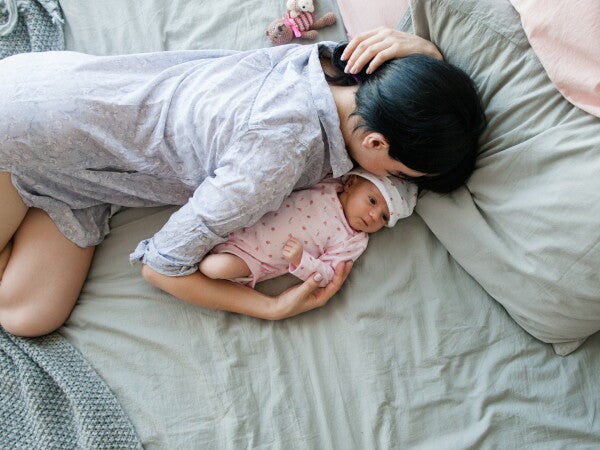
Your self-care plan includes prioritizing rest! Sleep when you can and embrace the art of doing nothing.
You just went through a major physical event, and you need time to recover.
Sleep whenever you can.
Since a newborn's sleep schedule is completely erratic during the first month, catching up on your own sleep requires a flexible approach. Don't feel guilty for napping at 10 a.m. when the baby is asleep. If that’s the best time for getting the sleep you need, take it.
Embrace doing nothing.
On the other hand, don't pressure yourself to fall into a deep sleep every time the baby naps. If you can’t fall asleep, just lying down in a quiet room helps conserve your energy. Recovery takes energy, so even quiet rest counts.
Share a room with your newborn.
Getting up every two hours is exhausting. By placing your baby’s crib or separate bed right next to yours, you avoid the physical strain of getting up in the middle of the night. The American Academy of Pediatrics (AAP) recommends sleeping in the same room but on a separate surface to keep your baby safe while still keeping them close enough to easily check on them.
3. Support Your Physical Healing
Stick to simple habits that ease body aches and support recovery.
- Wear your most comfortable clothes. Avoid tight waistbands that can cause friction but do wear a postpartum abdominal binder if your doctor recommends one. Its gentle compression eases pain and supports muscles, especially after a C-section.
- Help your body heal with a balanced diet. Eating enough protein helps repair tissues. Focus on warm, comforting meals like tinola with lots of malunggay to help you feel stronger.
- Take your vitamins. If your doctor advised you to continue taking your prenatal vitamins or any supplements, do so. This will help replenish the nutrients your body used during pregnancy.
- Stay hydrated. Keeping a big bottle of water next to you replenishes those lost fluids so you don't feel dizzy or sluggish throughout the day.
Looking for more ways to ease soreness and recover safely? Read these tips for postpartum care to help your body bounce back!
4. Create a Cozy Corner for You and Your Baby
The secret to getting through the first month is keeping things incredibly simple. Use these quick steps to make your space work for you.
Step 1: Designate a nursing station.
Pick a comfortable spot in the house where you spend the most time. Keep a basket nearby filled with easy-to-grab snacks like oatmeal cookies, roasted peanuts, or bananas—these are especially great for keeping your energy up when you’re nursing. (Learn more about milk-boosting foods in this guide for breastfeeding moms.)
Add a giant water bottle and your phone charger to the basket. Having everything within arm's reach prevents unnecessary strain while you recuperate.
Step 2: Keep essentials within reach.
Don't go looking for diapers in the middle of the night. Keep a survival kit in every room where you spend time. This kit should have diapers, wipes, and a change of clothes for the baby. This small bit of organization reduces stress and helps you maintain a calm routine.
Step 3: Assign shifts to family.
In Filipino family culture, lolas, titas, and cousins are often willing to help. Don't just let them visit; give them a job! Use teamwork to keep the household running. Ask a relative to handle the groceries or take over the cooking for the week. Being specific about what you need helps everyone.
5. Protect Your Mental Health and Emotions

Talking openly about your feelings with your partner or family is a vital part of your emotional recovery and self-care plan.
It’s not just your body that’s changing; your mind and emotions are too. Sudden mood swings are very common during the first week as your hormones shift.
Watch for the baby blues.
About two to three days after giving birth, you might start feeling anxious, upset, or find yourself crying for no clear reason.
The American College of Obstetricians and Gynecologists (ACOG) notes that these feelings are known as the baby blues. You might even question if you can handle caring for your new baby. You’re definitely not alone in feeling this way! These emotions usually come and go, naturally getting better within a few days to two weeks without any treatment.
Know the signs of PPD.
If your feelings of sadness or anxiety last longer than two weeks, or if you find it hard to bond with your baby, you might be experiencing postpartum depression (PPD). Exhaustion can make PPD harder to recognize. Consult your OB or a mental health professional to find out what you can do.
Talk to your partner.
Share how you feel daily. The study in the Journal of the Motherhood Initiative notes that emotional closeness and open communication with your partner are effective ways to alleviate both depression and anxiety. Bottling up your emotions only adds to the stress.
When to Reach Out for Extra Support
Part of a smart self-care plan is knowing when to ask for an extra hand. Whether you need medical advice or just a listening ear, you don't have to figure everything out by yourself.
If you have physical concerns like a high fever, sudden heavy bleeding, or intense pain that doesn't go away, call your doctor immediately.
For your emotional well-being, finding a support group or connecting with another new mom can be incredibly healing. Sometimes, just chatting with someone who is also awake for a 3:00 a.m. diaper change makes those long nights feel so much shorter.
You’re Doing Great, Mom!
That first month might feel like a wild ride, but you’re absolutely built for this! By following a simple self-care plan, you’re setting yourself up for a much smoother transition into motherhood. Always remember that taking care of yourself isn't selfish—it’s actually the secret to giving your baby the happiest, healthiest version of you.
Want to swap survival tips? Connect with other parents on the ParenTeam Moms and Dads Facebook group and share your own self-care plan to help other moms survive their first month!
References
American Pregnancy Association. "Baby Blues." Accessed February 19, 2026. https://americanpregnancy.org/postpartum/baby-blues/.
Cleveland Clinic. "Postpartum Depression." Last modified April 12, 2022. Accessed February 19, 2026. https://my.clevelandclinic.org/health/diseases/9312-postpartum-depression
De Chavez, Maria Delina E., and Marian Capco-Dichoso. "Prevalence of Postpartum Depression among Mothers Who Delivered in a Tertiary Hospital." Philippine Journal of Obstetrics and Gynecology. Accessed February 19, 2026. http://pjog.org/download.php?id=15
National Institute of Sleep. "Safe Sleep Environment for Baby." Accessed February 19, 2026. https://safetosleep.nichd.nih.gov/reduce-risk/safe-sleep-environment
Sari, D. P., D. N. Fajarningtiyas, M. M. P. Naibaho, A. Rizkianti, and E. F. Hutasoit. "Effectiveness of Postpartum Care to Improve Women's Health and Quality of Life in Southeast Asia: A Scoping Review Protocol." BMJ Open 15, no. 6 (2025): e095974. Accessed February 19, 2026. https://doi.org/10.1136/bmjopen-2024-095974
Related articles

15 Filipino Parenting Myths: What to Keep or Let Go, According to Stage
Cravings and pwera usog? Filipino myths are part and parcel of parenting. Here’s what’s sentimental, what’s outdated, and what modern medicine actually says.
14 mins to read

Baptism and Christening Costs in the Philippines: What to Expect
Baptism and christening costs in the Philippines add up fast. See where the money goes, and where you can spend less without losing the meaning.
8 mins to read

15 Time-Saving Mother's Day Gift Ideas New and Toddler Moms
These useful gifts for new moms will make them feel supported, loved, and more like themselves again.
6 mins to read

6 DIY Montessori Toys You Can Make for Every Development Stage
Montessori toys built from household scraps? You can do it, too, Mom! Discover six DIY ideas that sharpen your child’s skills without the hefty price tag.
9 mins to read

Hooked on K-Dramas? 9 Korean Boy Names Inspired by Beloved Characters
These Korean boy names from popular K-dramas are perfect for your little one. Find a name with a beautiful meaning and strong character traits today.
9 mins to read

How to Choose Unique Girl Names That Are Meaningful and Special
Looking for unique girl names? Skip the usual top-10 lists and use these creative strategies to choose a meaningful, one-of-a-kind name for your daughter.
7 mins to read

15 Strong Baby Boy Names with Meaning for Your Little One
Explore baby boy names with meaning that fit your family’s style. Discover Tagalog names, Spanish-Christian picks, and modern choices that are meaningful and timeless.
6 mins to read

15 Work-Life Balance Hacks Every Mom Needs in Her Life Right Now
Time to build your version of work-life balance! Use these tips to learn what to let go and how to reclaim time for yourself without the guilt.
6 mins to read

Christening or Baptism: When to Schedule and What to Prepare
Your baby's christening or baptism marks a beautiful milestone for your family! Here's everything you need to know to plan for this important religious ceremony.
7 mins to read

10 '90s-Themed Birthday Party Ideas for Your 1-Year-Old
This '90s birthday party guide gives you 10 themes for a fun toddler party, from cartoon vibes to sensory play.
7 mins to read

When and How to Get a PSA Birth Certificate for Your Baby
Knowing how to get a PSA birth certificate and when it becomes available can save you from unnecessary trips and delays.
6 mins to read

10 Ways Working Moms Can Simplify Life After Having a Baby
The early months after maternity leave are usually the hardest for a working mom. Here are a few practical tips to make the transition smoother.
6 mins to read

How to Create a Healthy Environment at Home for Your Newborn
Building a healthy environment at home helps your newborn thrive. Discover simple, affordable ways to keep your space safe, clean, and comfortable for your little one.
6 mins to read

The Joy of Parenting: 5 Tips for Spending Quality Time with Your Baby
Spending quality time with your little one doesn’t require a vacation. Discover five simple ways to pause your chores, connect deeply, and find joy every single day.
5 mins to read

Trending or Timeless? 20 Common Filipino Names from PSA Records
We looked at all the available PSA top 10 lists to come up with the common Filipino names over time. And guess what? You won't see any creative spellings!
5 mins to read

Traveling with a Baby in the Philippines: Packing, Safety, and Prep Guide
Traveling with a baby doesn’t have to feel overwhelming. Get a packing checklist plus car, ferry, and flight prep made for Filipino families.
8 mins to read

Do You Need a Pacifier for Your Baby? What to Know Before Deciding
Here’s what a pediatrician wants you to know about using a pacifier.
9 mins to read

Iba ang Pambata: Why Age-Appropriate Milk Matters
You wouldn’t let your youngest child wear ate or kuya’s shoes—so why give them milk that isn’t made for their age? Milk is not one-size-fits-all.
5 mins to read

Wais Pag Sakto sa Edad: Why Age-Appropriate Milk Matters
Milk comes in many forms, but not all milk is made equal. Learn why kids need age-appropriate nutrition during their most critical years of growth.
6 mins to read


