


3 Types of Ultrasounds in Pregnancy and When You Need Them
Curious about the different types of ultrasounds in pregnancy and which ones you’ll actually need? Your doctor will likely recommend a dating scan in your first trimester, followed by an anatomy scan and possibly others.
While your exact schedule depends on your needs, doctors typically recommend key scans to establish a baseline and monitor your baby's health. According to Dr. Leilani Go-Suva, an ob-gyn, ultrasound subspecialist, and Fellow of the Philippine Obstetrical and Gynecology Society (POGS), care is personalized rather than dictated by a strict schedule.
Here's a guide to the most common scans and why they matter, so you can feel informed and confident at every appointment.
What Is a Pregnancy Ultrasound?
A pregnancy ultrasound is also called a prenatal ultrasound or obstetric ultrasound. According to the American College of Obstetricians and Gynecologists (ACOG), it uses high-frequency sound waves to create a picture of your baby, which is called a sonogram.
ACOG identifies two main ways an ultrasound is performed:
- Transvaginal ultrasound: A slim, probe (also known as the transducer) is covered with a sheath and lubricant, and then gently placed inside the vagina for a clearer picture in early pregnancy.
- Abdominal ultrasound: A transducer with a clear gel is moved over the abdomen to create an image.
The Main Types of Ultrasounds by Trimester
Here are the most common scans you can expect, broken down by when and why they happen.
1. Early scan: Weeks 7 to 14
The first pregnancy ultrasound involves a dating and viability scan between Week 7 and Week 14. This scan establishes an estimated due date (EDD) by measuring the baby’s crown-rump length (CRL).
While scans can be done as early as 7 weeks, the ISUOG specifically recommends the window of Week 11 to 14 as the optimal time to confirm viability, establish accurate dating, and perform an early check for major structural anomalies.
"Ideally, the first time you attend to a patient, especially if she comes with nothing, you request for the baseline," explains Dr. Go-Suva. "We request our prenatal screenings like the ultrasound the first time we meet them [and] preferably on the first trimester, so that we will know the condition of the pregnancy."
What to expect: This ultrasound may be transvaginal if you’re having it done during early pregnancy (7 to 9 weeks), as it provides a much clearer picture. If you’re further along (closer to 10 to 12 weeks), your provider might use a standard abdominal ultrasound.
Optional screening: Your doctor may recommend a nuchal translucency (NT) scan It's typically done between 11 and 13 weeks to help assess your baby's risk for certain chromosomal conditions, like Down syndrome.
While available, Dr. Go-Suva clarifies the NT scan is not a standard part of every first-trimester scan. "We don’t usually report it unless there’s an incidental finding of thickened nuchal cord translucency or if the attending obstetrician requested it," she notes.
2. Anatomy scan: Weeks 18 to 22
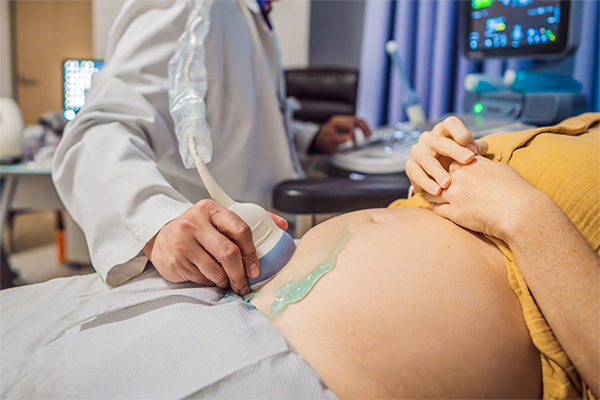
The 18 to 22-week anatomy scan is a detailed check-up. The sonographer carefully measures your baby's organs, limbs, and growth.
The ISUOG recommends performing the congenital anomaly scan between Week 18 and Week 24. While this is when most parents often find out the gender, its main purpose is a critical medical check. (Learn more about what to expect from this detailed scan in this comprehensive guide.)
Dr. Go-Suva notes that if a pregnancy is low-risk and the mom has no history of illness or exposure to hazards, this scan isn't always mandatory. However, many doctors can still request it routinely to check if any other subspecialist, like a perinatologist, is needed for antepartum care and delivery, and to counsel parents accordingly.
According to ACOG, the sonographer will perform a thorough scan to:
- Check all of the baby's major organs (brain, heart, spine, stomach, kidneys).
- Look at the facial features, limbs, counting fingers and toes.
- Check the placenta's location, the umbilical cord, and the amniotic fluid level.
- Measure the baby's growth to ensure it's on track.
It’s crucial to remember the medical nature of this appointment and not to use it for ‘gender reveal’ purposes only. As Dr. Go-Suva emphasizes, "These are indicated and targeted obstetrical scans. These are not social scans."
What to expect: This type of ultrasound in pregnancy may last for 30 to 45 minutes.
3. Biophysical Scoring (BPS): third trimester (as needed)
While not routine for all low-risk pregnancies, the ISUOG notes that a third-trimester scan can help assess fetal growth and well-being. Many doctors perform this scan routinely to ensure safety before delivery, like checking a breech position or monitoring gestational diabetes.
Dr. Go-Suva explains that a BPS is an ultrasound that measures the baby's growth and well-being. "This is in addition to fetal biometry, where we measure the head, abdomen and femur of the fetus, measure the heart rate, and assess the placenta. BPS is an ultrasound scan that includes a scoring to assess fetal breathing, movement, tone and amniotic fluid levels," Dr. Go-Suva notes, adding that this scan is essential in antenatal surveillance for the baby before birth.
What to Expect: The doctor will spend time observing your baby's behavior rather than just their anatomy. They’ll watch for specific movements (like breathing and muscle tone) to assign a wellness score, while also measuring the amniotic fluid volume and the baby's estimated weight.
Optional screening: According to ACOG, your doctor may also order a biophysical profile (BPP) if you have a high-risk pregnancy. This prenatal ultrasound combines the BPS with a specific heart rate monitor test called a Non-Stress Test (NST).
2D, 3D, and 4D: Understanding the Different Imaging Modes
The typical medical scans are 2D ultrasounds. This is the familiar flat, black-and-white, cross-section view. It is the gold standard for medical diagnoses.
However, you’ve probably seen those lifelike baby ultrasound photos, which come from different imaging modes:
- 3D Ultrasound: This ultrasound imaging technique takes multiple 2D images and stitches them together to create a 3D still picture of your baby.
- 4D Ultrasound: This is 3D in motion—it’s like a live video where you can see your baby yawn, stretch, or suck their thumb.
These are often optional "keepsake" scans offered by private clinics and aren’t a medical necessity. Doctors sometimes use 3D or 4D imaging to examine specific issues, such as a cleft lip detected on a 2D scan.
Dr. Go-Suva reminds parents that while an ultrasound is safe, it shouldn’t be abused. "We still have the ALARA principle or 'as low as reasonably achievable.'"
ALARA means ultrasound exposure should be limited only to what is medically necessary rather than used for optional or social reasons. "If there is no indication, please do not request it," she advises.
Your Ultrasound Questions, Answered

While you can't read the printout, you can ask your doctor questions! They can explain what you're seeing on the scan.
How many ultrasounds will I get?
Both the ACOG and the World Health Organization (WHO) advise that you should have at least one standard ultrasound exam during pregnancy.
While ACOG highlights the 18- to 22-week anatomy scan, the WHO specifically recommends having one scan before 24 weeks to accurately estimate gestational age and detect any abnormalities early.
How do I read my own ultrasound result?
While it's fascinating to learn how to read an ultrasound result, interpreting this ultrasound imaging takes years of training. Only your doctor or a trained sonologist (a specialist doctor) is qualified to read the scan and make a diagnosis.
But do ask your doctor questions such as:
- "What are we looking at right now?"
- "Can you point out the baby's head and feet?"
- "Is that the heartbeat we're seeing?"
Can I bring my family to my ultrasound or even film the process?
It’s tempting to bring other family members to an ultrasound but always ask your doctor first.
"Sometimes, when you politely tell them that only the patient stays or only the mother stays, na-sa-sad sila. But we have to understand there's the Data Privacy Act also," explains Dr. Go-Suva. If your doctor allows your family to stay, be respectful and don’t just film the process and upload it on social media.
Are pregnancy ultrasounds safe?
Yes. According to the ACOG, there’s currently no evidence that ultrasound is harmful to your baby. No links have been found to birth defects, childhood cancer, or developmental problems. So, doctors consider it a safe and standard part of prenatal care.
However, ACOG recommends ultrasounds be performed only for medical reasons. They advise against casual-use ultrasounds (like keepsake 3D ultrasounds) that aren't ordered by your doctor.
What to Remember About Your Pregnancy Scans
Each fetal ultrasound, from the first one that confirms your due date to the detailed anatomy scan, is an important check-in.
Understanding the different types of ultrasounds in pregnancy helps you know exactly what to expect at each appointment. While every scan has a unique job, they all share one simple goal: to support a healthy journey for you and your baby.
Got more questions about the types of ultrasounds in pregnancy? Find support and answers from a community of parents in the ParentTeam Moms and Dads Facebook group!
References
Cleveland Clinic. "Biophysical Profile." Last reviewed December 19, 2022. Accessed November 14, 2025. https://my.clevelandclinic.org/health/diagnostics/21013-biophysical-profile
Cleveland Clinic. "Ultrasound in Pregnancy." Last reviewed September 28, 2022. Accessed November 14, 2025. https://my.clevelandclinic.org/health/diagnostics/9704-ultrasound-in-pregnancy
Columbus OB/GYN. "What Is the Difference Between 2D, 3D, 4D Ultrasounds?" Accessed November 14, 2025. https://columbusobgyn.com/what-is-the-difference-2d-3d-4d-ultrasounds/
Community Diagnostic Services. "Breaking the Myths Around Ultrasound Scans." March 12, 2025. Accessed November 14, 2025. https://communitydiagnosticservices.com/f/breaking-the-myths-around-ultrasound-scans
Griffin, R. Morgan. "Biophysical Profile (BPP)." WebMD. Medically Reviewed April 18, 2025. Accessed November 14, 2025. https://www.webmd.com/baby/bpp-biophysical-profile
Jabaz, D., and S.M. Jenkins. "Sonography 2nd Trimester Assessment, Protocols, and Interpretation." In StatPearls. Treasure Island (FL): StatPearls Publishing, 2025. Updated November 12, 2023. Accessed November 14, 2025. https://www.ncbi.nlm.nih.gov/books/NBK570574/
Johns Hopkins Medicine. "Biophysical Profile: BPP Ultrasound and Nonstress Test." Accessed November 14, 2025. https://www.hopkinsmedicine.org/health/treatment-tests-and-therapies/biophysical-profile-bpp-ultrasound-and-nonstress-test
Martel, Janelle. "Pregnancy Ultrasound." Healthline. October 7, 2016. Accessed November 14, 2025. https://www.healthline.com/health/pregnancy/ultrasound
Nemours KidsHealth. "Prenatal Test: Ultrasound." Date reviewed July 2022. Accessed November 14, 2025. https://kidshealth.org/en/parents/prenatal-ultrasound.html
NHS Gateshead Health. "Growth Scan in Pregnancy." NHS Foundation Trust. Accessed November 14, 2025. https://www.gatesheadhealth.nhs.uk/resources/growth-scan-in-pregnancy/
pregnancybirth&baby. "Nuchal translucency scan." Last reviewed November 2023. Accessed November 14, 2025. https://www.pregnancybirthbaby.org.au/nuchal-translucency-scan
PRP Diagnostic Imaging. "Different Types of Pregnancy Scans and When You Need Them." Accessed November 14, 2025. https://www.prpimaging.com.au/pregnancy-scan-types-and-timing/
RadiologyInfo.org. "Obstetric Ultrasound." Page reviewed February 3, 2025. Accessed November 14, 2025. https://www.radiologyinfo.org/en/info/obstetricus
Sankaran, Srividhya. "What are the different types of ultrasound scans in pregnancy?" Top Doctors UK. September 22, 2022. Accessed November 14, 2025. https://www.topdoctors.co.uk/medical-articles/what-are-the-different-types-of-ultrasound-scans-in-pregnancy/
Varthaliti A, Fasoulakis Z, Lygizos V, Zolota V, Chatziioannou MI, Daskalaki MA, Daskalakis G, Antsaklis P. 2024. "Safety of Obstetric Ultrasound: Mechanical and Thermal Indexes—A Systematic Review" Journal of Clinical Medicine 13, no. 21: 6588. https://doi.org/10.3390/jcm13216588
Related articles

28 Weeks Pregnant: Baby Development, Symptoms, and Tips for Mommies
Your guide to being 28 weeks pregnant is here! Learn about key baby development milestones, how to manage new symptoms, and what you can do to stay comfortable.
6 mins to read

The Stages of Pregnancy: What to Expect for You and Baby
Get to know the stages of pregnancy! Learn about each trimester, track your baby's growth, and embrace your body’s changes.
5 mins to read

How to Track Ovulation Symptoms If You Have Irregular Periods
Tracking ovulation symptoms is key when your cycle changes. Learn how to read your body’s signs and spot your fertile window even with irregular periods.
10 mins to read

Ginger Tea in Pregnancy: Is It Safe for Morning Sickness?
Ginger tea in pregnancy can help ease morning sickness, but safe doesn’t mean unlimited. Here’s what your ob-gyn wants you to know about salabat and dosage.
7 mins to read

Does Milk Help You Sleep? How a Glass Before Bedtime Helps Kids Unwind
Does milk help you sleep? A pediatric nutrition specialist breaks down what’s true, what’s myth, and how bedtime milk fits your child’s routine.
6 mins to read

A Doctor Explains Baby Poop Color: What’s Typical and What’s Not
Baby poop color can change often, from mustard yellow to green to brown. Get a pediatrician’s take on every shade, and know exactly when to call your doctor.
10 mins to read

A Doctor Explains Cramps During Pregnancy and Other Discomforts
Experiencing cramps during pregnancy? A doctor explains what causes it, how to ease it, and when it’s worth a call to your OB to help bring you peace of mind.
7 mins to read

How a Pregnancy App Can Help You Track Your Baby’s Development
A pregnancy app can help you see how your baby grows each week. It’s a simple way to feel confident and ready for every new change.
7 mins to read

Your Complete Guide to the Types of Milk in the Grocery Aisle
Confused by the types of milk lining the grocery shelf? Here’s a clear way to compare full cream, fresh, fortified, and plant-based options for your family.
7 mins to read

Best Milk for Pregnant Women: What Nutrients to Look For
Not all milk for pregnant women is the same. Know the six nutrients that actually matter—and what to look for in nutrition labels for the best buy.
9 mins to read

A Derma’s Guide to Pregnancy Skin Care: What’s Safe and What to Avoid
Building a safe pregnancy skin care routine starts with checking the label. Discover the best ingredients for your skin and the chemicals you need to avoid right now.
8 mins to read

Early Pregnancy Pain Areas: A Dad’s Guide to Comforting His Partner
Learn how to help your partner manage early pregnancy pain areas. Small comforts like checking in, prepping light meals, and doing her chores make a huge difference.
6 mins to read

How to Deal with Pregnancy Hormones and Mood Swings
Pregnancy hormones can intensify your emotions. Learn simple ways you and your partner can handle those mood swings and get the support you need.
8 mins to read

Doctor-Approved Ways to Ease Acid Reflux in Pregnancy
Dealing with acid reflux in pregnancy is uncomfortable. Discover simple food tweaks, better sleep habits, and other doctor-approved tips to ease that sour burn today.
5 mins to read

A Doctor Explains Pregnancy Spotting Colors and Flow
Understanding your pregnancy spotting color and flow can help you spot warning signs early. Discover what to expect and when to call your doctor.
6 mins to read

Updated! 5 PhilHealth Benefits for You and Baby
Your PhilHealth benefits cover more than just delivery day. Here's everything you can claim under the 2026 expanded maternity benefits.
8 mins to read

5 Ways to Manage a Pregnancy Rash in the Hot Months
Treat a pregnancy rash by adjusting your daily hygiene habits. Discover how cool midday baths, gentle soaps, and loose clothing can soothe your skin now.
6 mins to read

1 Month Pregnant? A Guide to Symptoms, Baby Development, and Nutrition
Understand exactly what happens when you're 1 month pregnant! Explore common symptoms, how your baby starts growing, and vital nutrition tips for this crucial stage.
6 mins to read

Pregnancy Discharge? Your Guide to Staying Fresh and Comfortable
An increase in pregnancy discharge means your body is protecting your baby, but the extra moisture may feel uncomfortable. Learn how to stay fresh with simple habits.
5 mins to read


