


Many parents grow up hearing that "sharing is caring," but for toddlers, handing over a toy especially when it's theirs does not come naturally. At this stage, it's a social skill that develops slowly and needs parental guidance, patience, and repeated practice in everyday situations.
Before you can teach sharing calmly and realistically, let's tackle first why it is tricky for toddlers in the first place.
Why Sharing Is Hard for Toddlers
Between ages 1 and 3, kids can seem selfish or unreasonable because they are only beginning to develop social and emotional skills. Sharing is especially hard at this stage because it requires self-regulation and empathy, two abilities that are still developing.
Toddlers are still learning emotion regulation.
Toddlers are still developing the skills to understand and control their emotions. Right now, a playmate's toy in their hands feels like it belongs to them, so they will feel upset when you expect them to share.
The American Academy of Pediatrics (AAP) says that when toddlers play together, they often engage in parallel play, meaning they play side by side with the same toys but do not truly interact with each other. When they do interact, it often means a toy grab, aka "mine!"
Toddlers need to develop empathy.
You also have to rethink what "sharing is caring" really means at this age. While it's a positive message, sharing depends on empathy, which the American Psychological Association defines as understanding how another person feels, not just thinking about your own needs.
Your toddler is definitely not thinking about what another kid might be feeling or wanting when they play together. This is why forced sharing rarely works. A toddler may hand over a toy, but they do not learn empathy from the experience. They feel angry or pressured.
Practical Ways to Teach Sharing During Playdates

Your child begins to understand what "sharing is caring" means when you name feelings and point out how actions affect others.
Self-regulation and empathy take time and repeated practice. So don't expect too much yet when you teach your toddler how to share. Here is what experts say about how to teach toddlers sharing in a way that builds cooperation and understanding.
1. Model sharing at home.
According to AAP, toddlers spend a lot of time imitating adults during play. They learn more this way than by listening to instructions.
So, when you share food, tools, or household items, say what you are doing out loud. For example:
- "Share ni Mama yung food nya sa iyo."
- "Papa muna toothbrush, tapos ikaw naman."
You'll see that your toddler often copies your exact words and tone of voice, especially during pretend play. This roleplay is practice for what it feels like to be in someone else's shoes.
2. Talk about 'taking turns' rather than 'sharing.'
Mental health organization Anna Freud explains that the term 'sharing' may not be the best choice when talking to children under 3 years old. Instead, you can teach them how to take turns on swings or with toy cars.
Instead of telling them, "Share your toy," you can say:
- "Ikaw first maglaro tapos yung kalaro mo."
- "Count ka ng 10, tapos siya naman sa swing."
Getting your toddler into the habit of "turn taking" will help them learn to wait and deal with their frustration better.
3. Give praise when your toddler shares or takes turns.
According to Cleveland Clinic guidance, positive reactions toddlers get when they share or take turns make them more likely to repeat the behavior.
When you notice your toddler sharing, use descriptive praise. For example:
- "Gusto ko na nag-share ka ng toy sa friend mo."
- "Naghintay ka talaga matapos si Joshua. Good job."
This helps your child understand which behavior made you happy.
4. Help your toddler notice how others feel.
Your child needs you to help them understand other people's feelings. During playdates or conflicts, AAP advises talking out loud about what you see. Use simple, direct words to explain emotions and causes, such as:
- "Umiyak si Athena kasi nalungkot siya nung kinuha mo yung ball nya."
- "Ang saya ni Athena nung nagpahiram ka ng ball."
Do not expect your toddler to always respond the right way. The AAP reminds parents that empathy grows through repeated experiences.
5. Read books about sharing to your toddler.
Apart from building vocabulary for emotions and sharing, books create opportunities for conversations that help your child connect stories to real situations.
For example, the board book Hati Tayo by Russell Molina tackles what to do when two people want the same thing at the same time. The age-appropriate language allows your child to see both sides of the problem and hear how the characters handle it.
If you want more ideas, check out 12 Filipino Children's Books for Teaching Life Lessons.
What to Do When Sharing Leads to Tantrums
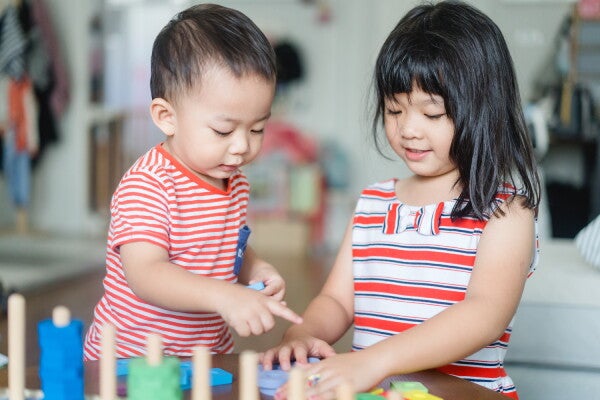
Over time, your toddler will ask for turns when sharing toys although it may not happen each time.
When a meltdown happens, your goal is not to fix the situation right away, but to help your child feel safe and calm.
When a tantrum happens, experts recommend the following:
- Stay close and keep your voice calm.
- Avoid shouting, threatening, or labeling your child.
- Name what your child is feeling in simple words.
- Wait until your child calms down before offering solutions.
Read How to Build Emotional Stability: Tips from a Psychologist to know how to help your child with big emotions.
Once your toddler settles, you can guide them toward the next step, such as taking turns, waiting, or choosing a different toy. How you react in these moments matters because some common reactions can make learning to share more difficult.
Common mistakes parents make include:
- Expecting toddlers to behave like older children
- Comparing siblings or playmates
- Stepping in too quickly at every minor conflict
These responses can frustrate your toddler and stop them from learning how to manage simple social situations. Give your child a chance to practice waiting and solving simple problems.
Practice Patience, Patience, and More Patience
Experts always remind parents that children under 3 may listen to instructions about sharing, or they might even do it spontaneously. But they lack the psychological skills to understand why sharing occurs. If you ask for too much cooperation too soon, you and your toddler can end up frustrated and exhausted with each other.
Helping your child understand feelings and fairness takes time and repetition. When taught with patience, sharing is caring becomes more than a phrase; it develops as a skill your child will carry into friendships, school, and family life.
How do you teach your child that sharing is caring? Share your tips on the ParenTeam Moms and Dads Facebook group!
References
Rod Soper, “SOCIAL AND EMOTIONAL DEVELOPMENT: Guiding Our Energy to Find Great Connections,” Early Childhood Australia, February 2023, accessed January 27, 2026, https://learninghub.earlychildhoodaustralia.org.au/wp-content/uploads/2023/02/ISP-Resource-Social-and-Emotional-Development-FA-web.pdf
Kirsten Weir, “How to Help Kids Understand and Manage Their Emotions,” Https://Www.Apa.Org, April 21, 2023, https://www.apa.org/topics/parenting/emotion-regulation
Julia Rodriguez, “Developing a Child’s Social Skills Through Playtime - First Things First,” First Things First, August 15, 2025, https://www.firstthingsfirst.org/first-things/sharing-and-playtime/
Sarah S. MacLaughlin, “Helping Young Children With Sharing | ZERO TO THREE,” ZERO TO THREE, September 25, 2023, https://www.zerotothree.org/resource/helping-young-children-with-sharing/
Related articles

25 Filipino Nursery Rhymes and Lullabies to Sing to Your Child
Explore this list of 25 Filipino nursery rhymes and lullabies. You can sing these songs to help your child learn, grow, and have fun!
9 mins to read

GROWING TOGETHER: The Importance of Tracking Developmental Milestones in the First 2000 days. -2nd
The first 2,000 days are critical in shaping a child’s future—discover why every developmental milestone matters in these early years of growth and learning.
2 mins to read
GROWING TOGETHER: The Importance of Tracking Developmental Milestones in the First 2000 days.
The first 2,000 days are critical in shaping a child’s future—discover why every developmental milestone matters in these early years of growth and learning.
2 mins to read

How to Survive Toddler Haircuts Without the Tears
Say goodbye to the struggles of toddler haircuts. Here are practical ways to make salon visits fun, tear-free, and comfortable for your child.
6 mins to read

15 Brain Games to Help Your Babies and Toddlers Learn!
No pricey toys required. These brain games need just one important thing: Mom or Dad. Get ready to have fun with your little one!
8 mins to read

How to Discipline a Child Without Hitting or Yelling
Disciplining your child without yelling or hitting? It’s possible with these effective tips that build better behavior.
4 mins to read

7 Teacher-Recommended Reading Strategies to Use at Home
Get your little one to build their reading skills with these expert tips and strategies from a teacher.
4 mins to read

How to Control Emotions: 9 Ways to Help Toddlers Who Feel Too Much
Toddlers feel big emotions but are still learning to manage them. Discover science-backed, mom-approved tips to guide meltdowns into calm without losing your cool.
6 mins to read

10 Fun Activities to Keep Toddlers Entertained in the Heat
You can keep your toddler cool and engaged even on the hottest days while making the most of play-based learning!
6 mins to read

How to Handle Short-Tempered Kids (Is It More Than a Phase?)
When your toddler becomes short-tempered, they can throw a fit like there's no tomorrow. Here's how to calm things down.
6 mins to read

Gentle Parenting Through Toddler Tantrums: What Works (and What Doesn’t)
The latest research shows gentle parenting isn't always easy. But it may be worth it, especially when dealing with toddler tantrums. Here's what it takes.
6 mins to read

Age-Appropriate Household Chores for Kids to Teach Life Skills
Getting kids to help doesn’t have to be a battle. Learn the best age-appropriate household chores for kids to build confidence, independence, and real-life skills.
6 mins to read

How a Daily Routine Can Support Your Child’s Emotional Health
Did you know that a simple daily routine can do wonders for easing tension at home? Learn how to start one now!
7 mins to read

Taming Tantrums: How to Teach Your Toddler Emotional Regulation
Struggling with meltdowns? Emotional regulation is the key to calm. Discover how to teach your toddler to manage big feelings with love.
6 mins to read

Real Moms Share What Works When Setting Boundaries With Lolos and Lolas
Setting boundaries with family takes patience, practice, and teamwork with your spouse. Here are seven ways to approach it with calm.
6 mins to read

How to Use the 5 Kinds of Love Language to Connect with Your Toddler
Knowing the different kinds of love language allows you to parent better! Here's how to talk to your toddler to meet their emotional needs.
5 mins to read

3 Ways Dads Build Self-Confidence in Kids
Want to build self-confidence in kids? Find out why Dad's kulitan and harutan are actually good for their future success.
4 mins to read

Toys for a 1-Year-Old to Help Motor, Brain, and Language Development
With toys for a 1 year old, think less about quantity and more about how they can support your child's developmental milestones.
7 mins to read

10 Montessori Toys to Help Your Child Develop Problem-Solving Skills
Discover how Montessori toys help kids think independently, solve problems, and grow through play—no flashing lights, batteries, or hovering needed.
4 mins to read


