


Does your child think Mom is the strict parent, while Dad is the fun one? While many families differ in parenting styles, it’s common to see Moms ensuring safety, while Dads push limits through play. But Dads’ jokes and roughhousing are still important in building self-confidence in kids.
Here’s why typical Dad moves—like playful wrestling and teasing—are crucial for showing kids how to be confident and strong.
1. Dads’ Roughhousing Teaches Control

Does this sound familiar? Dad comes home, and suddenly the living room turns into a wrestling ring for your toddler or preschooler. This rough-and-tumble play or harutan might look chaotic, but it’s actually a very important lesson in disguise.
According to the American Academy of Pediatrics (AAP), fathers’ high-intensity play (stimulating, vigorous games like wrestling or chasing) is linked to better social skills and fewer behavioral problems in children.
High-intensity play imparts three critical skills:
- It teaches limits: Your child learns that they can be strong without hurting others. If they get too rough, you stop the game.
- It builds trust: This "scary but safe" play teaches them to trust you—and eventually, to trust themselves when taking risks.
- It teaches fairness: When you let your child win or pin you down, they feel powerful. This feeling of capability stays with them when they face challenges on their own.
2. Dads’ Risky Play Encourages Diskarte
A 2024 statement from the Canadian Paediatric Society confirms that "risky play" (balancing on logs, running fast, wrestling, and playfighting) is essential for a child's physical and mental health.
Age-appropriate risky play—whether it's a toddler jumping off the bottom step or a preschooler climbing a tree—teaches your child diskarte (strategic thinking). It helps them learn the difference between a risk they choose—like climbing onto a sofa—and a real hazard, such as a sharp table edge nearby.
Risk-taking isn't just about climbing trees; it’s about how your child learns to think when they’re playing with you. The AAP notes that fathers build mental muscles by communicating differently—often using bigger words and asking more "Who, What, Where" questions.
According to Child Care Resources, moms and dads also approach questions in different ways. Exposing kids to these different perspectives improves their problem-solving skills.
You can encourage this diskarte at home:
- When they ask for help, don't fix it immediately. Ask, "What do you think we should do?"
- When they struggle with something, wait before jumping in to help. Surviving a little frustration proves they are resilient (matibay ang loob).
- Explain things differently than Mom does. This teaches them there is more than one way to solve a problem.
3. Dads’ Jokes Train Kids to Be Resilient
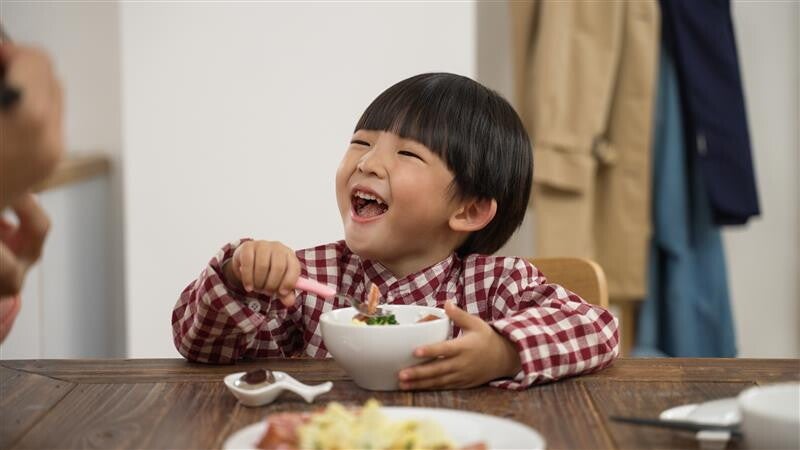
Filipino dads are famous for their jokes or pang-aasar. Sometimes it’s a corny pun, and sometimes it’s lighthearted teasing.
A 2024 pilot study published in PLOS One found that humor is a powerful parenting tool. The researchers asked over 300 adults about their childhoods and found that those whose parents used humor were much more likely to say they had a good relationship with them. According to the study, 71.8% of people believe humor is an effective parenting tool. Here’s why:
- It builds connection: Kids who grew up with funny parents were more likely to say their parents did a good job raising them.
- It teaches flexibility: When things get stressful, humor can help children shift gears and not get stuck in a bad mood.
- It teaches resilience: When your child can laugh at a small blunder, they recover faster and are willing to try again.
Just remember, there’s a line between teasing and hurting feelings. The goal is to laugh with them, not at them. If you need help navigating big reactions, read these tips on handling big emotions in kids.
How Dads’ Presence Builds Self-Confidence
In a 2019 study, researchers followed over 300 Filipino families in Cebu from 1983 all the way to 2009 to see how fathers influence their sons. The study revealed that when sons received care as young children and stayed close to their dads as teenagers, they saw dad as a role model and became caring, confident fathers themselves.
Child Care Resources also notes that children with supportive fathers don’t get easily frustrated and are braver in new situations. They’re also able to resist peer pressure and stand up for themselves.
The most important way Dads can help boost their kids’ confidence is simply by being there for them. Spending just 20 minutes playing or joking with your child builds their self-confidence now and teaches them how to be strong, independent adults in the future.
Think your dad jokes are the best? Prove it! Join the ParenTeam Moms and Dads Facebook group and tell us how you use fun and kulitan to build self-confidence in kids.
References
Anderson, S., W. Qiu, and S. J. Wheeler. 2017. "The Quality of Father-Child Rough-and-Tumble Play and Toddlers' Aggressive Behavior in China." Infant Mental Health Journal 38 (6): 726–742.1. Accessed on January 13, 2026. https://doi.org/10.1002/imhj.21675.
Center for Fathers and Families. 2023. "The Importance of Fatherhood: How Dads Help Shape Their Children's Lives." CFF Sacramento. June 27, 2023. Accessed on January 13, 2026. https://www.cffsacramento.org/post/the-importance-of-fatherhood-how-dads-help-shape-their-children-s-lives
StGeorge, Jennifer, and Emily Freeman. 2017. "Measurement of father-child rough-and-tumble play and its relations to child behavior." Infant Mental Health Journal 38(6): 709–725. Accessed on January 13, 2026. https://doi.org/10.1002/imhj.21676
Related articles

25 Filipino Nursery Rhymes and Lullabies to Sing to Your Child
Explore this list of 25 Filipino nursery rhymes and lullabies. You can sing these songs to help your child learn, grow, and have fun!
9 mins to read

GROWING TOGETHER: The Importance of Tracking Developmental Milestones in the First 2000 days. -2nd
The first 2,000 days are critical in shaping a child’s future—discover why every developmental milestone matters in these early years of growth and learning.
2 mins to read
GROWING TOGETHER: The Importance of Tracking Developmental Milestones in the First 2000 days.
The first 2,000 days are critical in shaping a child’s future—discover why every developmental milestone matters in these early years of growth and learning.
2 mins to read

How to Survive Toddler Haircuts Without the Tears
Say goodbye to the struggles of toddler haircuts. Here are practical ways to make salon visits fun, tear-free, and comfortable for your child.
6 mins to read

15 Brain Games to Help Your Babies and Toddlers Learn!
No pricey toys required. These brain games need just one important thing: Mom or Dad. Get ready to have fun with your little one!
8 mins to read

How to Discipline a Child Without Hitting or Yelling
Disciplining your child without yelling or hitting? It’s possible with these effective tips that build better behavior.
4 mins to read

7 Teacher-Recommended Reading Strategies to Use at Home
Get your little one to build their reading skills with these expert tips and strategies from a teacher.
4 mins to read

How to Control Emotions: 9 Ways to Help Toddlers Who Feel Too Much
Toddlers feel big emotions but are still learning to manage them. Discover science-backed, mom-approved tips to guide meltdowns into calm without losing your cool.
6 mins to read

10 Fun Activities to Keep Toddlers Entertained in the Heat
You can keep your toddler cool and engaged even on the hottest days while making the most of play-based learning!
6 mins to read

How to Handle Short-Tempered Kids (Is It More Than a Phase?)
When your toddler becomes short-tempered, they can throw a fit like there's no tomorrow. Here's how to calm things down.
6 mins to read

Gentle Parenting Through Toddler Tantrums: What Works (and What Doesn’t)
The latest research shows gentle parenting isn't always easy. But it may be worth it, especially when dealing with toddler tantrums. Here's what it takes.
6 mins to read

Age-Appropriate Household Chores for Kids to Teach Life Skills
Getting kids to help doesn’t have to be a battle. Learn the best age-appropriate household chores for kids to build confidence, independence, and real-life skills.
6 mins to read

How a Daily Routine Can Support Your Child’s Emotional Health
Did you know that a simple daily routine can do wonders for easing tension at home? Learn how to start one now!
7 mins to read

Taming Tantrums: How to Teach Your Toddler Emotional Regulation
Struggling with meltdowns? Emotional regulation is the key to calm. Discover how to teach your toddler to manage big feelings with love.
6 mins to read

Real Moms Share What Works When Setting Boundaries With Lolos and Lolas
Setting boundaries with family takes patience, practice, and teamwork with your spouse. Here are seven ways to approach it with calm.
6 mins to read

How to Use the 5 Kinds of Love Language to Connect with Your Toddler
Knowing the different kinds of love language allows you to parent better! Here's how to talk to your toddler to meet their emotional needs.
5 mins to read

Sharing Is Caring: How to Teach Toddlers to Share Toys
The idea of "sharing is caring" works better when you begin with realistic expectations. Here's a realistic guide to raising a cooperative child.
6 mins to read

Toys for a 1-Year-Old to Help Motor, Brain, and Language Development
With toys for a 1 year old, think less about quantity and more about how they can support your child's developmental milestones.
7 mins to read

10 Montessori Toys to Help Your Child Develop Problem-Solving Skills
Discover how Montessori toys help kids think independently, solve problems, and grow through play—no flashing lights, batteries, or hovering needed.
4 mins to read


