


Tooth Decay in Kids: Your Guide to Causes, Symptoms, and Prevention
You're brushing your child's teeth and see it—a little white or brown spot. Tooth decay in kids, also known as dental caries or cavities, is the most common childhood disease in the Philippines. In fact, the 2018 National Survey on Oral Health found that 85.2% of 5-year-old children have dental caries.
The good news is that tooth decay in kids is manageable as long as you catch it early. Understanding the causes and early signs helps you protect your child's smile, from their first baby tooth to their permanent grin. This guide will help you tackle it head-on.
What Causes Tooth Decay in Kids?
Bacteria in your child’s mouth feed on sugars from food and drinks, producing acids that wear away the enamel (the tooth’s hard outer layer). Poor or irregular oral hygiene also allows plaque (that sticky film of bacteria) to damage your child’s teeth.
If left untreated, this plaque can lead to tooth cavity, pain, infection, and even problems with your child's permanent teeth later on.
Signs and Symptoms of Tooth Decay in Kids
Catching decay early makes treatment simpler and can prevent your child from feeling pain. Here are common tooth decay symptoms to watch out for.
- Chalky white or brown spots, especially near the gumline
- Sensitivity or pain when eating hot, cold, or sweet things
- Sharp pain when your child bites down on food
- Visible dark spots, pits, or a hole in the tooth surface
- Swollen, red gums or bad breath that won't go away
How to Avoid Cavities and Protect Your Child's Smile

You can help your child build great brushing habits by making oral hygiene a fun, twice-a-day routine.
Now for the action plan! Follow these tips to help your child learn how to avoid cavities by practicing healthy habits and good oral hygiene.
1. Supervise your child's daily brushing routine.
Kids often don't have the fine motor skills to brush effectively on their own. A study in the International Journal of Paediatric Dentistry found that a child's ability to brush their teeth well is linked to other fine motor skills.
A good rule of thumb is that if your child can tie their own shoelaces, they’re developing the skills needed to brush well. Until then, you should help them with brushing or at least do a "touch-up" pass after they're done.
The Philippine Dental Association, Inc. recommends brushing twice a day: once after breakfast and again before bed for a full two minutes.
2. Use fluoride toothpaste every time.
Fluoride, a natural mineral in toothpaste, makes tooth enamel stronger. When you're helping your child brush, make sure they use the correct amount for their age, notes the Philippine Dental Association, Inc.
- 3 to 6 years old: A mung bean-sized amount
- 7 years old and up: A green bean-sized amount
3. Choose healthy food and drinks for your child.
The World Health Organization (WHO) highlights high sugar consumption as the main cause of tooth decay globally.
Limit sugary drinks like juice and soda, and swap sweet treats like cookies and cakes for healthier options like cheese or crunchy veggies. The American Dental Association (ADA) explains that dairy and calcium-rich foods can help neutralize acids in the mouth. Check out these healthy snack ideas for kids.
4. Stick to set snack times.
Every time your child eats a sugary or starchy snack, their teeth are under an acid attack for the next 30 minutes, notes the Pediatric Dentistry Center Philippines. So, if they're constantly snacking, their teeth are under constant attack with no time to recover.
This is also why the American Academy of Pediatrics (AAP) encourages serving only water in between meals. Water helps cleanse their mouth and keeps saliva flowing, which naturally washes away decay-causing bacteria.
5. Floss your child's teeth daily.
A toothbrush can't reach the plaque that hides between teeth. According to the AAP, as soon as your child has two teeth that touch, you should start teaching them to floss once a day. Kid-friendly flossers can make this job much easier.
6. Stop sharing utensils.
Did you know that the bacteria that cause cavities are contagious? You can pass them to your child by sharing a spoon or even cleaning their pacifier with your mouth, notes the American Academy of Pediatric Dentistry (AAPD). To be safe, avoid sharing saliva with your baby or toddler.
7. Partner with your child's dentist.
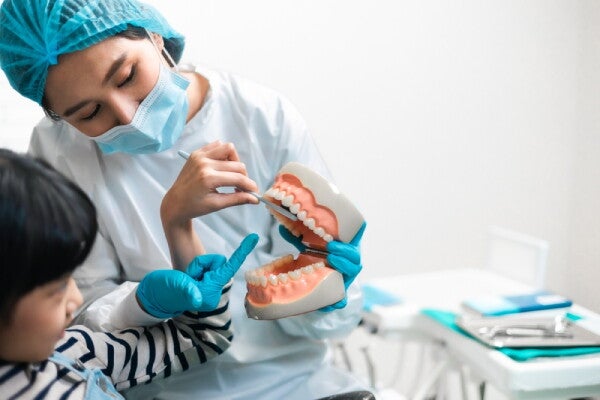
Your dentist can help catch any early signs of a tooth cavity, helping prevent tooth decay in kids.
You and your dentist can decide on a regular schedule for your child’s checkups. But it's crucial to show up on each one. These visits help catch early warning signs before they turn into serious problems.
Research on the oral health of young Filipino children in 2023 found that about 3 out of 10 Filipino children (33.7%) aged 5 and up had decayed, missing, or filled teeth.
A dentist is the only one who knows how to treat tooth decay or how to fix a hole in the tooth. Depending on the severity, your child’s dentist may recommend a fluoride varnish to stop early decay or a filling to repair a small cavity.
You can also ask your dentist about dental sealants. They apply these thin, protective coatings to the back teeth to help prevent cavities, especially in school-age kids. For older kids or those with braces, brushing around brackets and avoiding sticky or chewy snacks can help prevent decay on hard-to-clean surfaces.
Protecting Your Child’s Healthy Smile
Seeing signs of tooth decay in kids can feel discouraging, but don’t worry! By building these simple, consistent habits, you're helping your child keep their teeth and gum healthy.
It takes a village! Connect with other parents on the ParentTeam Moms and Dads Facebook group and share your tips for preventing tooth decay in kids.
References
American Academy of Pediatrics. "Diet Tips to Prevent Dental Problems." HealthyChildren.org. Last updated December 13, 2011. Accessed October 27, 2025. https://www.healthychildren.org/English/healthy-living/oral-health/Pages/Diet-Tips-to-Prevent-Dental-Problems.aspx
American Academy of Pediatrics. "Healthy Teeth and Your Child's Diet." HealthyChildren.org. Last updated February 4, 2020. Accessed October 27, 2025. https://www.healthychildren.org/English/healthy-living/oral-health/Pages/Healthy-Teeth-and-Your-Childs-Diet.aspx
American Academy of Pediatrics Section on Oral Health. "Fluoride for Children: Parent FAQs." HealthyChildren.org. Last updated April 24, 2025. Accessed October 27, 2025. https://www.healthychildren.org/English/healthy-living/oral-health/Pages/FAQ-Fluoride-and-Children.aspx
BetterHealth Channel. "Tooth Decay - Young Children." BetterHealth Channel. n.d. Accessed October 27, 2025. https://www.betterhealth.vic.gov.au/health/conditionsandtreatments/tooth-decay-young-children
Clark, Melinda B., Rebecca L. Slayton, and the AAP Section on Oral Health. "Fluoride Use in Caries Prevention in the Primary Care Setting." Pediatrics 134, no. 3 (September 2014): 626–33. Accessed October 27, 2025. https://doi.org/10.1542/peds.2014-1699
Crider, Catherine. "Treatment Options for Tooth Decay in Children." Medically reviewed by Jennifer Archibald, DDS. Healthline. November 27, 2023. Accessed October 27, 2025. https://www.healthline.com/health/dental-and-oral-health/treatment-options-for-tooth-decay-in-children
Johns Hopkins Medicine. "Tooth Decay (Caries or Cavities) in Children." Johns Hopkins Medicine. n.d. Accessed October 27, 2025. https://www.hopkinsmedicine.org/health/conditions-and-diseases/tooth-decay-caries-or-cavities-in-children
Krol, David, and Kaitlin Whelan. "Good Oral Health Starts Early: AAP Policy Explained." HealthyChildren.org. Last updated December 19, 2022. Accessed October 27, 2025. https://www.healthychildren.org/English/healthy-living/oral-health/Pages/Brushing-Up-on-Oral-Health-Never-Too-Early-to-Start.aspx
Related articles

Teach Kids Safety: 4 Ways to Gamify Your Family Emergency Plan
Practice your emergency plan with fun games that teach kids safety roles. You’ll help them stay calm, learn important contacts, and prepare for any disaster.
7 mins to read

Pedia Shares 3 Major Signs You May Have a Child With Special Needs
Here's what pedias want you to know if you suspect you have a child with special needs.
8 mins to read

How to Protect Your Active Toddler from Extreme Heat in the Philippines
Parenting in a hot climate can add to your stress levels! But your kids rely on you even more during these warmer days. Here's the TLC they need.
6 mins to read

Milk Teeth: What Are They and When Do Kids Lose Them?
Your child's milk teeth are crucial for their health and development. Learn when they appear, fall out, and how to care for them every step of the way.
6 mins to read

Doodling and Talking? Here Are Your 18-Month-Old Baby's Milestones
Your 18-month-old-baby is more active and curious than ever! Learn the key milestones to expect and how to support your toddler's growth every day.
5 mins to read

A Child Psychologist's Guide to Building Emotional Stability in Kids
Emotional stability is really shaped by the small, consistent moments you share with your child every day. Here's how to strengthen those moments.
6 mins to read

7 Simple Ways to Boost Brain Development in Growing Kids
Jumpstart your toddler's brain development by turning simple activities, fun games, and daily routines into learning opportunities. Build focus, memory, and confidence!
6 mins to read

8 Cute and Practical Kids’ Hairstyle Ideas for Boys and Girls
Looking for no-fuss kids’ hairstyles? Discover easy ideas, from French braids to a textured crop, that that you can do easily before school or playdates.
5 mins to read

Choking First Aid: A Step-by-Step Guide to Help Your Child Fast
Know what to do! This choking first aid guide gives you life-saving steps for infants (back blows) and children (Heimlich). Equip yourself with this crucial skill.
8 mins to read

Math for Kids: How to Instill a Love for Numbers Early
Math for kids doesn’t need worksheets. It needs stacked cups, sorted socks, and the games you’re already playing.
8 mins to read

12 Storybooks in Tagalog to Help Your Toddler Learn the Language
Looking for a storybook in Tagalog that your toddler will love? These picks build vocabulary, spark curiosity, and deepen your bond.
7 mins to read

25 Filipino Nursery Rhymes and Lullabies to Sing to Your Child
Explore this list of 25 Filipino nursery rhymes and lullabies. You can sing these songs to help your child learn, grow, and have fun!
9 mins to read

GROWING TOGETHER: The Importance of Tracking Developmental Milestones in the First 2000 days. -2nd
The first 2,000 days are critical in shaping a child’s future—discover why every developmental milestone matters in these early years of growth and learning.
2 mins to read
GROWING TOGETHER: The Importance of Tracking Developmental Milestones in the First 2000 days.
The first 2,000 days are critical in shaping a child’s future—discover why every developmental milestone matters in these early years of growth and learning.
2 mins to read

How to Survive Toddler Haircuts Without the Tears
Say goodbye to the struggles of toddler haircuts. Here are practical ways to make salon visits fun, tear-free, and comfortable for your child.
6 mins to read

Easy Pinoy Dinner Ideas Dads and Kids Can Cook for Mother’s Day
Need easy Pinoy dinner ideas? Surprise mom with a budget-friendly meal that dads and kids can quickly prep, cook, and enjoy together for a fun celebration at home.
6 mins to read

8 Simple Ways to Inspire Healthy Eating Habits in the Whole Family
From trying new dishes to setting an example at the dinner table, here’s how parents can instill healthy eating habits for the entire household.
6 mins to read

Where to Book a Christmas Photoshoot for Your Family
Your family's Christmas photoshoot deserves the perfect spot. Discover pro and self-shoot studios in and around Manila, plus tips on what to wear.
7 mins to read

15 Brain Games to Help Your Babies and Toddlers Learn!
No pricey toys required. These brain games need just one important thing: Mom or Dad. Get ready to have fun with your little one!
8 mins to read


