


When your baby’s first teeth start to come in, you might hear people talk about teething fever. But a high temperature (38°C / 100.4°F) isn’t a symptom of a new tooth erupting. Keep reading to learn how to spot the real warning signs and know when to call the doctor.
Does Teething Cause Fever in Babies?
No, teething doesn’t cause a fever—it means your child's body is fighting an infection. A 2016 meta-analysis in the American Academy of Pediatrics (AAP) journal, Pediatrics, confirmed this after reviewing data from over 3,500 children.
The study concluded that while teething can cause a slight increase in temperature, it’s not characterized as a fever. (Explore this parent's guide to baby fever for more tips.) The AAP notes that the temperature rise associated with teething doesn’t go above 38°C,. Any temperature at or above that number is considered a fever.
Call your pediatrician if you notice a high fever in a teething baby, as it signals an underlying condition.
How Long Does a Teething-Related Temperature Last?
Any mild warmth from teething is brief. A rigorous study in the AAP journal Pediatrics found that a slight temperature increase occurred specifically on the day the tooth actually broke through the gum.
Is it Teething or an Illness?

Is a teething fever real? Mild warmth from teething stays below 38°C, while a true fever is a sign of illness.
Since fever isn’t a teething symptom, here are the signs you can expect instead. A 2024 global meta-analysis in the International Journal of Paediatric Dentistry found that 80% of babies experience some form of teething problem. The most common symptoms backed by research are:
- Increased biting (the most common local symptom)
- Irritability (the most common general symptom)
- Drooling
- Sore or swollen gums
According to the AAP, teething won’t cause:
- Diarrhea
- Diaper rashes
- A cough or runny nose
For the discomfort that's actually from teething, check out these tips on easing teething pain.
How to Safely Soothe Actual Teething Pain
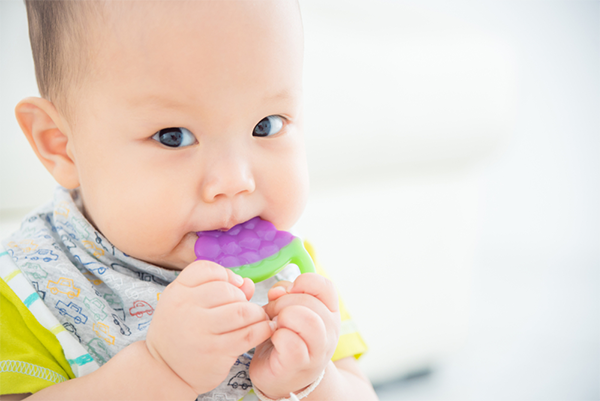
Soothe sore gums with safe methods like a chilled teether. For fevers, always look for the underlying cause with your doctor.
Now that you know a fever isn't a typical teething symptom, you can focus on safely managing the real discomforts like fussiness and sore gums. Experts recommend a few simple methods, such as:
- Gentle pressure: Massage your baby's gums with a clean finger.
- Cooling: Offer a chilled, solid (not liquid-filled) teething toy.
For a more detailed guide that includes soothing tips for teething, read all about a baby's first tooth.
When to Seek Medical Advice
A baby's age is the most crucial factor in determining how to respond to a fever.
- Under 3 months: Call your doctor or go to the emergency room immediately for any rectal temperature of 38°C (100.4°F) or higher, as this could be a sign of an infection in your newborn.
- 3 to 6 months: If your baby has a fever of 38°C or higher, call your pediatrician so they can provide specific advice tailored to your baby's condition.
- Over 6 months: A fever over 38°C (100.4°F) that lasts more than 24 hours or comes with other symptoms (like rashes or vomiting) requires a call to your doctor.
Call your doctor right away—at any age—if a fever comes with these symptoms.
- Unusual lethargy, drowsiness, or extreme irritability
- Signs of dehydration (e.g., fewer wet diapers, no tears when crying, dry mouth)
- Difficulty breathing
- A rash
- A seizure (convulsion)
- Refusing to eat or drink
Don't dismiss a high temperature as just a teething fever. Remember that a fever is often a sign of an underlying illness that has nothing to do with a new tooth. The most important rule is to trust your instincts; if you’re worried, always call your pediatrician.
Join the conversation about teething fever! Connect with other parents and share your experiences on the ParentTeam Moms and Dads Facebook group.
References
American Academy of Pediatrics. "Fever and Your Baby." HealthyChildren.org. Last updated September 23, 2025. Accessed October 1, 2025. https://www.healthychildren.org/English/health-issues/conditions/fever/Pages/Fever-and-Your-Baby.aspx
American Academy of Pediatrics. "Teething: 4 to 7 Months." HealthyChildren.org. Last updated June 26, 2024. Accessed October 1, 2025. https://www.healthychildren.org/English/ages-stages/baby/teething-tooth-care/Pages/Teething-4-to-7-Months.aspx
Cleveland Clinic. "Teething Doesn’t Cause Fevers — and Other Myths To Sink Your Teeth Into." May 1, 2023. Accessed October 1, 2025. https://health.clevelandclinic.org/teething-signs-and-symptoms
Mayo Clinic. "Teething: Tips for Soothing Sore Gums." December 21, 2024. Accessed October 1, 2025. https://www.mayoclinic.org/healthy-lifestyle/infant-and-toddler-health/in-depth/teething/art-20046378
National Health Service (NHS). "Baby Teething Symptoms." Last reviewed August 9, 2022. Accessed October 1, 2025. https://www.nhs.uk/baby/babys-development/teething/baby-teething-symptoms/
Related articles

What Is Stunted Growth? A Pediatrician’s Guide for Parents
Worried people think your child is bansot or pandak, Mommy? Behind that teasing is a real concern: stunted growth. Here’s how pediatricians check for it.
4 mins to read

A Parent’s Guide to Caring for Cradle Cap in Babies
Cradle cap in babies is common, harmless, and easy to manage with the right daily routine. Here’s what actually works, according to a pediatrician.
6 mins to read

How to Spot and Manage Your Baby’s Eczema at Home
Spotting baby eczema early helps you treat it fast. Learn to tell it apart from typical dry skin and explore easy routines to soothe their skin.
6 mins to read

Newborn Baby Baths Made Simple
Master newborn baby bath time! Learn when and how often to bathe your baby, along with step-by-step techniques and safety advice for a happy baby!
5 mins to read

Babbling to Full Sentences! Your Language Development Checklist by Age
Learn the language development milestones your child needs to hit from baby to preschool stage.
7 mins to read

30 Must-Know Terms to Guide You Through the Early Childhood Stage
Welcome to your early childhood stage cheat sheet, so you feel more prepared and less frazzled for parenting!
11 mins to read

How to Give a Baby Massage With Confidence
Love getting a good massage? Your baby probably does, too! Learn the essential baby massage techniques to help with sleep, constipation, and more.
8 mins to read

Sinisinok si Baby? 5 Easy Ways to Soothe Newborn Hiccups
Newborn hiccups are a natural reflex as your baby’s nervous system matures. Learn how to keep your little one comfortable with these expert-backed soothing techniques.
5 mins to read

Why Health Experts Recommend "Unang Yakap" After Birth
Unang Yakap is more than just a picture-worthy moment! Discover the so-good benefits that first embrace has in store for your baby—and you!
6 mins to read

Sitting and Teething! Welcome to Your 6-Month-Old Baby's Milestones
Your 6-month-old baby is discovering the world! This guide covers key developments, sleep patterns, and growth charts to help you on this journey.
6 mins to read

Why Babies Cry: 11 Reasons to Know So You Can Worry Less
Wondering why baKnowing why babies cry helps you understand their needs. From hunger to discomfort, learn the common reasons for tears and find ways to soothe your little one.bies cry?
7 mins to read

A Parent's Guide to Better Baby Sleep
Wondering how to help your baby sleep through the night? Learn to create a bedtime routine and find solutions to common sleep issues for more restful nights.
8 mins to read

Child Development Stages: A Guide from Birth to 5 Years
Understanding child development stages helps you celebrate every milestone. Discover what to expect, from newborn reflexes to preschooler chatter.
6 mins to read

Can Your Child Do This? Key Motor Skills From 0 to 5 Years
Motor skills play a crucial role in your child's growth and learning. Here's a complete checklist to their motor milestones!
7 mins to read

Your Guide to Your Baby’s First Tooth: Signs and Soothing Tips
Wondering about your baby’s first tooth? This guide covers the typical timeline, common symptoms, and simple remedies for teething discomfort.
5 mins to read

Newborn Screening 101: What First-Time Parents Need to Know
Newborn screening is a crucial first step to protect your baby's health as soon as they're born.
7 mins to read

Baby Sleeping Position Basics: What's Safe, What's Not, and Why
Worried about the safest baby sleeping position? Learn why experts recommend placing babies on their backs and master tips for creating a safe sleep environment.
8 mins to read

From Milia to Baby Acne: A Guide to Your Newborn's Rash on the Face
Seeing your newborn’s rash on the face is common in the first weeks. Find out how to handle tiny bumps easily, and know exactly when to visit your pediatrician.
6 mins to read

How to Burp a Newborn for Nervous First-Time Parents
This step-by-step guide on how to burp a newborn can help ease your worries about the right positions, burp frequency, and more.
5 mins to read


