


How Kids Develop Social Skills: A Mom’s Guide
As moms, we all hope for the same thing when we watch our kids grow.
We want them to feel happy, confident, and comfortable around others. We imagine them making their first friends at the playground, sharing toys, laughing with cousins, and learning how to express what they feel.
But social skills don’t appear overnight.
They grow slowly — through everyday experiences like playtime, conversations, and even the little moments when your kid is learning how to handle big emotions.
And as your kid learns how to interact with others, their brain is working hard behind the scenes, building the connections that help them understand feelings, communicate, and form relationships.
If you’re starting to notice your kid becoming more curious about others, you might also find helpful tips here: https://www.parenteam.com.ph/teach-your-kid-how-make-friends )
What’s Happening in Your kid’s “Social Brain”
During the kid years, your child’s brain is developing rapidly.1, 2
Certain parts of the brain help your kid:3, 4
- understand emotions
- express themselves through words or actions
- recognize how others feel
- respond to social situations
These brain areas help build the foundation for important social skills like communication, empathy, and cooperation.1, 2
For example:
- When your kid says “mine!” during playtime, they’re still learning about sharing.3, 4
- When they comfort a crying friend, they’re beginning to understand empathy.3
- When they start chatting endlessly about their day, their communication skills are growing.2, 3
- These moments might feel small, but they’re important milestones in social development.1
And while play and interaction play a big role, nutrition also supports the brain systems that help kids learn and connect with others.1,2
Everyday Ways to Help Your Kid Build Social Skills
Social development doesn’t only happen in school. It starts at home and in everyday interactions.1, 3
Here are simple ways moms can help support their kids’ social growth
1. Let Them Practice Social Moments
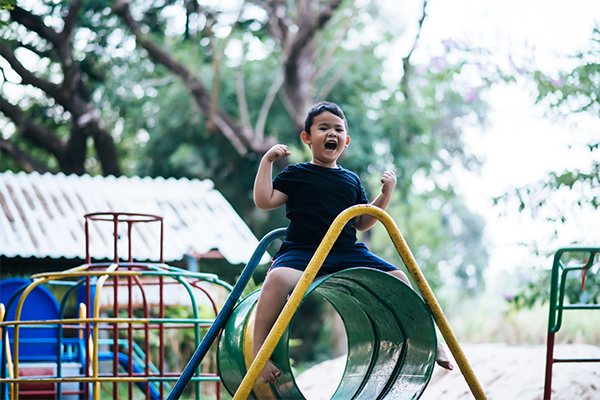
Playdates, playground visits, or family gatherings give kids opportunities to interact with others.
At first, they may play beside other children instead of with them — and that’s completely normal. This stage, called parallel play, is an important step toward learning cooperation.2
(Curious about play stages? Read more here: https://www.parenteam.com.ph/truth-about-childs-play)
2. Talk About Feelings
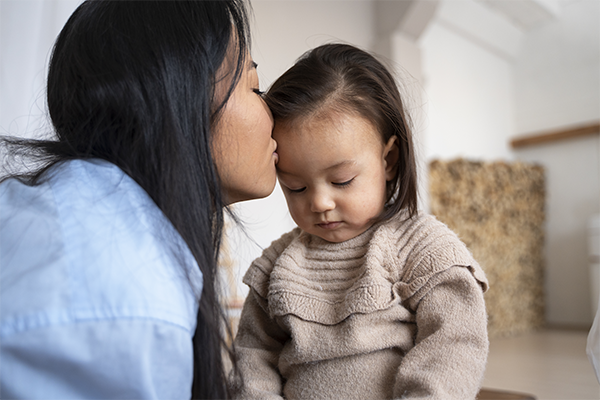
Helping kids name emotions builds emotional awareness.
You can say things like:
- “You look happy playing with your toy.”
- “Your friend seems sad. Maybe we can help.”
These simple conversations help kids understand their own feelings and the feelings of others.3, 4
(For more guidance on raising emotionally aware children, explore: https://www.parenteam.com.ph/article/how-to-positive-discipline-child)
3. Let Go a Little
One of the hardest parts of parenting kids is learning when to step back.
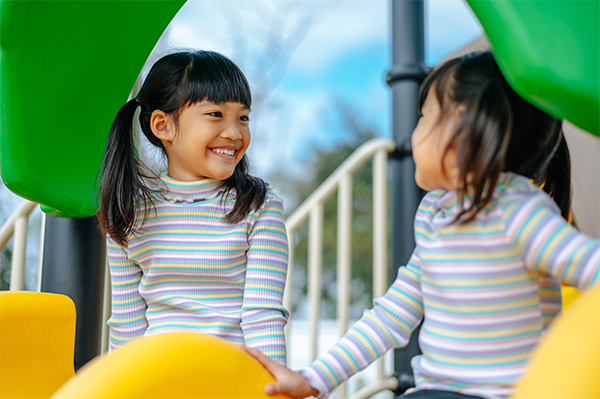
Sometimes your child needs space to figure things out — like solving a disagreement over toys or learning how to take turns.
When moms gently guide but allow kids to practice these interactions, children build confidence and independence.1, 2

4. Be Their First Social Example
Your kid learns a lot by watching you.
When they see you greeting neighbors, thanking store staff, or comforting a friend, they learn what kindness and empathy look like.3
In many Filipino families, these lessons also happen naturally during gatherings with cousins, titos, and titas — where kids learn how to connect with others.
Your Act of Love Supports your Kid’s Social Development
Your kid’s brain needs the right nutrients to support its rapid growth — especially as they begin to explore friendships, express emotions, and interact with the world around them. That’s why NIDO 3+ and NIDO 5+ contain Brain Support Nutrients designed to help support healthy brain development during the kid years.
Some of the nutrients that support brain and nervous system development include:
B Vitamins (B1, B2, B6, B12)
These vitamins help support the healthy function of brain cells and the nervous system. A well-supported nervous system allows kids to process information, communicate more clearly, and respond confidently to social situations.5
Iron, Zinc, Phosphorus, and Copper
These essential minerals help support energy production and overall brain function. They also help maintain healthy brain cells and support communication between different parts of the brain — key for learning and social interaction.6
DHA and ALA
These important fatty acids play a vital role in brain development. DHA supports cognitive function and learning ability, while ALA helps nourish brain cells — both contributing to better focus, understanding, and social responsiveness.7
Aside from brain nutrients, NIDO 3+ and NIDO 5+ also contains 1 Billion Probiotics
With 1 billion probiotics in every glass, NIDO 3+ and NIDO 5+ help support your child’s natural defenses and respiratory protection—so you can feel at ease as they discover more each day.
Together, these nutrients help support the brain systems that allow kids to learn, interact, and better understand the people around them.
Providing NIDO 3+ and NIDO 5+ is more than just nourishing your kid — it’s an Act of Love. As your kid begins to make friends and discover the world beyond home, giving them the right nutritional support helps keep them protected and ready for these new experiences. With every glass of NIDO 3+, you’re helping build not just their strength, but also their confidence to connect, share, and grow.
REFERENCES
- Philippine Pediatric Society. Preventive Health Care Handbook 2024.
- Zubler JM et al. Evidence-Informed Milestones for Developmental Surveillance Tools. Pediatrics. 2022.
- Centers for Disease Control and Prevention (CDC). Learn the Signs. Act Early. Developmental Milestones.
- Philippine Society for Developmental and Behavioral Pediatrics (PSDBP). Guidance on early childhood social and emotional development.
- Kennedy DO. B Vitamins and the Brain: Mechanisms, Dose and Efficacy--A Review. Nutrients. 2016 Jan 27;8(2):68. doi: 10.3390/nu8020068. PMID: 26828517; PMCID: PMC4772032.
- Roberts M, Tolar-Peterson T, Reynolds A, Wall C, Reeder N, Rico Mendez G. The Effects of Nutritional Interventions on the Cognitive Development of Preschool-Age Children: A Systematic Review. Nutrients. 2022; 14(3):532. https://doi.org/10.3390/nu14030532
- Massimo Pettoello-Mantovani, Donjeta Bali, Esra Sevketoglu, Maria Pastore, Mehmet Vural, Ida Giardino, The first thousand days: nourishing the developing brain for a lifetime of mental well-being. Narrative review, Global Pediatrics, Volume 13, 2025, 100270, ISSN 2667-0097, https://doi.org/10.1016/j.gpeds.2025.100270. (https://www.sciencedirect.com/science/article/pii/S2667009725000284)


