


You log on to social media and see toddlers reading beyond their years or solving arithmetic problems even you find confusing. You go to your parent Viber group for some assurance, but everyone’s talking about science workshops, math tutors, and summer enrichment classes. Nakaka-overwhelm 'yong parental anxiety! In a world that seems obsessed with early achievement, where does kids’ play fit in?
Social media has made comparison unavoidable in today’s parenting. When everyone else’s child seems advanced, busy, and always “learning,” it’s easy to feel like you’re not doing enough as a parent. And when achievement becomes the focus, kids’ play is often the first thing that’s taken away.
Under this kind of parental pressure, you might look at your child happily banging a spoon on a pot and think, “Sayang sa oras. Mag-review na lang kaya tayo.” After all, most of this generation of parents grew up believing that learning meant worksheets, quiet sitting, and visible results—so play can feel messy, unstructured, even indulgent.
But here’s the truth you may not hear often enough: kids’ play is not a break from learning. It is learning.
What Are the Benefits of Kids’ Play?
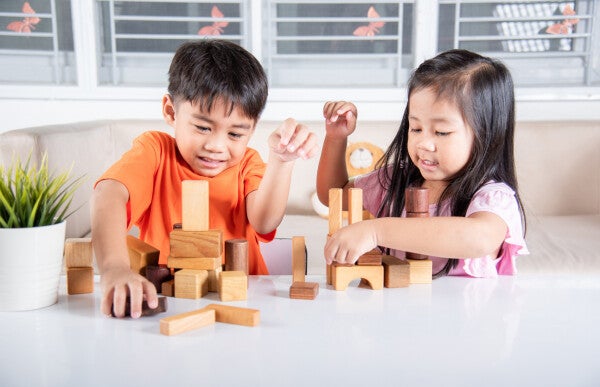
When kids play, they learn emotional regulation, fair play, physical limitations, and more things they can’t master in the classroom.
Child's play isn't superficial or aimless. It's the foundation of childhood development. Experts—from pediatricians to child psychologists—emphasize that play is not merely a way to pass time. It plays a vital role in your child's overall well-being.
“I often remind parents that play is not just fun. It is essential for healthy growth,” Dr. Carolyn Grace T. Madariaga, MD-MBA, FPPS, DPSDBP of Wunderkids Multispecialty Clinic and Therapy Center. “When children play, they’re building skills across every area of development: physical strength, language, problem‑solving, emotional regulation, and social connection.”
A neurodevelopmental pediatrician, Dr. Madariaga adds that “from a brain perspective, play actually shapes how the brain grows and functions. It strengthens the connections between neurons, which supports learning, memory, and self‑control.”
1. Physical play can boost their motor skills.
Physical perks are perhaps the most obvious benefits of playtime. From peek-a-boo to habul-habulan, these games can develop gross and fine motor skills. Gross motor skills refer to abilities that use the body’s larger muscles, such as climbing, jumping, and running. Fine motor skills, on the other hand, involve smaller muscles for precision tasks, such as picking up small objects or drawing.
These activities don’t just build coordination and balance and advance physical health. They also help children understand their own bodies and physical limits.
Research published in the Occupational Therapy Journal of Research shows that active play is also linked to better sleep, stronger immune systems, and lower stress levels. According to another paper in Children, for kids who struggle with focus or restlessness, regular play is not optional—it’s a necessary regulation.
2. Games can improve cognitive and mental development.
Did you know that even sorting pebbles in your backyard can help with your child’s cognitive skills and brain development? Such activities enhance problem-solving abilities, attention span, and imagination. Early exposure to these forms of play aids in infant brain development and sets the stage for successful early childhood education.
Toddlers can practice with puzzles and blocks, while even a simple game of jackstones or sungka can teach logic and strategy.
3. Kids’ play can enhance emotional growth.
Tantrums, big feelings, and emotional shutdowns aren’t signs of “bad behavior.” More often, they’re signs that a child doesn’t yet know how to process their feelings. Kids don’t naturally have the words for fear, frustration, jealousy, or anxiety—so they express them through play. When a child reenacts a scary doctor visit using doll or pretends to scold a toy, they’re actually working through emotions they can’t articulate yet.
Kids’ play also builds emotional bonds, especially when you make space for it. When you follow your child’s lead, listen to their stories, or simply sit beside them while they play, you send a powerful message: I see you, and your feelings matter. That sense of safety makes it easier for children to calm and cope. Over time, play becomes how they practice patience, empathy, and self-control—waiting their turn, caring for a “hurt” toy, or adjusting when a game doesn’t go their way. These moments may look simple, but they’re the building blocks of emotional resilience.
4. Social skills are learned through cooperative play.
Not all social skills can be taught through reminders or lectures. Concepts like sharing, fairness, and compromise are abstract for young children, but through kids’ play, they become real. Games quietly teach children how to negotiate (“Ikaw muna, ako next”), how to handle conflict, and how to accept that others have ideas and feelings too. These lessons happen organically, without pressure or correction.
Play also gives children a low-stakes space to experience social challenges. When someone changes the rules, cuts in line, or wants to quit, kids feel disappointment, frustration, or even rejection—and then learn how to respond. Over time, they start picking up social cues: who looks upset, who wants to join in, who needs space.
Even solitary play has social value. Children who are comfortable playing on their own often develop confidence, independence, and emotional self-regulation. These are the kids who often grow into secure, grounded individuals—comfortable both connecting with others and standing on their own.
5. Kids’ play can help with language and speech.
Whether you’re humming “Bahay Kubo” during bath time, reciting “Baa Baa Black Sheep,” or sharing stories in the shade of a mango tree, these simple moments of verbal play are doing heavy lifting. These aren't just sweet interactions; they’re fueling your little one’s language and speech development.
“Children often use more complex words and sentences when playing with peers, and traditional toys encourage richer dialogue than electronic ones because they invite imagination and conversation, says Dr. Maldariaga.
By turning everyday talk into play, you’re helping them hit those crucial milestones and giving them the best possible start for a lifetime of expression.
Is there a difference between indoor and outdoor play?
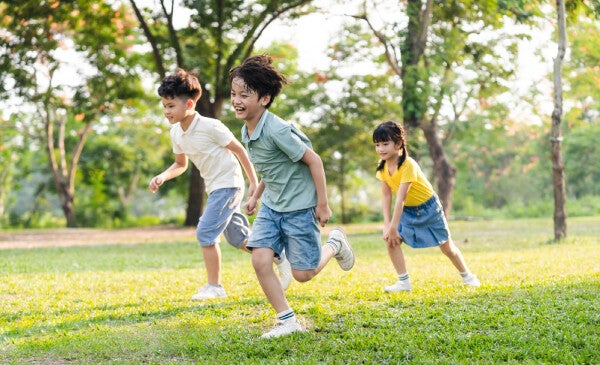
Balance your children’s playtime with indoor and outdoor activities.
Kids’ play looks different depending on where it happens, but both indoor and outdoor play offer important, complementary benefits.
According to Maldariaga, not all play is equal when it comes to supporting healthy development. “Outdoor play, for example, consistently shows stronger benefits compared to screen‑based play. Research has found that children who spend more time outdoors develop better social skills, attention, and emotional regulation, she explains.
Outdoor play supports physical health and encourages movement, exploration, and interaction with peers, which builds language, cooperation, and problem‑solving, she adds.
Running, climbing, biking, and free movement also help children release pent-up energy, improve coordination, and build strength. Being outside also lowers stress and improves mood, according to a study in Child Care Health and Development. Even old-school Filipino games like langit lupa and tumbang preso nurture teamwork and resilience. For many kids, outdoor kids play is where confidence grows fastest. Just don’t forget the SPF!
Indoor play is often where imagination and focus deepen. When children play inside—building with blocks, drawing, bahay-bahayan—they learn to entertain themselves, problem-solve, and concentrate. Quiet play helps kids process emotions, especially after long school days or overstimulating environments. It’s also where many children feel safest acting out feelings they can’t yet explain.
You don’t have to choose between either. Both types of play matter! Outdoor play builds physical confidence and stress relief, while indoor play nurtures creativity and emotional safety.
However, Dr. Maldariaga cautions against confusing indoor play with screentime.
“Excessive screen use has been linked to poorer social outcomes and higher risks for issues like depression, behavioral problems, and lower academic achievement,” she explains. While some digital games may offer limited benefits, such as practicing attention or certain problem‑solving skills, they don’t provide the same whole‑body, whole‑mind growth that traditional play does.”
How Parents Can Support Kids’ Play (Without Overcomplicating It)
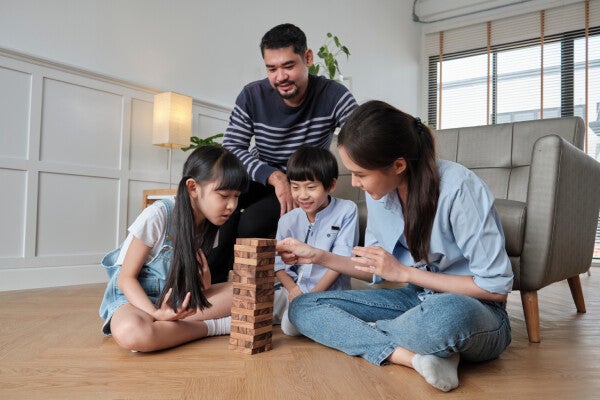
Many parents believe their children’s achievements are rooted in academics, but family playtime can do more for their future.
Supporting kids’ play doesn’t mean turning your home into a playroom, planning Pinterest-worthy activities, or equipping your kids’ bedrooms with slides, forts, and obstacle courses. Most of the time, it’s about creating room physically and emotionally for such fun activities.
1. Protect playtime.
This can be as simple as not filling every afternoon with lessons or screen time. The American Academy of Pediatrics states that even though highly scheduled children can appear thriving, many are also dealing with anxiety and signs of increased stress. Kids need unstructured moments where they decide what to do. Boredom isn’t a problem. It’s often the beginning of creativity.
2. Resist the urge to direct or correct.
When kids play, they don’t need constant instructions or reminders to “do it properly.” Let them lead. If a game doesn’t make sense to you, that’s okay; it’s not meant to.
“True play is child‑driven, not usually adult‑directed,” says Dr. Maldariaga. “It’s about curiosity, discovery, and joy. When parents allow children the freedom to play, they’re supporting growth and development in the most natural way possible.”
Remember, Kids’ play is about exploration, not outcomes.
3. Be present when it counts.
“One of the most important things I tell parents is that it’s not about the number of hours, it’s about the quality of the time you spend playing with your child,” says Dr. Maldariaga.
You don’t need to play with your child all the time, but showing interest matters. A simple “Ano ‘yan?” or sitting nearby while they play sends the message that what they’re doing is important. For younger kids, occasional participation strengthens emotional bonds and makes them feel seen.
“Children benefit most when parents actively join in or are present in co-play. Two‑way conversations, facial expressions, and shared moments during play build language and social skills far more than passive screen use,” explains Dr. Maldariaga.
4. Model balance.
When children see parents resting, enjoying hobbies, or taking breaks without guilt, they learn that life isn’t only about productivity. This reinforces the idea that play and rest are valuable at every age.
Did you know that the United Nations High Commission for Human Rights recognizes play as a right of every child? At the end of the day, kids’ play doesn’t require more effort from parents. It just needs trust: trust that play is doing important work, even when it looks simple, messy, or unproductive from the outside.
Have some simple but effective kids’ play ideas? Share them with us on the ParenTeam Moms and Dads Facebook Group.
References
Jersey, Horizon Blue Cross Blue Shield of New. 2024. “The Truth About Children and Outdoor Play.” October 18, 2024. Accessed February 19, 2026. https://www.horizonhealthnews.com/the-truth-about-children-and-outdoor-play/
“Play Helps Children Build Better Brains. Here Are Some Ways to Get Kids Learning.” 2025. Harvard Graduate School of Education. January 14, 2025. Accessed February 19, 2026. https://www.gse.harvard.edu/ideas/usable-knowledge/25/01/play-helps-children-build-better-brains-here-are-some-ways-get-kids
“The Benefits of Playing With Your Child.” n.d. Johns Hopkins Medicine. Accessed February 19, 2026. https://www.hopkinsmedicine.org/health/wellness-and-prevention/the-benefits-of-playing-with-your-child
Related articles

10 Signs na Hiyang Ang Anak Sa Kinakain Niya
Makikita mo sa kilos, sa energy, at kahit sa pagtulog ng anak mo na hiyang ang anak mo sa kinakain nya!
7 mins to read

Back-to-School Prep: 8 Ways to Help Your Child Get Ready for Classes
Back-to-school blues, begone! These practical tips take the stress out of planning to help your child feel confident, prepared, and ready for the new school year.
6 mins to read

How Much Parental Pressure is Healthy for a Kindergartener?
Starting kindergarten is a big step for both kids and parents. Here’s how to strike a healthy balance between encouragement and setting expectations.
5 mins to read

7 Ways Family Love Boosts Your Child's Success
Family love gives your child confidence, resilience, and emotional safety. Learn how a nurturing home shapes success from early childhood onward.
5 mins to read

12 Filipino Children’s Books That Help You Teach the Big Lessons
Discuss kindness, courage, and family changes with Filipino children's books for every age. These stories give you the right words for life's important conversations.
6 mins to read

Kaya Ko ‘To, Mommy: Para sa Independent na Pagpapalaki
Mommy, napakalaki ng role mo sa pagpapalaki kay baby para siya ay maging independent. At kaya mo siyang i-train para maging independent kahit bata pa.
3 mins to read

10 Bible Stories for Kids That Teach Values They Can Live By
Teaching big values to preschoolers isn’t easy. These Bible stories for kids bring concepts like patience and kindness in a way little minds can get.
13 mins to read

Sterilized Milk Benefits for Growing Kids: What Parents Should Know
Sterilized milk benefits your whole household, from safety to shelf life. Here’s what it offers your family and your growing kids.
5 mins to read

7 ₱500 Budget Ulam Ideas to Feed Your Family
Use these budget ulam ideas to cook hearty yet wallet-friendly meals for your family.
6 mins to read

Does Your Preschooler Need Fresh Milk or Growing-Up Milk?
Fresh milk gives your preschooler a strong start—but does it cover everything they need? Here’s how to know if growing-up milk can help your child.
7 mins to read

6 Budget-Friendly Milk Products for Your Preschooler’s Baon
Milk products don’t have to strain your budget. Here are six affordable picks that fit your preschooler’s baon and their growing needs.
7 mins to read

6 Benefits of Protein in Milk for Preschoolers
Protein in milk gives your preschooler the fuel to play hard, grow strong, and fight germs—here’s exactly how it works and how much they need.
7 mins to read

Powdered Milk or Fortified Milk: What’s the Difference for Your Preschooler?
Powdered milk and fortified milk might seem similar, but they serve different purposes. Learn how they differ and which one your preschooler might need.
6 mins to read

Your 6 Ways to a Good Night’s Sleep
Have some problems with sleeping? Try these 6 tips for well-rested sleep.
3 mins to read

How to Build Your Child’s Attention Span
Nurture your child’s ability to concentrate from an early age—and give him the mental discipline to succeed in school and life
6 mins to read

Eat Healthy for a Good Immune System
Food is very important for a healthy immune system to fight all types of infections. What are the nutrients needed to keep us nourished?
3 mins to read

Why You Shouldn’t Force Picky Eaters – And What Works Better
Does your child refuse to a large variety of food? Learn the real issue behind picky eating, and how to get your child to warm up to healthier and more nutritious options.
4 mins to read

Why Play is Essential For Your Kid in Stressful Times
Check out this research-backed listicle of ways that play can ease tension and promote a more positive outlook for kids, particularly as the “post new normal” has upended their more carefree way of
6 mins to read

What to Do When Your Toddler Kicks, Hits or Screams
It's common for toddlers to throw tantrums and be aggressive. But you can teach them to control their temper even at a young age. Read this article to find out how.
4 mins to read


