


32 Weeks Pregnant: Prenatal Checkups Become Crucial Now
You're 32 weeks pregnant—yes, just one more month before you reach your little one's big debut! It's that stage where excitement and exhaustion start to blend as your body prepares for the final stretch.
Let's look at what's happening with your baby and what these changes mean for you this week.
Your Baby's Milestones at 32 Weeks
According to the American College of Obstetricians and Gynecologists (ACOG), your baby can measure about 43 cm (17 in) long and weigh around 1.8 kg (a little more than 4 lbs). They're now the size of a large papaya or pineapple!
You'll feel stronger fetal movements.
Your baby is taking up much more space in your belly. You might notice that at 32 weeks pregnant, baby movements feel stronger but less frequent, since they're curled up tighter now.
You'll also feel bigger stretches, rolls, or jabs that can make your whole belly shift. ACOG says your baby can stretch, kick, and even make small grasping motions with their hands at this stage. To know more about fetal movements, head to Week 27.
Your baby's lungs and bones continue to develop.
Most of your baby's organ development is complete by now, but the lungs are still maturing. Your baby's bones are still soft, but they've started storing iron, calcium, and phosphorus to support growth.
The bone marrow is hard at work forming red blood cells. And that fine hair that once covered most of their body (lanugo) begins to fall off.
Your baby is also gaining fat quickly, which helps regulate body temperature after birth. Rhythmic breathing movements are happening too, even though the lungs aren't fully mature yet.
Pregnancy Symptoms at 32 Weeks
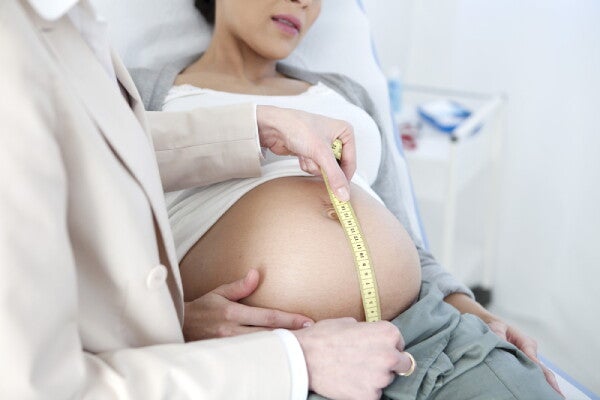
Fundal height is the primary screening tool to check your baby's growth.
Your ob-gyn typically starts measuring your fundal height during prenatal checkups after Week 24. Fundal height, or the distance from the top of your uterus to your pubic bone, often matches the number of weeks you're pregnant, so it's now around 32 cm (12.5 in).
With your growing belly, you'll likely feel more pressure in your back, ribs, and belly as your uterus expands. Here are some of the most common pregnancy symptoms:
Heartburn or reflux
Hormonal changes relax the muscles in your digestive tract, increasing the likelihood of acid reflux. Try eating smaller meals and avoiding foods that trigger symptoms.
You can read more in this guide on heartburn during pregnancy, which discusses why some women mistake it as a sign of labor at 32 weeks pregnant.
Back and pelvic pain
Low back pain at 32 weeks pregnant is typical since you're carrying extra weight. You can also have pelvic girdle pain (you feel it in your pelvic joints, hips, or groin). But if pain comes with numbness, weakness, or vaginal bleeding, get checked right away.
Shortness of breath
As your growing uterus presses against your diaphragm, you'll feel slightly out of breath, especially when climbing stairs or even when just lying flat on the bed. But if breathing feels difficult even at rest, or you notice chest pain, seek medical help right away.
Try sitting upright or sleeping on your side to give your lungs more room. You can read more in Best Pregnancy Sleeping Positions by Trimester.
Nausea and vomiting
Though more common in early pregnancy, nausea and vomiting at 32 weeks pregnant can persist, especially if you have a condition called hyperemesis gravidarum. This type of extreme morning sickness can lead to dehydration, warns the Royal College of Obstetricians and Gynaecologists (RCOG).
If you're dehydrated, RCOG adds, you might feel really thirsty, drowsy, and your urine might become darker yellow or even brown. Women in this situation might need to go to the hospital.
You can check Week 31 and Week 33 to learn more about your symptoms this third trimester.
Your Weight at 32 Weeks Pregnant
By the time you're 32 weeks pregnant, you've been gaining weight steadily as expected of a healthy pregnancy. But how much depends on your body mass index (BMI) before you became pregnant.
Below, the US Centers for Disease Control and Prevention (CDC) provides the ideal weight gain based on your pre-pregnancy BMI.
| BMI | Ideal weight gain throughout the pregnancy |
| Less than 18.5 | 23 to 28 kg (50 to 62 lbs.) |
| 18.5-24.9 | 17 to 24.5 kg (37 to 54 lbs.) |
| 25-29.9 | 14 to 23 kg (31 to 50 lbs.) |
| 30-39.9 | 11 to 19 kg (25-42 lbs) |
What's more important than the number on the scale is the trend or pattern. A sudden weight loss could suggest dehydration, poor appetite due to reflux, or a more serious concern, such as growth restriction.
On the other hand, rapid weight gain over a short period might point to water retention or a condition such as preeclampsia, especially if it's accompanied by swelling in your face, hands, or feet.
If your doctor notices a significant change in your weight pattern, they might check your blood pressure, urine, or order an ultrasound to ensure your baby's growth and amniotic fluid are on track.
Prenatal Care in the Third Trimester

You might feel some mild cramping at 32 weeks pregnant, which might be caused by false contractions (Braxton Hicks).
Your prenatal checkups become more frequent when you're 32 weeks pregnant. ACOG notes that the schedule can be adjusted depending on your health and pregnancy risk level. For instance, your doctor may want to check on you every two weeks instead of once a month.
Missing even one appointment can mean overlooking early warning signs, so it's best to stick to your schedule.
Vaccines and lab screenings
During this trimester, your doctor will also recommend certain vaccines and lab tests. The Tdap vaccine (tetanus, diphtheria, and pertussis) is typically given between Week 27 and Week 36 to help protect your newborn from whooping cough.
Antenatal fetal surveillance
High-risk pregnancies will need closer monitoring through antenatal fetal surveillance, especially if there are concerns about your baby's growth or health. This can involve nonstress tests or regular ultrasounds to check the baby's movements, heartbeat, and amniotic fluid levels.
According to ACOG, fetal surveillance often begins around 32 weeks for high-risk pregnancies, such as those involving high blood pressure, diabetes, or signs that the baby may not be growing as expected. Tests can be done once or twice a week, depending on your doctor's recommendation.
Healthy Pregnancy Nutrition
Now that you're 32 weeks pregnant, your baby's growth demands a little more energy, but not as much as you might think. CDC says you need around 450 extra calories a day in the third trimester.
The Pinggang Pinoy for pregnant women guide suggests filling your plate this way:
- 1/2 of the plate with Glow foods (vegetables and fruits)
- 1/3 of the plate with Go foods (rice or other grains)
- 1/6 of the plate with Grow foods (fish, chicken, or tofu)
For more ideas on balanced nutrition, read A 7-Day Healthy Ulam Meal Plan for Pregnant Women and Essential Vitamins for Pregnant Women in the Philippines.
The Pinggang Pinoy guidelines also recommend drinking at least 9 glasses of water throughout the day and 1 glass of milk daily. Dehydration can make pregnancy symptoms like cramps or constipation worse.
If you're unsure whether you're meeting your nutritional needs, track your weight gain and discuss your progress with your doctor or nutritionist.
Getting Ready for Delivery
With your baby's growth nearly complete and your body gearing up for labor, this week is the time to slow down. Rest when you can, and start preparing for the big day.
You can begin packing your hospital bag for you and your baby, such as comfortable clothes, toiletries, important documents like your birth plan, and a going-home outfit from your list of newborn essentials.
Don't put off your maternity leave arrangements to the last minute. Know what to prepare to claim your benefits with this guide on SSS and PhilHealth. Your husband is also entitled to paternity leave.
While most body aches and digestive troubles are common at 32 weeks pregnant, symptoms not to ignore include severe back pain, persistent vomiting, bleeding, sudden swelling, or contractions that come and go regularly.
Call your doctor or bring yourself to the emergency room if you experience the said symptoms. These could point to a serious pregnancy complication or preterm labor that could lead to your baby being born prematurely.
When you're 32 weeks pregnant, every step you take helps you feel more in control as you head into the final stretch before meeting your baby.
Find out what other moms' experiences are like during this pregnancy week on the ParenTeam's Moms and Dads Facebook group!
References
“Fetal Development: MedlinePlus Medical Encyclopedia.” Accessed November 6, 2025. https://medlineplus.gov/ency/article/002398.htm
Fowler, Josephine R., Heba Mahdy, Elsa S. Vadakekut, and Brian W. Jack. “Antepartum Care in the Second and Third Trimester.” StatPearls - NCBI Bookshelf, July 18, 2024. https://www.ncbi.nlm.nih.gov/books/NBK448166/
“Healthy Weight Gain During Pregnancy.” Accessed November 6, 2025. https://webassets.nationalacademies.org/whattogain/
RCOG. “Pregnancy Sickness (Nausea and Vomiting of Pregnancy and Hyperemesis Gravidarum) | RCOG.” Accessed November 6, 2025. https://www.rcog.org.uk/for-the-public/browse-our-patient-information/pregnancy-sickness-nausea-and-vomiting-of-pregnancy-and-hyperemesis-gravidarum/
ACOG. “Tailored Prenatal Care Delivery for Pregnant Individuals.” Accessed November 6, 2025. https://www.acog.org/clinical/clinical-guidance/clinical-consensus/articles/2025/04/tailored-prenatal-care-delivery-for-pregnant-individuals
Maternal Infant Health. “Weight Gain During Pregnancy,” May 15, 2024. Accessed November 6, 2025. https://www.cdc.gov/maternal-infant-health/pregnancy-weight/index.html
Related articles

The Complete Birth Plan Guide for Filipino Moms: An Ob-Gyn Weighs In
Your birth plan is your voice in the delivery room. Here’s how to build one with real ob-gyn advice and two moms’ true stories.
11 mins to read

28 Weeks Pregnant: Baby Development, Symptoms, and Tips for Mommies
Your guide to being 28 weeks pregnant is here! Learn about key baby development milestones, how to manage new symptoms, and what you can do to stay comfortable.
6 mins to read

The Stages of Pregnancy: What to Expect for You and Baby
Get to know the stages of pregnancy! Learn about each trimester, track your baby's growth, and embrace your body’s changes.
5 mins to read

How to Track Ovulation Symptoms If You Have Irregular Periods
Tracking ovulation symptoms is key when your cycle changes. Learn how to read your body’s signs and spot your fertile window even with irregular periods.
10 mins to read

Ginger Tea in Pregnancy: Is It Safe for Morning Sickness?
Ginger tea in pregnancy can help ease morning sickness, but safe doesn’t mean unlimited. Here’s what your ob-gyn wants you to know about salabat and dosage.
7 mins to read

Does Milk Help You Sleep? How a Glass Before Bedtime Helps Kids Unwind
Does milk help you sleep? A pediatric nutrition specialist breaks down what’s true, what’s myth, and how bedtime milk fits your child’s routine.
6 mins to read

A Doctor Explains Baby Poop Color: What’s Typical and What’s Not
Baby poop color can change often, from mustard yellow to green to brown. Get a pediatrician’s take on every shade, and know exactly when to call your doctor.
10 mins to read

A Doctor Explains Cramps During Pregnancy and Other Discomforts
Experiencing cramps during pregnancy? A doctor explains what causes it, how to ease it, and when it’s worth a call to your OB to help bring you peace of mind.
7 mins to read

How a Pregnancy App Can Help You Track Your Baby’s Development
A pregnancy app can help you see how your baby grows each week. It’s a simple way to feel confident and ready for every new change.
7 mins to read

Your Complete Guide to the Types of Milk in the Grocery Aisle
Confused by the types of milk lining the grocery shelf? Here’s a clear way to compare full cream, fresh, fortified, and plant-based options for your family.
7 mins to read

Best Milk for Pregnant Women: What Nutrients to Look For
Not all milk for pregnant women is the same. Know the six nutrients that actually matter—and what to look for in nutrition labels for the best buy.
9 mins to read

A Derma’s Guide to Pregnancy Skin Care: What’s Safe and What to Avoid
Building a safe pregnancy skin care routine starts with checking the label. Discover the best ingredients for your skin and the chemicals you need to avoid right now.
8 mins to read

Early Pregnancy Pain Areas: A Dad’s Guide to Comforting His Partner
Learn how to help your partner manage early pregnancy pain areas. Small comforts like checking in, prepping light meals, and doing her chores make a huge difference.
6 mins to read

How to Deal with Pregnancy Hormones and Mood Swings
Pregnancy hormones can intensify your emotions. Learn simple ways you and your partner can handle those mood swings and get the support you need.
8 mins to read

Doctor-Approved Ways to Ease Acid Reflux in Pregnancy
Dealing with acid reflux in pregnancy is uncomfortable. Discover simple food tweaks, better sleep habits, and other doctor-approved tips to ease that sour burn today.
5 mins to read

A Doctor Explains Pregnancy Spotting Colors and Flow
Understanding your pregnancy spotting color and flow can help you spot warning signs early. Discover what to expect and when to call your doctor.
6 mins to read

Updated! 5 PhilHealth Benefits for You and Baby
Your PhilHealth benefits cover more than just delivery day. Here's everything you can claim under the 2026 expanded maternity benefits.
8 mins to read

5 Ways to Manage a Pregnancy Rash in the Hot Months
Treat a pregnancy rash by adjusting your daily hygiene habits. Discover how cool midday baths, gentle soaps, and loose clothing can soothe your skin now.
6 mins to read

1 Month Pregnant? A Guide to Symptoms, Baby Development, and Nutrition
Understand exactly what happens when you're 1 month pregnant! Explore common symptoms, how your baby starts growing, and vital nutrition tips for this crucial stage.
6 mins to read


