


You’ve heard the horror stories: a helper who constantly extends her day off without warning, someone glued to her phone while the toddler is left alone, or worse—stories of harsh discipline. It’s enough to make you anxious about who to trust inside your home. That’s why finding a green flag yaya isn’t just nice to have—it’s necessary.
The right yaya does so much more than just watch the clock. She respects your home, keeps your child safe, and follows instructions so you can leave with confidence. Instead of adding stress, she makes your routine smoother.
So, how do you actually find one—and make sure she’s truly a green flag? Check out these tips to help with your search.
Step 1: Set Your Needs and Budget
Before you start looking, be clear on what you need.
Define the role.
In many homes, the lines get blurred, but a good setup starts with clear expectations. A kasambahay (house helper) usually focuses on the house—cleaning floors, doing laundry, and cooking.
A yaya’s main responsibilities are centered on your child’s safety, feeding, and development. Expecting your yaya to scrub the bathroom while watching your toddler sets her up to fail.
Do this first: Decide now if you need a child-only yaya or an all-around helper, as this will affect her responsibilities and your budget.
Know your non-negotiables.
Consider your must-haves, such as age preference, years of experience, or even if you’re more comfortable with someone from a specific province.
Do this first: List your deal-breakers clearly. Consider things like:
- Is she comfortable with pets?
- Does she have basic first-aid knowledge for toddlers?
- Is she okay with a no-cellphone rule while she's with your child?
- Is she willing to undergo a pre-employment medical exam?
Finalize the schedule and budget.
Be clear about the schedule. Do you need a stay-in, or is a stay-out yaya better for your space? Set a salary you can afford while still meeting the legal requirements for benefits.
Aside from paying her SSS, PhilHealth, and Pag-IBIG contributions, the Batas Kasambahay (R.A. 10361) requires you to provide a 13th-month pay, at least one full day off per week, and five days of paid annual leave once she completes a year of service. Be honest about this package can help you attract yayas who are looking for long-term work.
Do this first: Create a monthly yaya budget, including the base salary with government contributions, and a little extra for her personal hygiene supplies or emergency needs.
Step 2: Where to Find Your Green Flag Yaya

Ask trusted friends and family for direct referrals or screen online groups to find the perfect green flag yaya.
Once you know what you need, the next challenge is finding the right places to source your potential teammate.
Ask people you trust for referrals.
Reach out to your relatives, friends, or even trusted neighbors. A referral from someone you know often serves as an initial character check, since the person recommending them already knows their work ethic.
Do this first: Post a "looking for yaya" status on your social media profile or send a message to your family’s group chat. Be specific about your location and the age of your child to get better matches.
Explore online groups and agencies.
If referrals aren't working, you can look through reputable agencies or social media groups. If you use Facebook groups to find your yaya, be extra careful of pseudo-agencies or individuals with fake profiles and forged clearances. Agencies usually cost more, but many handle the initial screening and offer replacements if things don't work out.
Do this first: Join local community groups specifically for yayas and kasambahays in your city. Look at the comments on a candidate's profile to see if other employers have left positive or negative feedback about them.
Step 3: Look for the Green Flag During Interviews
The interview is your chance to see if her personality and instincts match your parenting style.
Look for the green flags in her personality.
When you meet, pay attention to the small details. Does she arrive on time? Is she dressed neatly, and does she have a warm, gentle way of speaking? The right candidate shows respect through her posture and eye contact. Since she’ll be your toddler’s yaya, her energy should feel calm and approachable rather than harsh or distracted.
Do this first: Look for clean nails and tidy hair, as these are basic signs that she understands hygiene—a must for anyone handling a toddler. If she arrives late without a valid reason, it may signal how she will handle her schedule later on.
Watch out for interview red flags.
Keep an eye out for signs that she might not be the right fit. If she’s constantly checking her phone during your conversation, speaks very negatively about all her past employers, or seems disinterested in your child's routine, take note. These behaviors during an interview can signal a lack of focus or a difficult attitude later on.
Do this first: Pay attention to how she answers questions about her previous work. If her story about why she left her last post keeps changing, it may be a sign of dishonesty.
Ask situational questions.
Instead of asking "Are you good with kids?", try asking, "What would you do if my 2-year-old throws a tantrum?" or "How do you react if my baby won't stop crying?" Her answers will tell you if she has the patience and the right instincts for childcare. You want someone who stays calm under pressure.
Do this first: Prepare a list of three what-if scenarios based on your child's specific habits. Listen for answers that prioritize safety, hygiene, and patience over shortcuts or discipline.
Step 4: Screen with a Background Check
Once you’ve found someone you like, checking her history is the best way to protect your family’s safety.
Verify her documents first.
Ask for an NBI clearance, barangay clearance, and at least one valid ID. These documents confirm her identity and ensure she has no criminal record, giving you peace of mind before she enters your home. Since she’ll be in close contact with your growing baby, it’s highly recommended to require a basic medical exam or a recent chest X-ray to rule out contagious conditions like Tuberculosis.
Checking a candidate’s social media profiles may also give you insight into the kind of person she is. Be wary of those who post photos of their former charges inside their employer’s house.
Do this first: Create a physical or digital yaya folder. Take a clear photo or photocopy of her clearances and ID so you have them on hand for your records before the trial period starts.
Call previous employers.
A major green flag is someone who willingly gives contact details of her former amo. Call these references. Ask about her nanny duties and responsibilities, and why she left. Did she handle tantrums well? Was she reliable? Hearing a positive review from another parent is the best way to verify her skills.
Do this first: When you call a reference, ask: "Would you hire her again?" Their hesitation or quick yes tells you everything you need to know.
Step 5: Start a Paid Day Trial
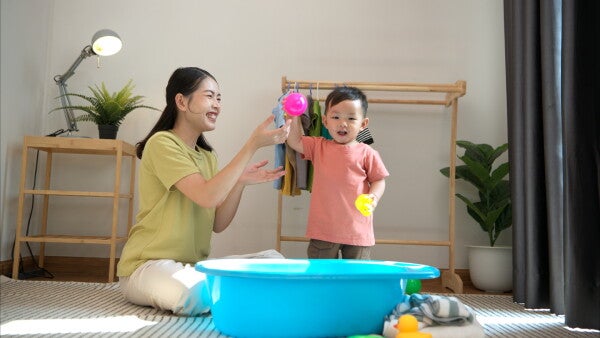
Use the paid trial to observe how she interacts with your toddler and see if she follows your house rules without reminders.
Nothing tells you more about a yaya's work ethic than seeing her in action inside your own home.
How to manage the trial period.
Once you like a candidate, start a trial period where she works in your home for three to seven days, so you can see how she actually works. It's important to pay her for these days, even if you decide not to hire her permanently.
Do this first: Walk her through your home on day one. Show her where the first-aid kit is, how to use your appliances, and explain your rules on visitors or gadget use while she is on duty.
Watch for initiative.
During the trial, notice if she washes her hands before touching the baby's food or if she sterilizes bottles correctly. Does she follow your responsibilities list without being reminded? A reliable yaya sees what needs to be done—like picking up toys after playtime—without you telling her every single time.
Do this first: Give her one specific task with two or three steps (like "Please prep the bag for our walk and don't forget the water and a face towel") and see if she completes it accurately without reminders.
Step 6: Check the Vibe between Yaya and Your Child
A long-term partnership works best when both your child and your new yaya feel happy and supported.
Watch how your toddler reacts.
Observe your child’s interaction with the new yaya. Does your toddler feel comfortable? Does the candidate engage in play, or is she constantly looking at her phone? While some children take time to warm up, the right yaya will make a consistent effort to bond and make your child feel safe.
Beyond your checklist, pay attention to the rapport—both with your child and with you. A candidate can tick all the boxes on paper, but if you two just don’t click, it will be a difficult setup. Remember, this person will be sharing your home and spending almost every day with you and your child. The overall energy has to feel right for the whole family.
Do this first: Leave the room for 15 minutes and listen from a distance. Does she talk to the child, or is there total silence? A yaya who talks and plays with your toddler even when you aren't watching is a keeper.
Establish open lines for feedback.
The International Labour Organization (2021) highlights that setting clear job expectations—like having a concrete agreement on hours and duties—is a vital step in providing decent work.
When you treat your yaya as a respected professional and make her responsibilities clear from the start, she’s much more likely to stay with your family long-term. Tell her what she’s doing well, and gently correct her if she misses a step in the routine.
Do this first: Sit down for a contract review before the trial ends. Under the R.A. 10361, you’re legally required to provide a written contract. List her specific responsibilities, her guaranteed rest days, and your house rules on paper so there are no "he-said, she-said" arguments later on.
Building a Lasting Bond with Your Yaya
Finding a green flag yaya takes patience, but it’s worth the effort for your child's safety and your own mental health. When you find that person, treat them with the respect they deserve. A happy yaya is more likely to stay and do her best work—and that stability is exactly what your toddler needs during their growing years.
Still unsure about your interview questions? Jump into the ParenTeam Moms and Dads Facebook group to ask other parents for real-life advice on hiring a green flag yaya today.
References
Bautista, Tisha C. The Maid Manual. Good Housekeeping. Summit Books, 2008.
Bautista, Tisha C. The Yaya Manual. Smart Parenting. Summit Books, 2010.
Labor Law PH. "R.A. 10361: Domestic Workers Act, Batas Kasambahay." Accessed February 26, 2026.
https://library.laborlaw.ph/r-a-10361-domestic-workers-act-batas-kasambahay/
Tina in Manila. "10 Tips in Looking for a Yaya Online." Tina in Manila (blog). January 23, 2019. Accessed February 26, 2026. https://tinainmanila.com/2019/01/23/10-tips-in-looking-for-a-yaya-online/
Related articles

12 Storybooks in Tagalog to Help Your Toddler Learn the Language
Looking for a storybook in Tagalog that your toddler will love? These picks build vocabulary, spark curiosity, and deepen your bond.
7 mins to read

Easy Pinoy Dinner Ideas Dads and Kids Can Cook for Mother’s Day
Need easy Pinoy dinner ideas? Surprise mom with a budget-friendly meal that dads and kids can quickly prep, cook, and enjoy together for a fun celebration at home.
6 mins to read

Where to Book a Christmas Photoshoot for Your Family
Your family's Christmas photoshoot deserves the perfect spot. Discover pro and self-shoot studios in and around Manila, plus tips on what to wear.
7 mins to read

6 Filipino Traditions to Teach Your Kids This Holy Week
Share these Filipino traditions with your kids this Lenten season. Guide them through Holy Week with these simple and meaningful family activities.
6 mins to read

GROWING TOGETHER: The Importance of Tracking Developmental Milestones in the First 2000 days. -2nd
The first 2,000 days are critical in shaping a child’s future—discover why every developmental milestone matters in these early years of growth and learning.
2 mins to read
GROWING TOGETHER: The Importance of Tracking Developmental Milestones in the First 2000 days.
The first 2,000 days are critical in shaping a child’s future—discover why every developmental milestone matters in these early years of growth and learning.
2 mins to read

Math for Kids: How to Instill a Love for Numbers Early
Math for kids doesn’t need worksheets. It needs stacked cups, sorted socks, and the games you’re already playing.
8 mins to read

25 Filipino Nursery Rhymes and Lullabies to Sing to Your Child
Explore this list of 25 Filipino nursery rhymes and lullabies. You can sing these songs to help your child learn, grow, and have fun!
9 mins to read

How to Survive Toddler Haircuts Without the Tears
Say goodbye to the struggles of toddler haircuts. Here are practical ways to make salon visits fun, tear-free, and comfortable for your child.
6 mins to read

Teach Kids Safety: 4 Ways to Gamify Your Family Emergency Plan
Practice your emergency plan with fun games that teach kids safety roles. You’ll help them stay calm, learn important contacts, and prepare for any disaster.
7 mins to read

8 Simple Ways to Inspire Healthy Eating Habits in the Whole Family
From trying new dishes to setting an example at the dinner table, here’s how parents can instill healthy eating habits for the entire household.
6 mins to read

Pedia Shares 3 Major Signs You May Have a Child With Special Needs
Here's what pedias want you to know if you suspect you have a child with special needs.
8 mins to read

How to Protect Your Active Toddler from Extreme Heat in the Philippines
Parenting in a hot climate can add to your stress levels! But your kids rely on you even more during these warmer days. Here's the TLC they need.
6 mins to read

15 Brain Games to Help Your Babies and Toddlers Learn!
No pricey toys required. These brain games need just one important thing: Mom or Dad. Get ready to have fun with your little one!
8 mins to read

How to Discipline a Child Without Hitting or Yelling
Disciplining your child without yelling or hitting? It’s possible with these effective tips that build better behavior.
4 mins to read

7 Teacher-Recommended Reading Strategies to Use at Home
Get your little one to build their reading skills with these expert tips and strategies from a teacher.
4 mins to read

How to Control Emotions: 9 Ways to Help Toddlers Who Feel Too Much
Toddlers feel big emotions but are still learning to manage them. Discover science-backed, mom-approved tips to guide meltdowns into calm without losing your cool.
6 mins to read

10 Fun Activities to Keep Toddlers Entertained in the Heat
You can keep your toddler cool and engaged even on the hottest days while making the most of play-based learning!
6 mins to read

Milk Teeth: What Are They and When Do Kids Lose Them?
Your child's milk teeth are crucial for their health and development. Learn when they appear, fall out, and how to care for them every step of the way.
6 mins to read


