


How to Manage Postpartum Hair Loss: Expert Tips from a Dermatologist
You just had a baby—and now your hair is falling out in clumps. Don't panic. Postpartum hair loss is common, and almost every new mother goes through it. You might notice it while combing your hair, in the shower drain, or on your pillow. It can feel alarming, especially when you’re already sleep-deprived and overwhelmed. But the truth is: it's temporary, it's hormonal, and you can do something about it.
Board-certified dermatologist and dermatopathologist Dr. Riza Milante of Daily Skin Clinic breaks down exactly why it happens—and how to manage it. (If you're still in the thick of postpartum recovery, this guide is worth a read too!)
What Is Postpartum Hair Loss?
According to Dr. Milante, the shedding you're experiencing right now is medically known as telogen effluvium. It may sound intimidating, but it simply means your hair has entered a resting phase. "Telogen effluvium is temporary; it's not a scarring hair loss," she explains. Your hair will grow back over time.
Instead of losing hair in bald patches, you'll notice diffuse shedding, where your hair thins out all over. Eventually, you'll also spot plenty of tiny baby hairs sprouting around your face and hairline. Experiencing this kind of hair loss after giving birth is a part of your body’s reset after pregnancy.
Why It Happens: The Hormonal Shift
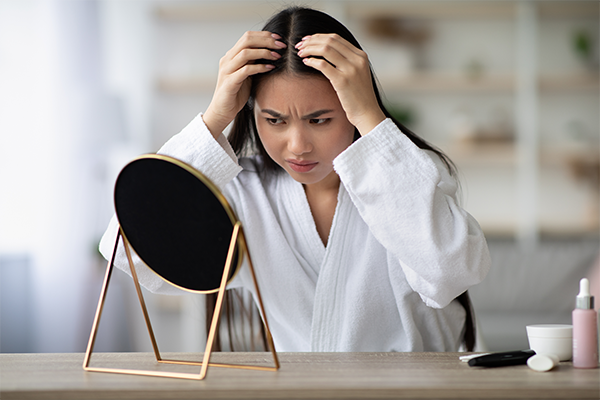
Hormonal changes after birth move more hair into the resting phase, leading to temporary thinning for many new moms.
When looking into postpartum hair loss causes, hormones are the primary factor. In a regular hair cycle, your strands constantly shift between a growing phase and a resting phase.
Dr. Milante explains that pregnancy brings a massive surge in estrogen, which essentially locks most of your hair into the growing phase. "Parang gaganda at ang full ng hair mo pag ganun. And they shed less," she notes.
Immediately after delivery, your estrogen levels fall sharply. This drop forces all those retained, thick hairs to shift directly into the resting phase. However, those resting strands take time to release from the scalp. "These telogen hairs—they're not immediately shed," she shares.
She also points out that the intense physical recovery and emotional shifts of having a new baby naturally add stress to your body can worsen shedding.
A Typical Timeline for Shedding and Regrowth
You’re probably wondering, how long does postpartum hair loss last, or when does postpartum hair loss stop? When you're seeing clumps of hair every day, it’s natural to want clear answers. While everybody recovers at their own pace, you can generally expect this typical timeline:
- Start: Noticeable shedding usually begins 2 to 6 months after delivery.
- Duration: This heavy shedding phase typically lasts for several months.
- Regrowth: New baby hairs become visible around 6 to 12 months postpartum.
To track your progress, keep a close eye on your hairline and temples for signs of recovery. Dr. Milante explains that healthy regrowth initially shows up as shorter, tapered hairs that are a bit finer than your original strands. "Over time, these hairs should become longer or denser," she reassures.
Gentle Ways to Manage Postpartum Hair Loss
You can’t stop the shedding itself, but you can prevent breakage from making it worse. But it helps to set the right expectations first when it comes to postpartum hair loss remedies.
Choose mild products to keep your scalp comfortable.
Because this shedding is a hormonal event, there isn’t a magic ingredient that completely stops the hair fall. Instead, Dr. Milante recommends focusing on keeping your scalp comfortable:
- Use gentle shampoos and conditioners. Look for products with conditioning agents, silicones, fatty acids, or mild surfactants to reduce friction and tangling.
- Avoid harsh products. Skip strong clarifying shampoos and products with heavy fragrances that easily dry out your hair.
- Treat dandruff separately. If you have dandruff, using an anti-fungal shampoo helps clear up your scalp, but it won't stop the actual hormonal shedding.
No shampoo or serum can stop hormonal shedding—but the right products can keep your scalp healthy and reduce breakage while your hair recovers.
Handle your fragile hair with care to minimize breakage.
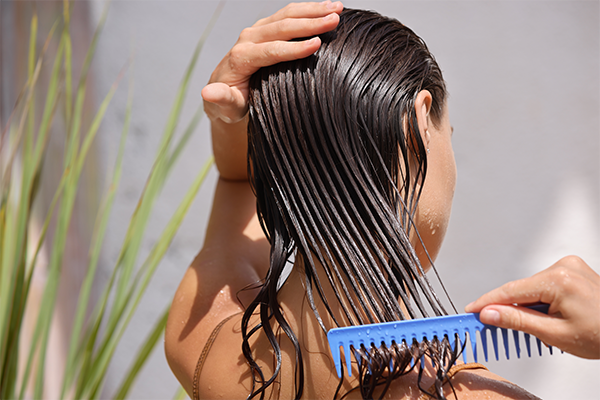
Using a wide-toothed comb helps you detangle your wet hair without pulling or causing any extra breakage to fragile strands.
Your hair is incredibly fragile right now, so how you handle it makes a huge difference. Dr. Milante suggests washing your hair just as often as you need to, but always avoiding rough, aggressive scrubbing on your scalp.
To further protect your strands, she suggests adopting these habits:
- Detangle carefully: Avoid heavy brushing when your hair is wet, as that is when it is most fragile. Use a dedicated wet brush or a wide-toothed comb.
- Ditch tight hairstyles: Pulling your hair into tight ponytails causes unnecessary tension. Switch to soft fabric scrunchies or spiral telephone wire ties.
- Skip chemical treatments: Hold off on bleaching and heat styling until the shedding phase fully settles down.
- Consider a fresh haircut: If the thinning around your hairline truly bothers you, Dr. Milante suggests asking your salon for a cut that minimizes the look of the shedding.
Follow this safety tip for you and your baby.
While managing your hair fall, keep your loose strands safely secured when you’re around your newborn. Dr. Milante advises tying your hair up in a loose bun—and asking your yaya or kasambahay, or anyone else holding the baby, to do the same.
"Sometimes if you have loose hair... they can actually tie around the fingers, toes, or the genitals of the baby," she warns. This can cause a hair tourniquet—a condition where hair wraps tightly around a baby’s fingers, toes, or genitals and cuts off circulation.
"That's one of the things that we always check if the baby is crying. Baka may maga na kasi naging parang tali na sa hands and feet nila." Keeping your hair gently pulled back protects your delicate strands and keeps your little one completely safe.
When to Seek Medical Advice
While postpartum hair loss is common, some signs mean it’s time to check in with your doctor. According to Dr. Milante, seek medical advice if you notice:
- Shedding that doesn’t slow down after several months
- No visible regrowth, such as baby hairs along your hairline
- A widening hair part or more noticeable thinning over time
- New hairs that stay thin and don’t thicken as they grow
It’s also worth checking for underlying factors like low iron or poor nutrition, which can prolong shedding and are often easy to address.
These symptoms might signal a different condition, such as female pattern hair loss or an internal thyroid issue, rather than just the typical postpartum shedding phase.
Navigating the Shedding Phase with Confidence
Postpartum hair loss can feel overwhelming, but it’s a manageable phase of your recovery. It’s your body's natural response to the hormonal shifts of pregnancy and childbirth. Focus on gentle care, reduce breakage, and watch for new growth as your hair gradually recovers. Most importantly, be patient and kind to yourself as your body slowly settles back into its regular rhythm.
You’re not alone in this experience! Head on over to the ParenTeam Moms and Dads Facebook group and share tips or ask questions on postpartum hair loss.
About Dr. Riza Milante
Dr. Riza Milante is a board-certified dermatologist and the sole practicing dermatopathologist in the Bicol region. She leads the Daily Skin Clinic, offering comprehensive medical, surgical, and aesthetic dermatological services using state-of-the-art technology. Dr. Milante honed her clinical skills through a dermatopathology fellowship at the University of California, San Francisco, alongside observerships at the Johns Hopkins Medical Institute. Combining a deep background in peer-reviewed clinical research with extensive hands-on expertise, she is well-versed in advanced procedures, including biopsies, skin cancer excisions, injectables, and laser treatments.
References
Cleveland Clinic. "Postpartum Hair Loss." Last modified June 13, 2022. Accessed April 24, 2026. https://my.clevelandclinic.org/health/diseases/23297-postpartum-hair-loss
Hirose, Asuka, Masakazu Terauchi, Tamami Odai, Ayako Fudono, Kotoi Tsurane, Masaki Sekiguchi, Misako Iwata, Tatsuhiko Anzai, Kunihiko Takahashi, and Naoyuki Miyasaka. "Investigation of Exacerbating Factors for Postpartum Hair Loss: A Questionnaire-Based Cross-Sectional Study." International Journal of Women's Dermatology 9, no. 2 (2023): e084. Accessed April 24, 2026. https://pmc.ncbi.nlm.nih.gov/articles/PMC10846762/
Hussein, R. S., and S. B. Dayel. "Telogen Effluvium, Diagnosis and Management: A Narrative Review." International Journal of Biomedicine 13, no. 1 (2023): 26–30. Accessed April 24, 2026. https://www.ijbm.org/articles/i49/ijbm_13(1)_ra4.pdf
Johns Hopkins Medicine. "Postpartum Hair Loss." Accessed April 24, 2026. https://www.hopkinsmedicine.org/health/wellness-and-prevention/postpartum-hair-loss
Related articles

Back to Work? How to Cope with Parental Separation Anxiety
Going back to work? Dealing with parental separation anxiety is typical for new moms and dads. Here’s how to cope with the guilt and help you and your baby adjust.
6 mins to read

Do You Need a Pacifier for Your Baby? What to Know Before Deciding
Here’s what a pediatrician wants you to know about using a pacifier.
9 mins to read

Iba ang Pambata: Why Age-Appropriate Milk Matters
You wouldn’t let your youngest child wear ate or kuya’s shoes—so why give them milk that isn’t made for their age? Milk is not one-size-fits-all.
5 mins to read

Wais Pag Sakto sa Edad: Why Age-Appropriate Milk Matters
Milk comes in many forms, but not all milk is made equal. Learn why kids need age-appropriate nutrition during their most critical years of growth.
6 mins to read

15 Filipino Parenting Myths: What to Keep or Let Go, According to Stage
Cravings and pwera usog? Filipino myths are part and parcel of parenting. Here’s what’s sentimental, what’s outdated, and what modern medicine actually says.
14 mins to read

Baby Toothpaste Guide: What to Use from First Tooth to Toddler Years
Baby toothpaste matters more than you’d think. Know how to pick the right one, use the right amount, and the right time to start, from that very first tooth.
7 mins to read

A Doctor Explains How to Use a Nasal Aspirator on Your Baby
A nasal aspirator can help your congested baby breathe easier, sleep better, and feed without a fight. Here’s how to use one safely, according to a pediatrician.
8 mins to read

PhilHealth Contribution for Self-Employed Parents: Requirements and Rates
How much is the PhilHealth contribution for self-employed parents? It depends on your declared income. Learn the rates, the requirements, and how to pay it correctly.
4 mins to read

5 Signs You Need to Switch Your Baby’s Laundry Detergent
Does your little one have a rash that won’t go away? It could be caused by your baby laundry detergent. Here’s how to spot the signs and know what to do next.
4 mins to read

What Is Stunted Growth? A Pediatrician’s Guide for Parents
Worried people think your child is bansot or pandak, Mommy? Behind that teasing is a real concern: stunted growth. Here’s how pediatricians check for it.
4 mins to read

Newborn Essentials: A Real-Parent Guide for the First 90 Days
Overwhelmed by baby shopping? Check out this no-hype guide for Filipino parents that break down the true newborn essentials—plus which items to skip or splurge on.
7 mins to read

Baptism and Christening Costs in the Philippines: What to Expect
Baptism and christening costs in the Philippines add up fast. See where the money goes, and where you can spend less without losing the meaning.
8 mins to read

How to Claim 14 Days of Paternity Leave: A Dad’s HR Filing Guide
Paternity leave gives you seven paid days to support your wife and bond with your baby. Learn how to qualify, file with HR, and claim up to 14 days total.
7 mins to read

A Parent’s Guide to Caring for Cradle Cap in Babies
Cradle cap in babies is common, harmless, and easy to manage with the right daily routine. Here’s what actually works, according to a pediatrician.
6 mins to read

15 Time-Saving Mother's Day Gift Ideas New and Toddler Moms
These useful gifts for new moms will make them feel supported, loved, and more like themselves again.
6 mins to read

How to Spot and Manage Your Baby’s Eczema at Home
Spotting baby eczema early helps you treat it fast. Learn to tell it apart from typical dry skin and explore easy routines to soothe their skin.
6 mins to read

6 DIY Montessori Toys You Can Make for Every Development Stage
Montessori toys built from household scraps? You can do it, too, Mom! Discover six DIY ideas that sharpen your child’s skills without the hefty price tag.
9 mins to read

Hooked on K-Dramas? 9 Korean Boy Names Inspired by Beloved Characters
These Korean boy names from popular K-dramas are perfect for your little one. Find a name with a beautiful meaning and strong character traits today.
9 mins to read

How Much Do You Need to Save for Your Child’s College Tuition Fees
It's never too early to think and plan for college tuition fees, which increase yearly. Here's how much they cost now and how to calculate future costs.
5 mins to read


