


You’ve finally met your baby after nine months of waiting. You feel overwhelming joy holding this tiny, fragile being in your arms, but then anxiety creeps in as you think about bringing them home. You worry about protecting them from infections and nurturing their growth. Don't panic! This guide will help you build a healthy environment for your little one by focusing on safety, daily routines, and your own well-being as a parent.
Design and Maintain a Safe Physical Space
Wondering where to start? The Centers for Disease Control and Prevention (CDC) explains that preparing your home starts with physical safety. Make these simple adjustments to create a safe space for your baby.
1. Focus on air quality and ventilation.
In the Philippines, where dust, heavy vehicle exhaust, and humid weather can easily trap pollutants indoors, making sure your home has proper air circulation is important. The World Health Organization (WHO) explains that good air quality reduces exposure to harmful pathogens and chemicals.
To keep the air fresh at home, you can open your windows during the cooler parts of the morning and late afternoon. You can also use an air purifier, or just point an electric fan away from your baby to keep the room well-ventilated. The WHO also recommends keeping your home free of smoke from cooking and smoking.
2. Keep the room at a comfortable temperature.
The American Academy of Pediatrics (AAP) warns that overheating increases the risk of sudden infant death syndrome (SIDS), so keep your baby comfortably dressed. A great rule of thumb from the AAP is to dress your little one in just one more layer than you would comfortably wear in that same room.
You can manage the heat by drawing the curtains during the hottest hours to block direct sunlight and keeping the room well ventilated. Just watch out for signs that your baby is too warm, such as a hot chest, sweating, or flushed skin.
3. Choose baby-safe and breathable materials.
When shopping for baby essentials, like crib sheets and clothes, stick to soft, breathable cotton linens to keep their skin cool and free from irritation. If you receive second-hand items or hand-me-downs, always wash them thoroughly with baby-safe detergents before letting your little one use them.
4. Keep surfaces sanitized and clean.
To help protect your newborn from infections, the WHO advises keeping your indoor spaces as clean as possible and storing away any unsafe or toxic household substances safely and securely.
Keeping the outdoor areas around your home clean and swept helps keep pests away, adding another layer of protection. Don't forget to wash your hands thoroughly with soap as well before holding your baby, especially after coming in from outside (or after a diaper change!).
You can also protect your newborn by limiting visitors in the early weeks and asking anyone who feels unwell to postpone their visit. Don’t be afraid to set a strict no-kissing-or-touching-the-face rule, either.
Build a Consistent Routine for Emotional Security
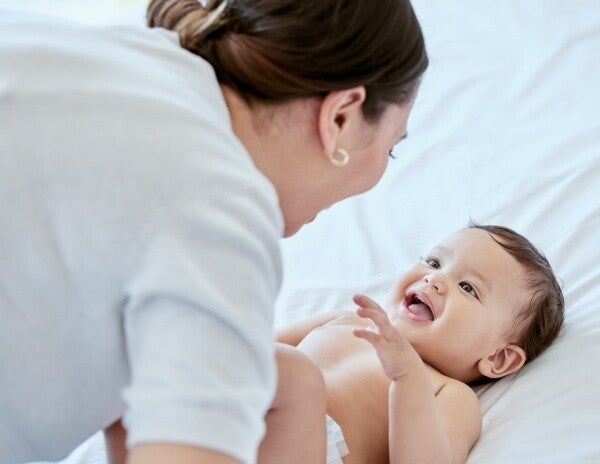
Looking and smiling at your baby during bathtime builds trust, making them feel loved in a healthy environment.
Once your physical space is safe, focus on emotional safety. The AAP explains that establishing healthy routines can make those early months feel more manageable. Start with regular feeding and bath times. By the second to fourth month, begin a consistent bedtime routine.
These predictable rhythms help your baby feel secure and make daily care smoother for you.
1. Keep feeding times calm.
Feeding your baby is a big part of your daily schedule, so it is important to make this time as peaceful as possible. Find a supportive chair and relax your shoulders before you begin. When you feel relaxed and calm, it creates a much better experience for you and helps you bond beautifully with your baby.
2. Use bath time as a time for bonding.
Bath time can become one of the first predictable routines you establish at home. It’s easy to treat diaper changes and bathing as chores, but they’re meaningful chances to connect.
Prepare all your supplies beforehand so you aren't rushing or leaving your baby unattended. Talk gently to your baby while you clean them up. Looking directly into their eyes, smiling, and cuddling them makes them feel loved.
3. Make time for gentle play.
Playtime is a wonderful way to support your baby’s development. The CDC recommends playing with your little one when they’re alert and relaxed. Keep a close eye out for signs of them feeling tired or fussy, so you know exactly when to take a break.
Make these moments engaging by reading to them or answering their little sounds with real words to help develop their language skills. Always offer plenty of praise and loving attention to create a wonderful learning environment.
4. Create a sleep schedule.
Sing Filipino lullabies or just hum a gentle tune. Keep the room dark and quiet, even during naps. Over time, this daily rhythm helps your baby sleep better and gives you a break to catch your breath.
A note of caution: The AAP advises that you ensure your newborn’s sleeping surface is firm, flat, and clear of blankets, pillows, pillow-like toys, and other items for a safe environment. Always place your baby on their back to sleep.
Support Your Own Well-Being as a Parent
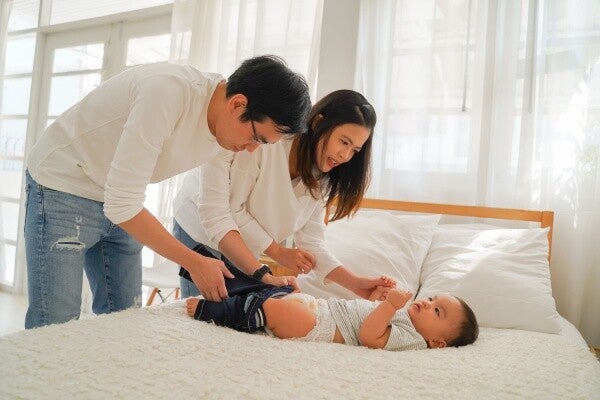
Sharing chores with your partner gives you more time to rest, making it easier to maintain a positive environment.
A healthy environment for your newborn also depends on you. When you’re rested, supported, and emotionally steady, you create a calmer, more secure space for your baby.
- Divide household chores: Sit down with your partner to split everyday tasks like laundry and cooking so neither of you burns out.
- Nourish your body: Drink plenty of water and eat balanced meals to keep your energy up.
- Rest when the baby rests: Take a break or sleep whenever your little one naps, because a healthy parent is the best foundation for a happy newborn.
Keep It Simple Every Day
Creating a healthy environment at home is all about practical, consistent habits. By improving airflow, building consistent routines, and protecting your own rest, you create a calm, safe home where your baby can grow and thrive.
Figuring out this whole healthy environment thing is so much easier together. Swap stories, ask questions, and share your everyday routines on the ParenTeam Moms and Dads Facebook group!
References
Flais, Shelly Vaziri. 2024. "The Importance of Family Routines." HealthyChildren.org. Last modified June 28, 2024. Accessed February 25, 2026. https://www.healthychildren.org/English/family-life/family-dynamics/Pages/The-Importance-of-Family-Routines.aspx
Office on Women’s Health. 2025. "Making Your Home Safe for Baby." U.S. Department of Health and Human Services. Last modified September 26, 2025. Accessed February 25, 2026. https://womenshealth.gov/pregnancy/getting-ready-baby/making-your-home-safe-baby
UNICEF. 2023. Early Childhood Development: UNICEF Vision for Every Child. July 2023. Accessed February 25, 2026. https://www.unicef.org/media/145336/file/Early_Childhood_Development_-_UNICEF_Vision_for_Every_Child.pdf
Related articles

Baptism and Christening Costs in the Philippines: What to Expect
Baptism and christening costs in the Philippines add up fast. See where the money goes, and where you can spend less without losing the meaning.
8 mins to read

15 Time-Saving Mother's Day Gift Ideas New and Toddler Moms
These useful gifts for new moms will make them feel supported, loved, and more like themselves again.
6 mins to read

6 DIY Montessori Toys You Can Make for Every Development Stage
Montessori toys built from household scraps? You can do it, too, Mom! Discover six DIY ideas that sharpen your child’s skills without the hefty price tag.
9 mins to read

Hooked on K-Dramas? 9 Korean Boy Names Inspired by Beloved Characters
These Korean boy names from popular K-dramas are perfect for your little one. Find a name with a beautiful meaning and strong character traits today.
9 mins to read

How to Choose Unique Girl Names That Are Meaningful and Special
Looking for unique girl names? Skip the usual top-10 lists and use these creative strategies to choose a meaningful, one-of-a-kind name for your daughter.
7 mins to read

15 Strong Baby Boy Names with Meaning for Your Little One
Explore baby boy names with meaning that fit your family’s style. Discover Tagalog names, Spanish-Christian picks, and modern choices that are meaningful and timeless.
6 mins to read

15 Work-Life Balance Hacks Every Mom Needs in Her Life Right Now
Time to build your version of work-life balance! Use these tips to learn what to let go and how to reclaim time for yourself without the guilt.
6 mins to read

Christening or Baptism: When to Schedule and What to Prepare
Your baby's christening or baptism marks a beautiful milestone for your family! Here's everything you need to know to plan for this important religious ceremony.
7 mins to read

10 '90s-Themed Birthday Party Ideas for Your 1-Year-Old
This '90s birthday party guide gives you 10 themes for a fun toddler party, from cartoon vibes to sensory play.
7 mins to read

New Mom? Here’s a Self-Care Plan for Your First Month
This self-care plan helps you manage your first month as a new mom. Learn how to handle sleep, healing, and home life with your little one.
7 mins to read

When and How to Get a PSA Birth Certificate for Your Baby
Knowing how to get a PSA birth certificate and when it becomes available can save you from unnecessary trips and delays.
6 mins to read

10 Ways Working Moms Can Simplify Life After Having a Baby
The early months after maternity leave are usually the hardest for a working mom. Here are a few practical tips to make the transition smoother.
6 mins to read

The Joy of Parenting: 5 Tips for Spending Quality Time with Your Baby
Spending quality time with your little one doesn’t require a vacation. Discover five simple ways to pause your chores, connect deeply, and find joy every single day.
5 mins to read

Trending or Timeless? 20 Common Filipino Names from PSA Records
We looked at all the available PSA top 10 lists to come up with the common Filipino names over time. And guess what? You won't see any creative spellings!
5 mins to read

PhilHealth Contribution for Self-Employed Parents: Requirements and Rates
How much is the PhilHealth contribution for self-employed parents? It depends on your declared income. Learn the rates, the requirements, and how to pay it correctly.
4 mins to read

Newborn Essentials: A Real-Parent Guide for the First 90 Days
Overwhelmed by baby shopping? Check out this no-hype guide for Filipino parents that break down the true newborn essentials—plus which items to skip or splurge on.
7 mins to read

How to Claim 14 Days of Paternity Leave: A Dad’s HR Filing Guide
Paternity leave gives you seven paid days to support your wife and bond with your baby. Learn how to qualify, file with HR, and claim up to 14 days total.
7 mins to read

A Parent’s Guide to Caring for Cradle Cap in Babies
Cradle cap in babies is common, harmless, and easy to manage with the right daily routine. Here’s what actually works, according to a pediatrician.
6 mins to read

How to Spot and Manage Your Baby’s Eczema at Home
Spotting baby eczema early helps you treat it fast. Learn to tell it apart from typical dry skin and explore easy routines to soothe their skin.
6 mins to read


