


Maybe you’re watching your child try to button their uniform or hold a spoon, but their little fingers just can't seem to get a grip. Strengthening these muscles now prepares your child for later tasks like writing their name. You can help your preschooler develop their fine motor skills with these arts and crafts for kids--and you can do it using materials found right in your pantry or recycling bin.
Quick safety note: These fun crafts should always be done with adult supervision, especially when using scissors, small items, or string.
1. Pasta Threading Necklaces
Threading builds focus and steady hand control. Your child needs to hold a string in one hand and a pasta noodle in the other, which helps both hands work together. These small movements also help with everyday tasks like buttoning shirts or zipping bags
What you need
• Uncooked macaroni (the one used for sopas or salad) or penne pasta
• Yarn, shoelace, or thick string
• Paint (optional)
How to do it
Start by tying a large knot at one end of the string so the pasta doesn't fall off. If you want to make it colorful, let your child paint the dried pasta first and let it dry.
Then, show your child how to push the string through the pasta hole. Encourage them to hold the tip of the string tight so it doesn't fray.
Let them fill the string until they have a necklace! You can challenge them to create a pattern, like "red, blue, red, blue." You can also explore activities that support early brain development in preschoolers.
2. DIY Lacing Shapes
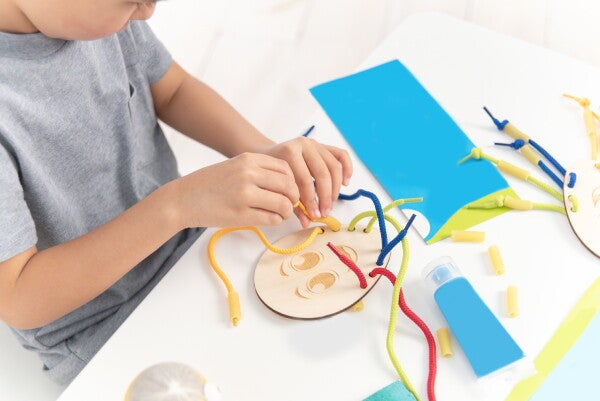
Lacing shapes mimics sewing patterns, helping your child master the motions needed for tying shoelaces later.
Lacing mimics the motion of sewing and helps your child understand "over and under" patterns. This skill helps prepare them for tying their shoelaces later on. Perfect for giving their little fingers a workout.
What you need
• Cardboard (from an old Koko Krunch or Corn Flakes box)
• A hole puncher (or a sharp pencil to poke holes)
• A shoelace or a piece of yarn with tape wrapped around the tip
• Scissors
How to do it
First, cut the cardboard into fun shapes. Simple ones, like circles, squares, or even a heart, work best. Let your child choose the shape to get them excited about the project.
Next, punch holes around the edge of the shape about an inch apart. If you don't have a hole puncher, you can carefully poke holes using a pen or pencil (adults only for this step!).
Finally, show your child how to thread the shoelace through the holes. Teach them to go "down through the hole" and "up through the next one."
3. Paper Tearing Mosaics
Tearing paper requires your child to move their hands in opposite directions, which builds hand strength. It also helps your child control their fingers during table activities at school.
What you need
• Old newspapers, grocery flyers, or colored paper
• A piece of recycled cardboard or thick paper for the base
• Glue stick
• Marker
How to do it
Begin by drawing a simple shape on the cardboard. You can also draw the first letter of your preschooler’s name to make it personal.
Have your child tear the colorful paper into small bits. Encourage them to use their thumbs and pointer fingers to rip the paper rather than pulling with their whole arm.
Apply glue to the shape on the cardboard. Let your child start sticking the torn paper pieces onto the glue to fill in the shape. Challenge them to stay "inside the lines" to practice precision. (No glue? Stickers work great for this, too!)
4. Q-Tip Painting (Pointillism)
Holding a Q-tip or cotton bud helps refine your child's grip, mimicking how they’ll eventually hold a pencil. It’s less messy than finger painting but just as fun.
What you need
• Cotton swabs / buds / Q-tips
• Washable paint
• Paper
How to do it
Pour small amounts of different colored paints onto a plate or palette. Give your child a Q-tip for each color to avoid mixing them up too much.
Show them how to dip the tip in paint and make dots on the paper to create a picture. Instead of just swiping a paint brush across the page, the "dotting" motion slows their hands down and builds control. You can also review other developmental milestones parents should know.
Encourage them to make specific shapes or just fill the page with colors. The dotting motion requires them to be precise with their hand movements.
5. Playdough Scissor Skills
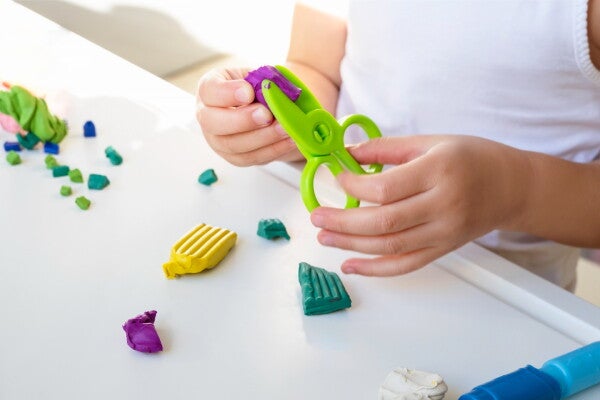
Cutting clay offers resistance that builds hand strength, making it easier to transition to cutting paper.
Cutting is one of the hardest skills to master. Starting with paper can be challenging because it flops around. Playdough offers resistance but is soft enough to cut easily, building hand strength safely. This builds confidence before they move on to more complex school activities, like cutting paper during school worksheets and art time.
What you need
• Playdough or modeling clay (store-bought or homemade)
• Plastic safety scissors
How to do it
Roll the playdough into long "snakes." You can do this on a table or between your hands. Give your child the safety scissors. The American Academy of Pediatrics (AAP) encourages using tools like child-safe scissors to build dexterity and hand-eye coordination, provided there is always adult supervision.
Ask them to cut the snake into small pieces. This is typically easier than cutting paper because the dough holds the scissors in place.
Tips for Stress-Free Arts and Crafts
When trying these arts and crafts for kids, keep a few things in mind to make the experience smooth.
Keep it short.
Kids have short attention spans. According to cognitive milestones from the Centers for Disease Control and Prevention (CDC) and AAP, a 5-year-old might only focus on an activity for five to 10 minutes. Fifteen to 20 minutes is usually the sweet spot for a craft. If they lose interest, it's okay to stop and come back to it later.
Focus on the process, not perfection.
Your child's work doesn't need to be perfect. It might get messy or look "undone," and that’s okay. The National Association for the Education of Young Children (NAEYC) encourages focusing on "process art". It means letting children explore and create freely without worrying about the final product. Just cover your table with old newspaper so you can relax and let them explore.
Supervise closely.
Always keep an eye on them, especially when using small items like buttons or beads. The AAP recommends active supervision to prevent accidents and avoid choking hazards during play. Safety comes first!
Why Arts and Crafts for Kids Matter
Fine motor skills involve the small muscles in the hands and wrists. Practicing these activities helps your child use those muscles more easily in everyday tasks.
Plus, the Lego Foundation and UNICEF note that learning through play isn't just fun—it builds concentration and problem-solving skills that traditional classroom drills often miss.
It’s easy to support your child’s motor skill development with these easy arts and crafts for kids. At the same time, you’re helping them get ready for big school milestones while creating fun memories together at home.
Don't keep those creative moments to yourself! Hop over to the ParenTeam Moms and Dads Facebook group to share photos of arts and crafts for kids and connect with the community.
References
American Academy of Pediatrics. "Hand and Finger Skills of Your Preschooler." HealthyChildren.org. Last modified July 28, 2022. Accessed January 16, 2026. https://www.healthychildren.org/English/ages-stages/preschool/Pages/hand-and-finger-skills-of-your-preschooler.aspx
Centers for Disease Control and Prevention. "Milestones by 3 Years." April 18, 2025. Accessed January 16, 2026. https://www.cdc.gov/act-early/milestones/3-years.html
Centers for Disease Control and Prevention. "Milestones by 4 Years." September 11, 2025. Accessed January 16, 2026. https://www.cdc.gov/act-early/milestones/4-years.html
Centers for Disease Control and Prevention. "Milestones by 5 Years." April 18, 2025. Accessed January 16, 2026. https://www.cdc.gov/act-early/milestones/5-years.html
CNLD Neuropsychology. "How Long Should a Child’s Attention Span Be?" Accessed January 16, 2026. https://www.cnld.org/how-long-should-a-childs-attention-span-be/
Related articles

Where to Go Out of Town with a Preschooler: 7 Places Near Manila
Planning a trip out of town with a preschooler? Discover fun, easy, and kid-friendly places near Manila for your next family getaway.
7 mins to read

6 Budget-Friendly Spots to Visit with Your Preschooler This Summer
Plan a budget-friendly day out with your preschoolers this summer. Discover pools, parks, and museums that your whole family will love exploring together.
7 mins to read

10 Bible Stories for Kids That Teach Values They Can Live By
Teaching big values to preschoolers isn’t easy. These Bible stories for kids bring concepts like patience and kindness in a way little minds can get.
13 mins to read

10 Signs na Hiyang Ang Anak Sa Kinakain Niya
Makikita mo sa kilos, sa energy, at kahit sa pagtulog ng anak mo na hiyang ang anak mo sa kinakain nya!
7 mins to read

Sterilized Milk Benefits for Growing Kids: What Parents Should Know
Sterilized milk benefits your whole household, from safety to shelf life. Here’s what it offers your family and your growing kids.
5 mins to read

7 ₱500 Budget Ulam Ideas to Feed Your Family
Use these budget ulam ideas to cook hearty yet wallet-friendly meals for your family.
6 mins to read

Does Your Preschooler Need Fresh Milk or Growing-Up Milk?
Fresh milk gives your preschooler a strong start—but does it cover everything they need? Here’s how to know if growing-up milk can help your child.
7 mins to read

6 Budget-Friendly Milk Products for Your Preschooler’s Baon
Milk products don’t have to strain your budget. Here are six affordable picks that fit your preschooler’s baon and their growing needs.
7 mins to read

6 Benefits of Protein in Milk for Preschoolers
Protein in milk gives your preschooler the fuel to play hard, grow strong, and fight germs—here’s exactly how it works and how much they need.
7 mins to read

Powdered Milk or Fortified Milk: What’s the Difference for Your Preschooler?
Powdered milk and fortified milk might seem similar, but they serve different purposes. Learn how they differ and which one your preschooler might need.
6 mins to read

Your 6 Ways to a Good Night’s Sleep
Have some problems with sleeping? Try these 6 tips for well-rested sleep.
3 mins to read

How to Build Your Child’s Attention Span
Nurture your child’s ability to concentrate from an early age—and give him the mental discipline to succeed in school and life
6 mins to read

Eat Healthy for a Good Immune System
Food is very important for a healthy immune system to fight all types of infections. What are the nutrients needed to keep us nourished?
3 mins to read

Why You Shouldn’t Force Picky Eaters – And What Works Better
Does your child refuse to a large variety of food? Learn the real issue behind picky eating, and how to get your child to warm up to healthier and more nutritious options.
4 mins to read

Why Play is Essential For Your Kid in Stressful Times
Check out this research-backed listicle of ways that play can ease tension and promote a more positive outlook for kids, particularly as the “post new normal” has upended their more carefree way of
6 mins to read

What to Do When Your Toddler Kicks, Hits or Screams
It's common for toddlers to throw tantrums and be aggressive. But you can teach them to control their temper even at a young age. Read this article to find out how.
4 mins to read

Natural and Organic Ways to Fight Colds, Fever and Flu
Medicine isn't the only remedy when your child comes down with a flu. We listed down practical, natural remedies that can help your child fight the dreaded fever and sniffles.
6 mins to read

8 Masustansyang Ulam Ideas for Your Preschooler’s Healthy Weight Gain
Consistent weight gain happens when you serve the right meals. Discover eight budget-friendly ulam ideas packed with nutrients for your growing child.
6 mins to read

6 Key Benefits of Milk to Fuel Your Active Preschooler
The benefits of milk go beyond strong bones—fueling energy, sharpening focus, and building immunity for your always-on-the-go preschooler.
6 mins to read


