


From Milia to Baby Acne: A Guide to Your Newborn's Rash on the Face
Seeing small red bumps on your sweet baby’s cheeks might cause you to panic, but a newborn’s rash on the face is a typical part of your little one's first few weeks. Your baby’s skin is adjusting outside the womb, and this transition often brings a few temporary skin changes. You don’t need to stress over every single spot.
To help you figure out what's on your baby's cheeks, Dr. Riza Milante, a board-certified dermatologist of Daily Skin Clinic, breaks down the most common bumps and shares her golden rules for newborn skincare.
Why Do Newborns Get Facial Rashes?
For newborns (or babies under a month old), skin changes are usually a typical part of adjusting to the outside world. Dr. Milante explains, "It could be the change from going from inside the mommy's tummy to going out. Sometimes there might be some excess hormones (from mommy)." Because of this transition, she reassures parents that "most of the time, newborn bumps and rashes are very temporary."
Another major trigger is overexposure to everyday products. "Sometimes in our excitement for our baby, we expose them to more than 10 skin care products—the wipes, the diapers, the powder, and even the fabric conditioner for the clothes," she warns. Even a caregiver's perfume can irritate a newborn's sensitive skin.
Common Types of Newborn Facial Rashes
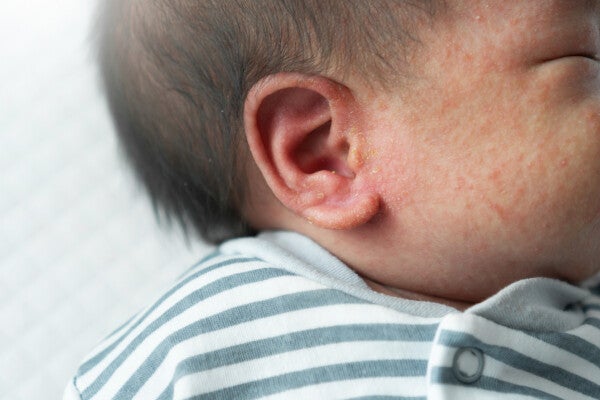
Pimple-like spots on the cheeks are typically baby acne, while yellowish, scaly skin behind the ears could be cradle cap.
Not all bumps are the same. Here’s how to identify what’s appearing on your baby's delicate skin.
Baby acne (neonatal acne)
This rash develops within the first 30 days of life and affects roughly 20% of infants. Dr. Milante describes exactly what to look for: "They look like pimples—whiteheads, blackheads, papules." She adds, "It’s because of immature oil glands and maternal hormones. Usually resolves on its own." It clears up entirely without leaving any lasting scars.
Neonatal cephalic pustulosis
A specific variant of baby acne, neonatal cephalic pustulosis usually shows up around the third week. Unlike standard baby acne, it completely lacks whiteheads or blackheads. It’s triggered by a combination of hormones and a harmless yeast overgrowth. It typically goes away on its own without needing any topical treatments.
Milia
Milia appears as tiny white pearls resting on the nose, cheeks, or even inside the mouth (often called Epstein pearls). They’re benign, superficial cysts filled with keratin trapped under the skin and resolve on it owns within a few weeks.
Sebaceous gland hyperplasia
Dr. Milante describes their appearance as yellow papules on the nose. "This is found in around half of newborns, and it usually clears on its own. You don't really need to do anything." The enlarged oil glands usually resolve around four to six months, when the mother’s hormones are no longer present.
Erythema toxicum neonatorum
The medical name sounds intimidating, but this rash is very common and nothing to worry about. It appears as blotchy red patches, sometimes featuring a tiny yellow or white center. Dr. Milante notes that it’s often seen in term babies who are just one to two days old. It resolves completely on its own without leaving any scars.
Facial cradle cap (seborrheic dermatitis)
Cradle cap doesn’t just stay on the scalp; it can also appear on the forehead, eyebrows, and behind the ears as yellowish, scaly skin. "Because the baby still has some maternal hormones, their oil glands produce excess oil," Dr. Milante states. "It’s not anything bad."
How to Care for Your Baby’s Skin at Home
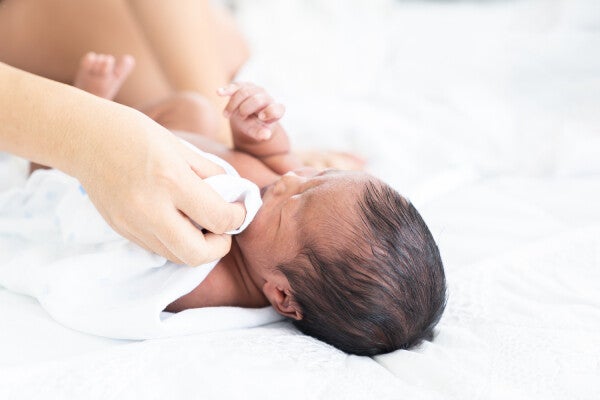
Plain water and a soft cloth are all you need to keep your baby's sensitive skin clean and fresh.
When dealing with newborn skin, keeping routines simple is the best strategy. Here are the golden rules for managing delicate facial bumps and maintaining healthy hydration.
1. Leave the bumps alone to clear up naturally.
While over-the-counter treatments seem tempting, the safest approach is often doing nothing at all. "Most of the time, less is more, so don't treat it. Don't do anything na lang, just let it go," advises Dr. Milante. These temporary breakouts rarely need medical intervention. "It usually resolves within a few days to a few weeks," she adds. If the bumps refuse to clear up after that timeframe, it is time to consult a pediatrician for proper guidance and medication.
2. Moisturize immediately after bathing to prevent dryness.
While some guidelines suggest bathing an infant only once or twice a week, "you can also do it every day as long as you moisturize immediately after," Dr. Milante explains. Locking in that moisture right after the bath is a crucial step “so that the skin doesn't get too dry," she emphasizes.
3. Start applying lotion daily in early infancy to lessen skin asthma risks.
Applying a simple, unscented moisturizer does more than just soothe a temporary rash; it protects a child's skin health in the long run. A recent dermatological study found that starting this daily habit before a baby reaches nine weeks old can significantly reduce their risk of developing eczema.
"They actually saw that moisturizing a kid before two years old lessens the risk of skin asthma for the future," Dr. Milante notes. "So that's one of the things that I advise new parents nowadays."
When to See a Doctor Right Away
While most bumps are harmless, stay observant. Dr. Milante advises consulting a pediatrician immediately if you notice any of these warning signs:
- The rash persists: The bumps do not go away on their own within three days to two weeks.
- Signs of discomfort: Your baby has difficulty sleeping, is unusually fussy, or tries to rub their face against your skin or the mattress to relieve the itch.
- Signs of illness or infection: Your baby develops a fever, shows signs of distress (like poor feeding or lethargy), or the rash rapidly spreads and produces yellow pus.
Catching these signs early ensures your little one gets the exact medical care they need.
Keep Calm and Give Your Baby's Skin Time to Adjust
Seeing your newborn's rash on the face can feel alarming, but it’s usually just a normal part of their skin adjusting to the outside world. Whether dealing with milia or baby acne, the best approach is to keep the skin clean, moisturize daily, and give it time. Always remember that most newborn rashes are completely harmless and will clear up naturally as your baby grows.
Connect with other parents on the ParenTeam Moms and Dads Facebook group and share your best tips for managing your newborn’s rash on the face.
References
Snyder, Katherine A. M., and Adam D. Voelckers. "Newborn Skin: Part I. Common Rashes and Skin Changes." American Family Physician 109, no. 3 (March 2024): 212–216. Accessed March 12, 2026. https://www.aafp.org/pubs/afp/issues/2024/03/newborn-skin-common-rashes-and-skin-changes.html
Seattle Children’s Hospital. "Newborn Rashes and Birthmarks." Last modified January 25, 2025. Accessed March 12, 2026. https://www.seattlechildrens.org/conditions/a-z/newborn-rashes-and-birthmarks/
Mayo Clinic. "Common Baby Rashes." March 29, 2024. Accessed March 12, 2026. https://www.mayoclinic.org/healthy-lifestyle/infant-and-toddler-health/in-depth/baby-rashes/art-20546833
Related articles

5 Signs You Need to Switch Your Baby’s Laundry Detergent
Does your little one have a rash that won’t go away? It could be caused by your baby laundry detergent. Here’s how to spot the signs and know what to do next.
4 mins to read

What Is Stunted Growth? A Pediatrician’s Guide for Parents
Worried people think your child is bansot or pandak, Mommy? Behind that teasing is a real concern: stunted growth. Here’s how pediatricians check for it.
4 mins to read

A Parent’s Guide to Caring for Cradle Cap in Babies
Cradle cap in babies is common, harmless, and easy to manage with the right daily routine. Here’s what actually works, according to a pediatrician.
6 mins to read

How to Spot and Manage Your Baby’s Eczema at Home
Spotting baby eczema early helps you treat it fast. Learn to tell it apart from typical dry skin and explore easy routines to soothe their skin.
6 mins to read

Newborn Baby Baths Made Simple
Master newborn baby bath time! Learn when and how often to bathe your baby, along with step-by-step techniques and safety advice for a happy baby!
5 mins to read

Babbling to Full Sentences! Your Language Development Checklist by Age
Learn the language development milestones your child needs to hit from baby to preschool stage.
7 mins to read

30 Must-Know Terms to Guide You Through the Early Childhood Stage
Welcome to your early childhood stage cheat sheet, so you feel more prepared and less frazzled for parenting!
11 mins to read

How to Give a Baby Massage With Confidence
Love getting a good massage? Your baby probably does, too! Learn the essential baby massage techniques to help with sleep, constipation, and more.
8 mins to read

Sinisinok si Baby? 5 Easy Ways to Soothe Newborn Hiccups
Newborn hiccups are a natural reflex as your baby’s nervous system matures. Learn how to keep your little one comfortable with these expert-backed soothing techniques.
5 mins to read

Why Health Experts Recommend "Unang Yakap" After Birth
Unang Yakap is more than just a picture-worthy moment! Discover the so-good benefits that first embrace has in store for your baby—and you!
6 mins to read

Sitting and Teething! Welcome to Your 6-Month-Old Baby's Milestones
Your 6-month-old baby is discovering the world! This guide covers key developments, sleep patterns, and growth charts to help you on this journey.
6 mins to read

Why Babies Cry: 11 Reasons to Know So You Can Worry Less
Wondering why baKnowing why babies cry helps you understand their needs. From hunger to discomfort, learn the common reasons for tears and find ways to soothe your little one.bies cry?
7 mins to read

A Parent's Guide to Better Baby Sleep
Wondering how to help your baby sleep through the night? Learn to create a bedtime routine and find solutions to common sleep issues for more restful nights.
8 mins to read

Child Development Stages: A Guide from Birth to 5 Years
Understanding child development stages helps you celebrate every milestone. Discover what to expect, from newborn reflexes to preschooler chatter.
6 mins to read

Can Your Child Do This? Key Motor Skills From 0 to 5 Years
Motor skills play a crucial role in your child's growth and learning. Here's a complete checklist to their motor milestones!
7 mins to read

Your Guide to Your Baby’s First Tooth: Signs and Soothing Tips
Wondering about your baby’s first tooth? This guide covers the typical timeline, common symptoms, and simple remedies for teething discomfort.
5 mins to read

Newborn Screening 101: What First-Time Parents Need to Know
Newborn screening is a crucial first step to protect your baby's health as soon as they're born.
7 mins to read

Baby Sleeping Position Basics: What's Safe, What's Not, and Why
Worried about the safest baby sleeping position? Learn why experts recommend placing babies on their backs and master tips for creating a safe sleep environment.
8 mins to read

How to Burp a Newborn for Nervous First-Time Parents
This step-by-step guide on how to burp a newborn can help ease your worries about the right positions, burp frequency, and more.
5 mins to read


