


14 Weeks Pregnant: Your Growing Bump and Lemon-Sized Baby
You turn to the side while looking in the mirror and wonder, "Is that the start of a baby bump?" That little curve is a classic sign you're 14 weeks pregnant. This is the week your baby grows to the size of a lemon, your second-trimester energy arrives, and your body starts to show the first clear signs of the amazing work it's doing.
So, what’s happening inside that growing bump? From the first fine hairs growing on your baby’s skin to your shifting symptoms, here’s a closer look at everything happening during Week 14.
Your Baby’s Development at 14 Weeks
Your baby is now about 8.7 cm (about 3.5 inches) long from crown to rump and weighs around 45 grams (1.5 ounces), roughly the size of a lemon or chico. Their arms have grown longer and are now more proportionate to the rest of their body.
They’re starting to make facial expressions
Inside your womb, your baby is busy practicing for their big debut. They can now squint, frown, and maybe even grimace! These facial movements are due to the developing brain impulses.
Their neck and limbs are more developed
Your baby's neck has grown longer and more defined, which allows them to turn their head. According to the American College of Obstetricians and Gynecologists (ACOG), their lower limbs are also well-developed, meaning their legs are now longer than their arms. They can even bring their tiny fingers to their mouth now.
Fine hair and unique fingerprints are forming
This week, the first fine, colorless hairs, called lanugo, begin to appear on your baby's face. This soft hair will eventually cover most of their body.
Key organs are maturing
Important internal developments are happening, too. Your baby's thyroid gland has matured and is now producing its own essential hormones. Their external genitals are also fully formed this week. However, they can be difficult to see clearly on a standard ultrasound.
Most parents find out the gender during the mid-pregnancy anatomy scan, which typically happens around Week 18 to Week 22. To learn more about gender prediction, see what’s happening in Week 20.
Their movements are not yet distinct
Those first flutters, called quickening, usually happen between Week 16 and Week 25, although some second-time moms feel them earlier. You can find more information about baby movements in Week 27.
Your Body’s Changes and Other Symptoms
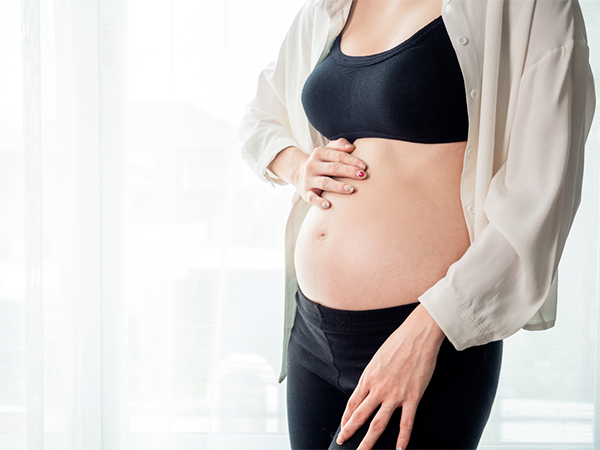
At 14 weeks, your baby bump may start to show as your uterus moves up.
At 14 weeks pregnant, symptoms begin to improve as you enter the second trimester.
The first sign of a baby bump
You may see your first real baby bump this week as your uterus rises above your pelvic bone. It’s common if your bump is still small or hardly noticeable—every pregnancy shows at a different pace.
The American Pregnancy Association notes that you’re likely to show earlier if this isn’t your first pregnancy.
Skin changes
Pregnancy hormones may cause skin changes, such as darker areolas or a faint line down your belly (linea nigra). However, don't worry, these are common signs that typically subside after giving birth.
Less nausea, more energy
For many, this week marks a welcome turning point. Morning sickness often subsides around this time, and a welcome surge of energy takes its place, allowing you to feel more like yourself again.
Round ligament pain
Stomach pain at 14 weeks pregnant may be due to round ligament pain. The UK National Health Service (NHS) describes this as sharp pains on the side of your belly, caused by your expanding womb. You'll likely feel these brief twinges when you change positions suddenly, cough, or sneeze.
Headaches and dizziness
Headaches and dizziness can still occur around this time, due to hormonal shifts, dehydration, or changes in blood volume. But they usually subside during the second trimester.
If you’re 14 weeks pregnant, frequent headaches should be checked by a healthcare professional to ensure everything is okay. Talk to your doctor to find pregnancy-safe ways to get relief.
Increased vaginal discharge
You might notice an increase in vaginal discharge (called leukorrhea) that’s thin, white, milky, and has a mild smell. This discharge is typical and helps keep your birth canal clean, preventing infections.
However, it's essential to monitor any spotting or bleeding at 14 weeks pregnant. While light spotting in early pregnancy can be harmless, you should still call your doctor right away if you notice any bleeding to rule out any complications and ensure both you and your baby are healthy.
How to Take Care of Yourself at 14 Weeks
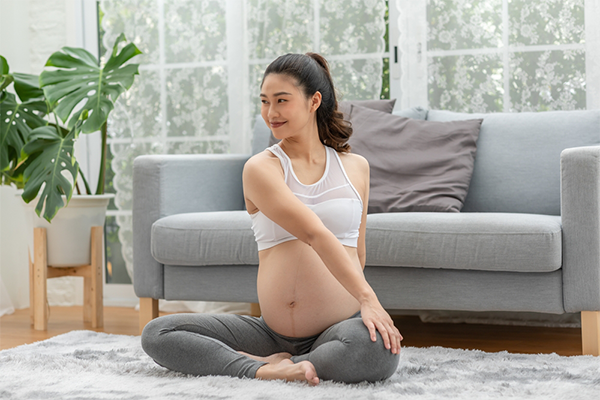
Gentle exercise like prenatal yoga can help manage second-trimester aches and is a great activity to do with your partner.
Your energy is returning, making this an ideal time to prioritize self-care through balanced nutrition, regular exercise, and adequate rest.
Eat well to fuel your pregnancy
With your appetite back, aim for balanced meals that meet your growing needs. The Food and Nutrition Research Institute’s (FNRI-DOST) Philippine Dietary Reference Intakes (PDRI) and Pinggang Pinoy for pregnant women can help guide your portions. Focus on:
- Iron-rich foods: To maintain high energy levels, include lean meats, lentils, and dark leafy greens like spinach.
- Calcium and vitamin D: For your baby's developing bones, consider adding dairy products, tofu, and fortified juices to your diet.
- Omega-3 Fatty Acids: Support your baby's brain health with omega-3s from salmon or walnuts.
- Fiber: Help prevent constipation with high-fiber foods like fruits and whole grains.
Check out these easy pregnancy meal plans for more ideas.
Support your body with healthy habits
Here are a few simple ways to manage your body’s changes and feel your best at 14 weeks.
- Try prenatal massage to relieve muscle tension and improve circulation.
- Stay active with walking, swimming, or prenatal yoga to boost mood and sleep.
- For most low-risk pregnancies, sex is safe and can strengthen your connection with your partner. Consult your doctor if you have any concerns.
Prioritize your mental well-being
Your mental well-being is just as important as your physical health. It's common to feel anxious or depressed even during the second trimester. A 2022 study in the journal Cureus highlights that social support from your loved ones is essential to protecting the health of both you and your baby.
If you're struggling, remember that reaching out to your doctor or a therapist is a sign of strength.
Being 14 weeks pregnant is exciting. From seeing the first hint of a baby bump to knowing your baby is developing unique fingerprints, this week is a significant milestone. Embrace your returning energy, focus on key nutrients, and enjoy this new stage of your pregnancy.
For real-time support and advice, connect with a community in the ParentTeam Moms and Dads Facebook group to talk about being 14 weeks pregnant.
References
American College of Obstetricians and Gynecologists (ACOG), The. n.d. “How Your Fetus Grows During Pregnancy.” Accessed September 18, 2025. https://www.acog.org/womens-health/faqs/how-your-fetus-grows-during-pregnancy
American Pregnancy Association. n.d. “Vaginal Discharge During Pregnancy.” Accessed September 18, 2025. https://americanpregnancy.org/healthy-pregnancy/pregnancy-health-wellness/vaginal-discharge-during-pregnancy/
Cleveland Clinic. n.d. “Pregnancy: Second Trimester.” Accessed September 18, 2025. https://my.clevelandclinic.org/health/articles/16092-pregnancy-second-trimester
Cunha, John P. n.d. “Are Headaches Normal in the Second Trimester?” eMedicineHealth. Accessed September 18, 2025. https://www.emedicinehealth.com/are_headaches_normal_in_the_second_trimester/article_em.htm
Kardes, G., A. Hadimli, and A.M. Ergenoglu. 2023. "Determination of the Frequency of Migraine Attacks in Pregnant Women and the Ways They Cope with Headaches: A Cross-Sectional Study." Healthcare (Basel) 11, no. 14: 2070. https://doi.org/10.3390/healthcare11142070
Mayo Clinic. 2025. “2nd Trimester Pregnancy: What to Expect.” February 7, 2025. Accessed September 18, 2025. https://www.mayoclinic.org/healthy-lifestyle/pregnancy-week-by-week/in-depth/pregnancy/art-20047732
MedlinePlus. 2023. “Fetal Development.” Last reviewed August 23, 2023. Accessed September 18, 2025. https://medlineplus.gov/ency/article/002398.htm
NHS. n.d. “Week 14 - Your Pregnancy and Baby Guide.” Accessed September 18, 2025. https://www.nhs.uk/start-for-life/pregnancy/week-by-week-guide-to-pregnancy/2nd-trimester/week-14/
Related articles

The Complete Birth Plan Guide for Filipino Moms: An Ob-Gyn Weighs In
Your birth plan is your voice in the delivery room. Here’s how to build one with real ob-gyn advice and two moms’ true stories.
11 mins to read

28 Weeks Pregnant: Baby Development, Symptoms, and Tips for Mommies
Your guide to being 28 weeks pregnant is here! Learn about key baby development milestones, how to manage new symptoms, and what you can do to stay comfortable.
6 mins to read

The Stages of Pregnancy: What to Expect for You and Baby
Get to know the stages of pregnancy! Learn about each trimester, track your baby's growth, and embrace your body’s changes.
5 mins to read

How to Track Ovulation Symptoms If You Have Irregular Periods
Tracking ovulation symptoms is key when your cycle changes. Learn how to read your body’s signs and spot your fertile window even with irregular periods.
10 mins to read

Ginger Tea in Pregnancy: Is It Safe for Morning Sickness?
Ginger tea in pregnancy can help ease morning sickness, but safe doesn’t mean unlimited. Here’s what your ob-gyn wants you to know about salabat and dosage.
7 mins to read

Does Milk Help You Sleep? How a Glass Before Bedtime Helps Kids Unwind
Does milk help you sleep? A pediatric nutrition specialist breaks down what’s true, what’s myth, and how bedtime milk fits your child’s routine.
6 mins to read

A Doctor Explains Baby Poop Color: What’s Typical and What’s Not
Baby poop color can change often, from mustard yellow to green to brown. Get a pediatrician’s take on every shade, and know exactly when to call your doctor.
10 mins to read

A Doctor Explains Cramps During Pregnancy and Other Discomforts
Experiencing cramps during pregnancy? A doctor explains what causes it, how to ease it, and when it’s worth a call to your OB to help bring you peace of mind.
7 mins to read

How a Pregnancy App Can Help You Track Your Baby’s Development
A pregnancy app can help you see how your baby grows each week. It’s a simple way to feel confident and ready for every new change.
7 mins to read

Your Complete Guide to the Types of Milk in the Grocery Aisle
Confused by the types of milk lining the grocery shelf? Here’s a clear way to compare full cream, fresh, fortified, and plant-based options for your family.
7 mins to read

Best Milk for Pregnant Women: What Nutrients to Look For
Not all milk for pregnant women is the same. Know the six nutrients that actually matter—and what to look for in nutrition labels for the best buy.
9 mins to read

A Derma’s Guide to Pregnancy Skin Care: What’s Safe and What to Avoid
Building a safe pregnancy skin care routine starts with checking the label. Discover the best ingredients for your skin and the chemicals you need to avoid right now.
8 mins to read

Early Pregnancy Pain Areas: A Dad’s Guide to Comforting His Partner
Learn how to help your partner manage early pregnancy pain areas. Small comforts like checking in, prepping light meals, and doing her chores make a huge difference.
6 mins to read

How to Deal with Pregnancy Hormones and Mood Swings
Pregnancy hormones can intensify your emotions. Learn simple ways you and your partner can handle those mood swings and get the support you need.
8 mins to read

Doctor-Approved Ways to Ease Acid Reflux in Pregnancy
Dealing with acid reflux in pregnancy is uncomfortable. Discover simple food tweaks, better sleep habits, and other doctor-approved tips to ease that sour burn today.
5 mins to read

A Doctor Explains Pregnancy Spotting Colors and Flow
Understanding your pregnancy spotting color and flow can help you spot warning signs early. Discover what to expect and when to call your doctor.
6 mins to read

Updated! 5 PhilHealth Benefits for You and Baby
Your PhilHealth benefits cover more than just delivery day. Here's everything you can claim under the 2026 expanded maternity benefits.
8 mins to read

5 Ways to Manage a Pregnancy Rash in the Hot Months
Treat a pregnancy rash by adjusting your daily hygiene habits. Discover how cool midday baths, gentle soaps, and loose clothing can soothe your skin now.
6 mins to read

1 Month Pregnant? A Guide to Symptoms, Baby Development, and Nutrition
Understand exactly what happens when you're 1 month pregnant! Explore common symptoms, how your baby starts growing, and vital nutrition tips for this crucial stage.
6 mins to read


