


Iodine-Rich Foods in Pregnancy: What to Eat and Why It Matters
Congratulations on your pregnancy, Mommy! Now is the time to eat well to help your body grow your little one. You’re probably focusing on iron and folate (or its synthetic form, folic acid) already, making iodine-rich foods easy to overlook. But if you’ve ever wondered what else your body might need right now, iodine is one of them, and it doesn’t take much to work into your day.
Next time you’re at the palengke, toss a little more fish and eggs (even iodized salt!) into your basket. These iodine food sources do more for you and your baby than you might expect.
If you’re not sure how to get enough iodine through your everyday meals, Cat Delos Reyes, a registered nutritionist-dietitian (RND) for Wyeth Nutrition, breaks down the best foods rich in iodine, how much you actually need, and what to watch out for once you start upping your intake.
Why Iodine Matters During Pregnancy
So what exactly does this mineral do for your baby? It comes down to your thyroid. Your body uses iodine to make thyroid hormones, and in the early weeks of pregnancy, your baby depends entirely on those hormones for healthy brain development, before their own thyroid even starts working.
That’s why “iodine is an essential nutrient that must be obtained from the diet, especially during pregnancy when requirements increase,” Delos Reyes explains. Since your body can’t make iodine on its own, it all comes down to what’s on your plate.
What happens if you don’t get enough iodine?
A 2023 National Nutrition Survey by the Department of Science and Technology–Food and Nutrition Research Institute (DOST-FNRI) found that Filipino pregnant women had a median urinary iodine level of just 128 micrograms per liter (µg/L), below the 150 µg/L the World Health Organization (WHO) considers adequate during pregnancy. About 1 in 5 pregnant women (21.8%) had levels below 50 µg/L, a sign of significant deficiency.
Simply put, a lot of moms in the Philippines (possibly including you!) may be getting less iodine than they need without even realizing it. Delos Reyes adds that low iodine can affect both your thyroid function and your baby’s development, which may carry over into your child’s learning ability and growth later on. It’s actually one of several micronutrient deficiencies common among pregnant Filipino women, so it’s worth keeping an eye on alongside iron and folate.
What happens if you take in too much iodine
More isn’t always better, though. A 2025 review in Nutrients found that very high iodine intake during pregnancy has also been linked to poorer cognitive and language outcomes in children in some studies, not just too little. The sweet spot is getting just enough, which is exactly why knowing your food sources and your daily needs (more on that below) makes such a real difference.
Foods Rich in Iodine to Add to Your Meals
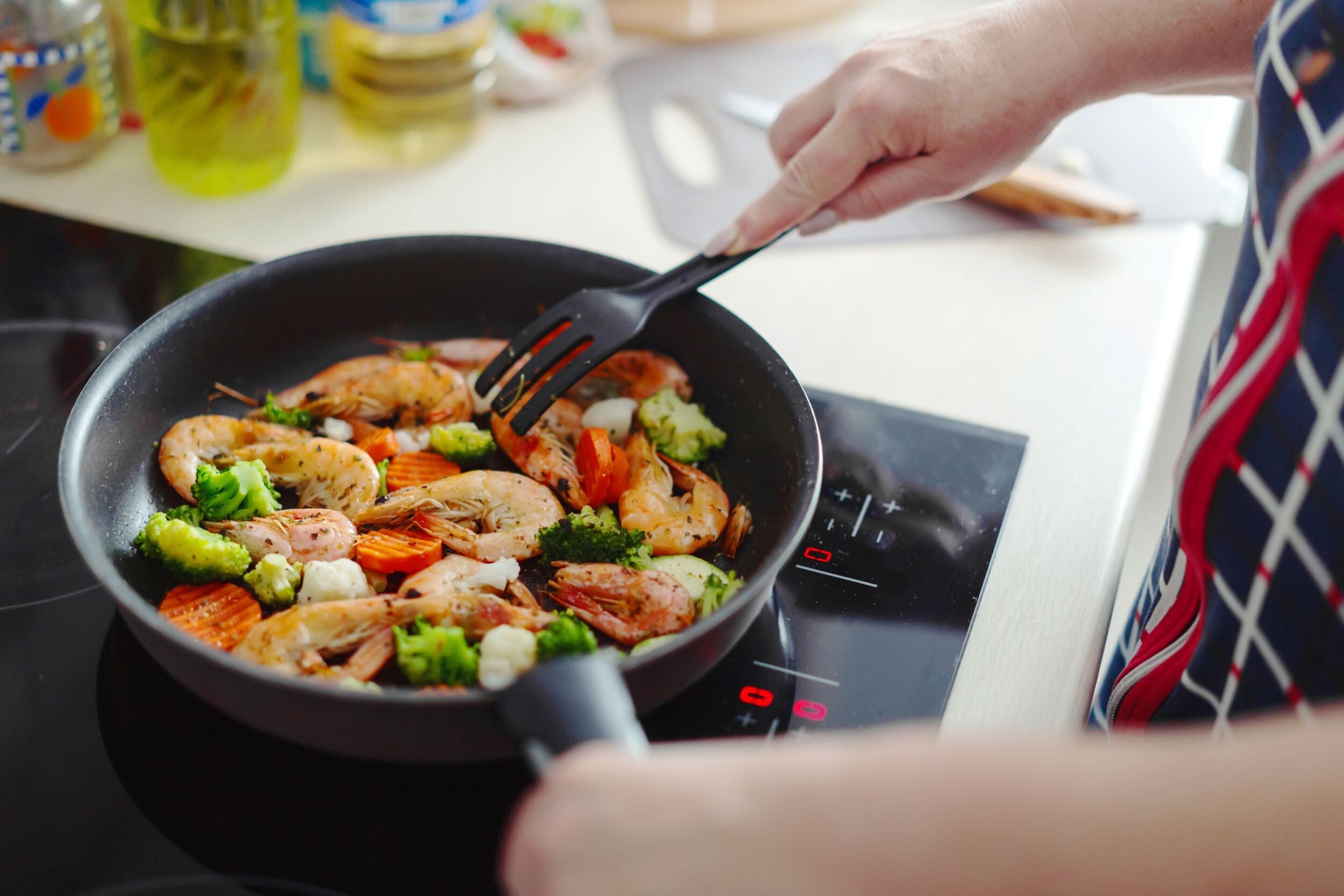
Iodized salt, eggs, and shrimp are iodine-rich foods already found in most Filipino kitchens.
So what does “getting just enough” look like on your plate, Mommy? Delos Reyes keeps it simple, recommending four easily available food groups:
Fish, shrimp, and shellfish
Delos Reyes points to fish, shrimp, and other seafood as some of the easiest iodine sources to reach for. A simple grilled bangus or a bowl of sinigang with shrimp both count toward your intake. Just make sure everything’s cooked through, as raw or undercooked seafood is one of the foods to avoid during pregnancy.
Eggs and dairy
She also recommends eggs and dairy as an easy pair to work into your diet. Eggs work well for breakfast, snacks, or mixed into soups and other dishes, while dairy products like milk, yogurt, and cheese are also solid iodine food sources.
If you’re weighing your options between different types of milk for pregnant women, consider BONINA® Maternal Milk Supplement. It’s proudly Filipino-made and specially formulated for expecting mothers, providing 100 mcg of iodine per 100g serving, or 50 mcg per 240mL glass, on top of its other maternal nutrients.
Iodized salt
“Use iodized salt at home,” Delos Reyes recommends, checking that the salt sitting in your kitchen actually has iodine added to it. Iodized salt is easy to find; most supermarkets carry it right alongside the regular kind, so this is one of the simplest swaps you can make without changing how you cook. Just keep it in moderation alongside your other seasonings, since too much sodium isn't good for your health either.
Seaweed, in moderation
Seaweed earns its reputation as one of the richest natural sources of iodine, and Delos Reyes says it’s an easy one to work in, whether eaten on its own as a snack or added to rice, soups, and other dishes.
Just how rich in iodine is it? A 2022 systematic review in Comprehensive Reviews in Food Science and Food Safety found that iodine can be sky-high in one type of seaweed and barely there in another, so how much you’re getting really depends on what’s on your plate.
That’s exactly why Delos Reyes’ advice is to enjoy it in moderation rather than as a daily habit, since even a small serving of the wrong variety can add up fast. “There’s no need to avoid seaweed,” she says, “but include it as part of a balanced and varied diet.” For more ideas on building healthy, balanced meals day to day, try this 7-day pregnancy meal plan.
How Much Iodine Do You Actually Need During Pregnancy?

Bring your iodine intake questions to your ob-gyn or a registered dietitian for advice specific to you.
Delos Reyes puts real numbers to this: women need about 150 mcg of iodine a day at age 19 to 29 years, and you need another 100 mcg on top of that if you’re pregnant. This would bring your daily target to around 250 mcg, making iodine for pregnant women higher than at any other stage in your life.
Wondering what that looks like on your plate? Delos Reyes gives some examples in the table below.
FOOD ITEM | SERVING SIZE | IODINE CONTENT |
Iodized salt | 1 teaspoon | 310 mcg |
Whole egg | 1 piece (medium) | 24.7 mcg |
Cheddar cheese | 1 slice (30 grams) | 14.46 mcg |
Oyster | ½ cup (without shell) | 93 mcg |
Lobster | ½ cup (without shell) | 157 mcg |
Food composition can vary depending on where and how something’s prepared, so treat these numbers as a helpful guide rather than an exact count. One thing to double-check: not all prenatal vitamins include iodine, so don’t assume yours already has you covered. A quick look at the label can tell you either way.
If you’re not sure whether your current diet and prenatal supplement already cover your needs, or if low iodine intake has you wondering about thyroid problems like hypothyroidism, bring it up with your ob-gyn or an RND at your next prenatal visit. They can look at your specific intake and adjust from there.
Simple Ways to Meet Your Iodine Needs Through Food
You don’t have to overhaul your meals to get enough iodine-rich foods into your day. A piece of fish or shrimp at lunch, an egg at breakfast, a slice of cheese as a snack, and iodized salt in your usual cooking can already add up. For a broader look at what else belongs on your plate, this guide to food for pregnant women rounds out the full picture beyond iodine.
“As always, aim for moderation, balance, and variety in your food choices,” Delos Reyes advises. Moderation means not overdoing any single food, balance means pulling from different food groups, and variety means giving your body access to a wider range of nutrients, she adds.
Small Steps That Make a Real Difference for Your Baby
Iodine-rich foods matter more than they might seem. Small, simple changes to what’s already on your plate can support your thyroid and your baby’s brain development without needing to rethink everything you eat or track every gram. One simple place to start: swap your regular salt for iodized salt this week. It’s a small switch, and it adds up fast.
Wondering what else you can or can’t eat while you’re pregnant, Mommy? These guides on yogurt and pasteurization, eggplant safety, and spicy food tackle other food questions other expecting moms ask all the time.
If you’re curious what other small changes have worked for moms in the same situation, join the ParenTeam Moms and Dads Facebook group, where those conversations happen—real questions, real answers, from parents figuring this out right alongside you.
Disclaimer: This article is for general informational purposes and isn’t a substitute for professional medical advice. Talk to your ob-gyn or a registered nutritionist-dietitian about your specific iodine needs during pregnancy. Views expressed by interviewed medical professionals are their own and may not reflect the official position of ParenTeam.
References:
Aakre, Inger, Inger Beate Tveit, and Lene Secher Myrmel, et al. "Bioavailability of Iodine from a Meal Consisting of Sushi and a Wakame Seaweed Salad—A Randomized Crossover Trial." Food Science & Nutrition 11, no. 12 (2023): 7707–7717. Accessed September 11, 2026. https://pmc.ncbi.nlm.nih.gov/articles/PMC10724604/
Blikra, Marthe Jordbrekk, Sigrun Henjum, and Inger Aakre. "Iodine from Brown Algae in Human Nutrition, with an Emphasis on Bioaccessibility, Bioavailability, Chemistry, and Effects of Processing: A Systematic Review." Comprehensive Reviews in Food Science and Food Safety 21 (2022): 1517–1536. Accessed September 11, 2026. https://ift.onlinelibrary.wiley.com/doi/10.1111/1541-4337.12918
Department of Science and Technology–Food and Nutrition Research Institute. "2023 National Nutrition Survey: Part 2 Dissemination." Presented at the 2024 National Nutrition Summit, December 10, 2024. Accessed September 11, 2026. https://enutrition.fnri.dost.gov.ph/uploads/2024%20National%20Nutrition%20Summit_Part%202.pdf
Department of Science and Technology–Food and Nutrition Research Institute. Philippine Dietary Reference Intakes (PDRI) 2018. Accessed September 10, 2026. https://fnri.dost.gov.ph/images/images/news/PDRI-2018.pdf
Ma, Zheng Feei, and Louise Brough. "Effect of Iodine Nutrition during Pregnancy and Lactation on Child Cognitive Outcomes: A Review." Nutrients 17, no. 12 (2025): 2016. Accessed September 10, 2026. https://pmc.ncbi.nlm.nih.gov/articles/PMC12345678 (placeholder — see note below)
National Institutes of Health, Office of Dietary Supplements. "Iodine – Consumer." Last updated May 1, 2024. Accessed September 10, 2026. https://ods.od.nih.gov/factsheets/Iodine-Consumer/


