


The Truth About Spicy Food for Pregnant Women: Is it Safe?
You just found out you're expecting. Your pregnancy cravings are starting to kick in. Suddenly, you want a bowl of fiery Bicol Express or ginataang langka. The truth about spicy food for pregnant women? It's generally safe, but there are a few things worth knowing before you dig in.
For most moms, it really comes down to how their bodies handle it. This guide breaks down how spicy meals may affect you and your baby, and how you can still enjoy your favorite dishes without uncomfortable heartburn.
Is It Safe to Eat Spicy Food During Pregnancy?
Yes, you can eat spicy food while you’re pregnant. As with most foods during pregnancy, moderation matters. No research links it to birth defects, early labor, or miscarriage. Even the US Centers for Disease Control and Prevention (CDC) and the American College of Obstetricians and Gynecologists (ACOG) don't list spicy food among the things to avoid during pregnancy. Their guidance focuses on foods that carry harmful bacteria, like raw meat and unpasteurized dairy. Spicy food doesn't make that list.
How Spicy Food Affects Your Baby
You might wonder if a heavily spiced meal affects your growing baby. Here’s what studies have found:
Flavor transfers through amniotic fluid.
While researchers haven't specifically measured chili peppers, they have proven how strong aromatics, such as garlic and ginger, transfer to your baby. Flavors from your diet can pass directly into the amniotic fluid, which your baby swallows regularly.
A 2019 comprehensive review in The American Journal of Clinical Nutrition found consistent evidence that strong flavors, like garlic, reach the amniotic fluid within just 45 minutes of you eating them. This early exposure may help your baby develop a diverse palate. If you enjoy richly-spiced meals during pregnancy, your baby might prefer those familiar flavors as they grow.
Spicy food does not induce labor.
You might’ve heard some women use spicy foods to induce labor. A well-established benchmark study in the journal Birth surveyed over 200 postpartum women and found that over half of them tried natural methods to start labor. Eating spicy food was one of the most common unprescribed methods used. Despite how popular this is, there is no medical proof that it works. Researchers believe that fetal hormones—not your diet—likely trigger labor.
Spicy food doesn't cause uterine contractions, and it won't force your body into preterm labor. Right now, the only known risk of spicy meals falls on how well your body can tolerate them.
Common Comfort Challenges for You

Pregnancy hormones relax the esophageal sphincter, making heartburn common, especially as your uterus grows.
While spicy food isn’t known to hurt your baby, that doesn't mean your body will handle it the same way it used to. Pregnancy changes a lot, including how your digestive system responds to food. What you once ate without a second thought can now leave you uncomfortable for hours.
Managing acid reflux and heartburn
Heartburn, indigestion, and an upset stomach are common complaints of expecting moms. Your body produces a hormone called progesterone, which relaxes the valve between your stomach and your esophagus. This allows stomach acid to creep back up into your chest and throat.
Spicy food is a major trigger for this acid reflux. It irritates the lining of your relaxed stomach and creates that burning feeling in your chest. Plus, your digestion slows down during pregnancy, which makes these symptoms more noticeable than usual.
According to Dr. Roma Ramones Guevara, a board-certified OB-GYN, "It’s definitely best to avoid foods that can easily irritate your tummy and aggravate the burning feeling. This would easily be spicy, fatty, salty food, and carbonated drinks."
So the real question isn't "can I eat spicy food while pregnant?" It's "how does my body react to it?" If you handle heat well, you can keep eating it. If it leaves you miserable for hours, it's worth pulling back. Talk to your doctor if heartburn becomes severe, persistent, or starts interfering with your eating or sleep.
Dealing with morning sickness
Do you suffer from morning sickness in your first trimester? To help manage your symptoms, guidelines from the ACOG suggest eating frequent, small meals and temporarily avoiding spicy or fatty foods. They advise this to avoid triggering nausea, although they also note that strong clinical evidence for restricting these foods is lacking. You can slowly reintroduce these flavors in your second trimester when your nausea usually fades.
Late-stage pregnancy considerations
Your third trimester brings a new set of challenges: Your growing uterus pushes up against your stomach and intestines. This pressure pushes stomach acid upward, making heartburn and acid reflux much more likely. Even a slightly spicy meal can cause intense discomfort during these last few months. To help manage this, try switching to milder flavors until the baby is born.
Tips for Enjoying Your Favorite Spicy Filipino Dishes
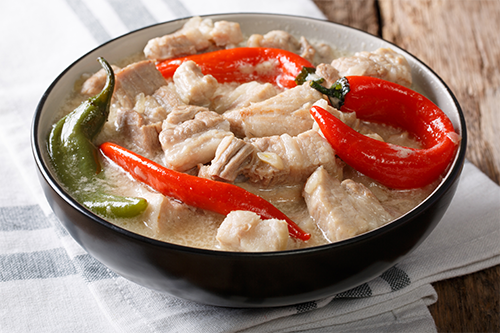
You can reduce the chili in Bicol Express to help you avoid late-night indigestion.
You don't have to give up your favorite meals entirely. You just need to make a few smart adjustments. Here's how you can still enjoy your food.
1. Start with mild versions.
Adjust your pepper-rich recipes at home. If you love Ginataang Langka, simply reduce the amount of siling labuyo. You can use one chili instead of three, or remove the chili seeds (which contain most of the heat) before cooking. This gives you the flavor you crave without the intense burn.
You can also substitute fresh chilies with milder spices. A dash of paprika gives your food a nice red color and a slightly smoky flavor. You can also use ginger or black pepper to add flavor instead of relying entirely on siling labuyo.
2. Pair spicy food with dairy.
Dairy is a great way to neutralize spice because the proteins in dairy break down the capsaicin, helping ease the burning sensation in your mouth and stomach. For enhanced effects, keep a glass of cold milk like Bonina nearby when you eat. It instantly cools down the heat while also satisfying your daily need for essential pregnancy nutrients. You can also eat a small cup of yogurt after your meal. This neutralizing effect is why dishes cooked in coconut milk, like laing, are sometimes easier to digest.
3. Eat smaller portions.
Avoid the busog-lusog feeling. Eating a larger plate of Bicol Express may worsen indigestion because food stays in your stomach longer. Eat a small portion instead and see how your stomach reacts. You can always eat more later if you feel fine. Smaller meals also put less pressure on your stomach valve. Taking a short, gentle walk after your meal also helps move things along.
4. Cook at home to control the heat level.
If you want to enjoy a plate of fiery curry or spicy sisig, the best approach is to prepare your meals at home. You can't control the amount of chili oil or peppers restaurants use. By cooking at home, you can control the exact heat level and satisfy your craving with a mild kick of spice that won't overwhelm your sensitive stomach.
Final Thoughts for Spicy-Loving Moms
So, is spicy food good for a pregnant woman? It depends entirely on your own physical comfort. If spice triggers heartburn, indigestion, or discomfort, avoid it and give your stomach a break. If you handle it well, there's no reason to stop. Just try milder versions of spicy dishes, pair them with milk, and stop when your body tells you to. The truth about spicy food for pregnant women comes down to one thing: your baby is safe, but your comfort is yours to manage.
Do you have mild recipes of spicy food for pregnant moms? Connect with other parents on the ParenTeam Moms and Dads Facebook group to share your own heartburn-friendly recipes.
References
American College of Obstetricians & Gynecologists. "Healthy Eating During Pregnancy." Frequently Asked Questions. Last updated March 2026. Accessed on May 8, 2026. https://www.acog.org/womens-health/faqs/healthy-eating-during-pregnancy
American Pregnancy Association. "Heartburn During Pregnancy." American Pregnancy Association. Accessed on May 8, 2026. https://americanpregnancy.org/pregnancy/heartburn-during-pregnancy/
Healthline. "Can You Eat Spicy Food While Pregnant?" Healthline. Accessed on May 8, 2026. https://www.healthline.com/health/pregnancy/spicy-food-pregnancy
The Center for Women’s Health. "The Truth About Forbidden Foods During Pregnancy." The Center for Women’s Health. Accessed on May 8, 2026. https://centerforwomen.com/the-truth-about-forbidden-foods-during-pregnancy/
Vinmec Healthcare System. "Does eating spicy food affect the fetus during pregnancy?" Vinmec Healthcare System. Last updated February 4, 2025. Accessed on May 8, 2026. https://www.vinmec.com/eng/blog/can-pregnant-women-eat-spicy-food-affect-the-fetus-en


