


Have you noticed a patch of yellow, crusty scale on your little one’s scalp? It doesn’t seem to be going anywhere, no matter how many times you wash their hair. Don’t worry, Mom. What looks like baby dandruff is actually called cradle cap in babies, and it’s one of the most common skin conditions in your child’s first few months of life.
Still, it’s understandable that even the smallest thing can make any parent panic. To help you make sense of it, board-certified pediatrician Dr. Sandra Sharlene Lim Uy explains what causes cradle cap, how to clean it safely at home, and when it’s worth a call to your baby’s doctor.
What Is Cradle Cap?
If you’re seeing thick, oily patches building up on your baby’s scalp, you’re likely looking at a form of infant seborrheic dermatitis called cradle cap. The patches may look white or yellow, and aren’t usually itchy or painful for your baby.
You might spot them on the scalp first, but cradle cap in newborns can also show up around the eyebrows, behind the ears, or in the diaper area. According to the American Academy of Pediatrics (AAP), cradle cap usually starts between three weeks and two months after birth, and it’s extremely common, affecting around 70 percent of three-month-olds.
Causes of Cradle Cap in Babies
Now that you know what cradle cap looks like, the next question is obvious: what causes cradle cap? Dr. Lim Uy explains that the exact cause isn’t fully known, but it’s most likely your baby’s oil glands going into overdrive as the maternal hormones they got in the womb start to wear off.
“This can cause an excess in sebum production, mixed with the growth of a type of yeast called Malassezia and some bacteria," she says. “So the oil and the dead skin get trapped instead of flaking off, resulting in a thickening of the affected area.” In other words, it’s a bit like dandruff—but instead of simply flaking away, the oil and dead skin can build up and stick to the scalp, creating those thicker, sometimes stubborn patches you may notice on your little one.
But don’t stress, says Dr. Lim Uy. It’s not contagious. It’s not caused by poor hygiene, and it doesn’t mean your baby’s skin is unhealthy. You can relax knowing this is just a common, temporary part of your baby’s first few months.
How to Treat Cradle Cap at Home
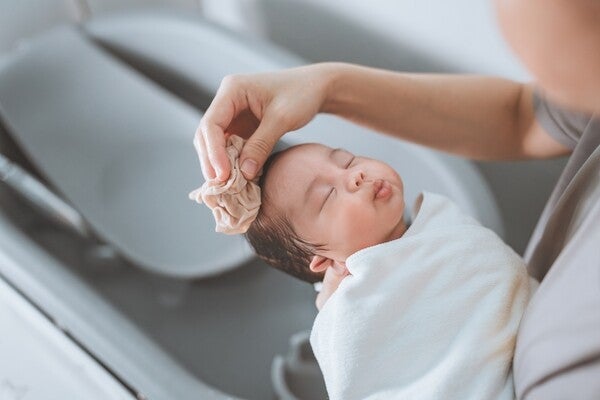
Daily gentle washing loosens scales without scratching or peeling the scalp.
Now that you know what’s behind those patches, here’s the part you actually came for: what to do about them. Your cradle cap baby treatment comes down to a simple bathtime routine.
Wash your baby’s scalp regularly.
Washing your baby’s hair daily can keep cradle cap from building up in the first place. If the scales are already there, Dr. Lim Uy shares a few gentle ways to help:
- Rub the scalp gently with your fingers, a very soft toothbrush, a washcloth, or a fine-tooth comb while bathing your baby.
- Never scratch or peel at the scales; let them lift on their own instead of forcing them off.
- For patches that won’t budge, rub a small amount of mineral oil or petroleum jelly onto the scalp before the next wash to help loosen them.
This simple routine is often all it takes to clear the flakes up.
Use baby-safe products.
Not every product sitting on your bathroom counter is safe for your little one. “It’s best to use products formulated for babies, as adult products may have harsher chemicals that may irritate the baby,” Dr. Lim Uy says. She specifically cautions against olive oil and nut-based oils, which you can find in many everyday skin and hair care products.
In fact, a 2016 University of Manchester study found that using olive or sunflower oil on newborns’ skin may not help the skin barrier develop as well as leaving it alone. The study wasn’t specifically about cradle cap, though, and the researchers themselves said more research is needed before drawing firm conclusions. Still, they noted that you still need to be careful when it comes to using oils on your newborn’s skin.
So what does this mean for you? Since your baby’s skin is still building its protective barrier, it's best to avoid anything that might slow that down. Stick to products made specifically for infant skin.
When to See a Pediatrician

A pediatrician can prescribe medicated shampoo if home care doesn’t clear up cradle cap in babies.
Most cases of cradle cap clear up with a steady home routine, but “if the above methods don’t work, parents can bring their child in for a checkup,” Dr. Lim Uy says. From there, your pediatrician might prescribe a medicated shampoo, an antifungal cream, or a mild steroid, depending on what your baby needs. This isn’t a step to skip if scales linger. It’s simply the next stage of care.
Cleveland Clinic also flags a few specific signs that mean it’s time to call your doctor right away:
- The scalp feels hot to the touch
- Fluid or blood is leaking from the crusted skin
- The area smells bad
- The rash or scales look swollen or very red
Dr. Lim Uy also warns you to never scratch, pick, or peel at the scales yourself. “They may irritate or wound the skin and cause infections,” she explains.
You don’t need to wait for a special appointment, either. Cradle cap often comes up naturally during your baby’s regular checkups, so make sure to mention it even if it’s not the main reason for your visit.
Managing Cradle Cap is Simple
A little patience goes a long way when it comes to cradle cap in babies. All you need to do? Wash your baby’s scalp daily, reach for mineral oil or petroleum jelly on stubborn scales, and skip anything not made specifically for baby skin. If the patches start looking red, swollen, or hot to the touch, or won’t budge after a few months, that’s your sign to call your pediatrician. Otherwise, a gentle routine and a little time are usually all it takes.
Try this tonight: after your baby’s next bath, take thirty seconds to gently check their scalp with your fingertips. It’s an easy way to track whether the scales are clearing up or if it’s time to mention it at their next checkup. For more on caring for your newborn in these early weeks, check out this guide to newborn essentials and baby milestones to know what else to expect.
Got questions about cradle cap in babies or other newborn skin concerns? Head over to the ParenTeam Moms and Dads Facebook group and swap notes with other parents going through the same thing.
About Dr. Sandra Sharlene Lim Uy
Dr. Sandra Sharlene Lim Uy is a board-certified pediatrician with a deep commitment to newborn and premature infant care. For the past five to six years, she has served as a dedicated pediatrician in the Neonatal Intensive Care Unit (NICU) at Taguig Pateros District Hospital, guiding countless families through the critical early days of their premature babies' lives.
Disclaimer: This article is for informational purposes only and isn’t a substitute for professional medical advice. Always consult your pediatrician about your baby’s specific care needs.
References
Cleveland Clinic. "Cradle Cap." Last updated August 10, 2023. Accessed July 21, 2026. https://my.clevelandclinic.org/health/diseases/15786-cradle-cap-seborrheic-dermatitis-in-infants
Cooke, Alison, Michael J. Cork, Suresh Victor, Malcolm Campbell, Simon Danby, John Chittock, and Tina Lavender. "Olive Oil, Sunflower Oil or No Oil for Baby Dry Skin or Massage: A Pilot, Assessor-Blinded, Randomized Controlled Trial (the Oil in Baby SkincaRE [OBSeRvE] Study)." Acta Dermato-Venereologica 96, no. 3 (2016): 323–30. Accessed July 21, 2026. https://medicaljournalssweden.se/actadv/article/view/6032
Mayo Clinic. "Cradle Cap." Last updated April 30, 2025. Accessed July 21, 2026. https://www.mayoclinic.org/diseases-conditions/cradle-cap/symptoms-causes/syc-20350396
Nemours KidsHealth. "Cradle Cap (Seborrheic Dermatitis) in Infants." Reviewed by Yamini Durani. Last reviewed March 2023. Accessed July 21, 2026. https://kidshealth.org/en/parents/cradle-cap.html
Stein, Sarah. "What Is Cradle Cap?" American Academy of Pediatrics. Last updated October 19, 2023. Accessed July 21, 2026. https://www.healthychildren.org/English/ages-stages/baby/bathing-skin-care/Pages/Cradle-Cap.aspx
Related articles

5 Signs You Need to Switch Your Baby’s Laundry Detergent
Does your little one have a rash that won’t go away? It could be caused by your baby laundry detergent. Here’s how to spot the signs and know what to do next.
4 mins to read

What Is Stunted Growth? A Pediatrician’s Guide for Parents
Worried people think your child is bansot or pandak, Mommy? Behind that teasing is a real concern: stunted growth. Here’s how pediatricians check for it.
4 mins to read

How to Spot and Manage Your Baby’s Eczema at Home
Spotting baby eczema early helps you treat it fast. Learn to tell it apart from typical dry skin and explore easy routines to soothe their skin.
6 mins to read

Newborn Baby Baths Made Simple
Master newborn baby bath time! Learn when and how often to bathe your baby, along with step-by-step techniques and safety advice for a happy baby!
5 mins to read

Babbling to Full Sentences! Your Language Development Checklist by Age
Learn the language development milestones your child needs to hit from baby to preschool stage.
7 mins to read

30 Must-Know Terms to Guide You Through the Early Childhood Stage
Welcome to your early childhood stage cheat sheet, so you feel more prepared and less frazzled for parenting!
11 mins to read

How to Give a Baby Massage With Confidence
Love getting a good massage? Your baby probably does, too! Learn the essential baby massage techniques to help with sleep, constipation, and more.
8 mins to read

Sinisinok si Baby? 5 Easy Ways to Soothe Newborn Hiccups
Newborn hiccups are a natural reflex as your baby’s nervous system matures. Learn how to keep your little one comfortable with these expert-backed soothing techniques.
5 mins to read

Why Health Experts Recommend "Unang Yakap" After Birth
Unang Yakap is more than just a picture-worthy moment! Discover the so-good benefits that first embrace has in store for your baby—and you!
6 mins to read

Sitting and Teething! Welcome to Your 6-Month-Old Baby's Milestones
Your 6-month-old baby is discovering the world! This guide covers key developments, sleep patterns, and growth charts to help you on this journey.
6 mins to read

Why Babies Cry: 11 Reasons to Know So You Can Worry Less
Wondering why baKnowing why babies cry helps you understand their needs. From hunger to discomfort, learn the common reasons for tears and find ways to soothe your little one.bies cry?
7 mins to read

A Parent's Guide to Better Baby Sleep
Wondering how to help your baby sleep through the night? Learn to create a bedtime routine and find solutions to common sleep issues for more restful nights.
8 mins to read

Child Development Stages: A Guide from Birth to 5 Years
Understanding child development stages helps you celebrate every milestone. Discover what to expect, from newborn reflexes to preschooler chatter.
6 mins to read

Can Your Child Do This? Key Motor Skills From 0 to 5 Years
Motor skills play a crucial role in your child's growth and learning. Here's a complete checklist to their motor milestones!
7 mins to read

Your Guide to Your Baby’s First Tooth: Signs and Soothing Tips
Wondering about your baby’s first tooth? This guide covers the typical timeline, common symptoms, and simple remedies for teething discomfort.
5 mins to read

Newborn Screening 101: What First-Time Parents Need to Know
Newborn screening is a crucial first step to protect your baby's health as soon as they're born.
7 mins to read

Baby Sleeping Position Basics: What's Safe, What's Not, and Why
Worried about the safest baby sleeping position? Learn why experts recommend placing babies on their backs and master tips for creating a safe sleep environment.
8 mins to read

From Milia to Baby Acne: A Guide to Your Newborn's Rash on the Face
Seeing your newborn’s rash on the face is common in the first weeks. Find out how to handle tiny bumps easily, and know exactly when to visit your pediatrician.
6 mins to read

How to Burp a Newborn for Nervous First-Time Parents
This step-by-step guide on how to burp a newborn can help ease your worries about the right positions, burp frequency, and more.
5 mins to read


