


How to Use a Period Calculator to Plan Your Month
Maybe you planned a fun family weekend at the mall, but Saturday arrives, and you wake up with terrible cramps and zero energy. Running a home is hard enough, and unexpected fatigue can ruin your plans. But a period calculator can help. This digital tool isn’t just for trying to get pregnant; it can also help you plan for a busy month.
Why You Need a Period Calculator
The American College of Obstetricians and Gynecologists (ACOG) explains that tracking your period helps you notice a pattern, making it much easier to tell when your next one will arrive. Even if your cycle is irregular, logging symptoms like cramps, fatigue, or mood changes can help over time.
When you know how to track your menstrual cycle, you learn your body's unique language. Maybe you always get a slight headache two days before, or you feel extra masungit during a specific week. Many women feel like their hormones are a "shadowy monster" controlling their lives, but noticing their patterns helps bring those feelings to light.
By understanding your cycle, you can better manage your physical energy and your role as a parent. It helps you know when you’ll have the high energy needed for a busy family weekend, parent-teacher meetings, and heavy chores, as well as when you should schedule rest. Plus, you’ll know when to be more patient and less masungit when your toddler is throwing a tantrum.
In fact, a 2024 study in the JMIR mHealth and uHealth journal shows that using digital tracking apps directly improves your health literacy. A period tracker helps you to understand your body’s specific signals better, so you can ensure sudden cramps or mood swings won't easily disrupt your family time.
How to Set Up Your Period Calculator in 3 Easy Steps
Setting up a period calculator only takes a few minutes. You can download a free app to your phone, such as Flo and Clue, or you can use a quick online tool like an ovulation calendar (or calendar method calculator). Both use your usual cycle dates to map out your month.
Whether you’re trying to find your fertile window or just want to know when to schedule heavy chores, they both give you the same helpful roadmap.
1. Mark the first day of your last period.
Your app will ask for this date because it’s considered Day 1 of your cycle. This is the most important detail because it determines your cycle predictions.
2. Estimate your average cycle length.
Everybody is different, so your cycle might be 28 days, or it could stretch to 35 days. Not sure about your exact number? Don't worry! Most tools automatically start with a 28-day guess. As you keep logging your dates each month, the app will learn your actual rhythm and adjust its predictions.
3. Log your daily moods and energy.
If you’re using a mobile app, make it a daily habit to log how you’re feeling—energetic, irritable, or exhausted. Noting those tired, masungit, or moody days helps the tracker learn your personal patterns faster. This makes it more accurate at predicting when you’ll start feeling the symptoms of your period coming.
Planning Your Month Based on Your Cycle Phases
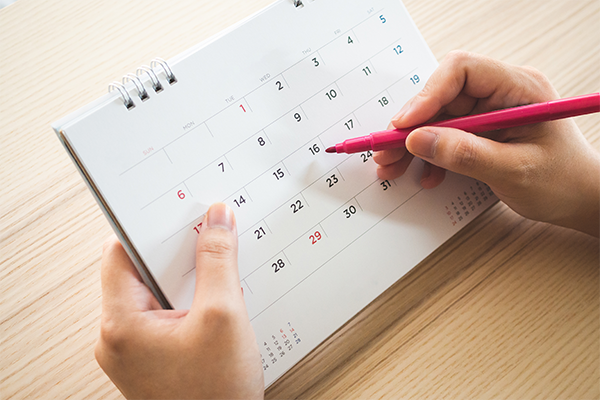
Knowing your cycle phases helps you decide the best days for heavy cleaning or when to rest and ask your partner for help.
After tracking your cycle for a few months, your app can predict which phase you're in—and that makes planning your month much easier. Your monthly cycle is made up of four main phases. Knowing exactly which phase you're in makes it so much easier to plan your chores, your family outings, and your rest days.
The menstrual phase is for heavy rest.
When you're menstruating, your estrogen and progesterone levels are at their lowest. Your uterus is also shedding its lining, a process that can lead to cramps, fatigue, and general discomfort for some people. If you’re wondering how long dysmenorrhea lasts, the worst cramps typically peak at 23 to 48 hours.
Clinical tests show that muscle strength may be lower, and fatigue levels higher, during these bleeding days. You might also find it harder to focus or process information. Recent research also shows that your brain infrastructure—how different parts of your brain communicate—reorganizes as your hormones shift.
This can be a good time to focus on simple household chores, quiet hobbies, or rest. Keep your schedule as light as possible, use a heating pad if it helps, and treat yourself kindly while your body rests.
The follicular phase is for big projects.
As your period ends, your estrogen levels rise, bringing a fresh wave of energy. Use this week for your most demanding household tasks. This is the perfect time to do a major grocery run, deep clean the kitchen, or start planning your child’s upcoming birthday party.
The ovulation phase is for social energy.
Estrogen levels peak right around ovulation. For many women, this hormonal shift brings a natural boost to mood and overall energy. You'll likely feel your most confident and sociable right now!
If you’re asking, how do you know your ovulation day or how many days from ovulation to period? Your app will highlight this window, which usually happens right in the middle of your cycle. Take advantage of this high energy to schedule parent-teacher meetings, family reunions, or a fun weekend trip to the mall.
The luteal phase is for nesting and prep.
Your energy starts to wind down as your body prepares for the next cycle. If you suffer from PMS, the ACOG states that the days before your period can bring physical changes like fatigue and food cravings, or emotional shifts like irritability.
Use this time to finish light tasks, batch-cook meals, and stock the pantry. Prepping your home now means you won't have to worry about heavy cooking or chores when your energy drops.
Smart Ways to Use Your Tracker for Family Harmony

Sharing your cycle tracking app with your partner helps them understand your moods and know when you need extra support.
Now that you’re more familiar with how you feel during different parts of your cycle, use your data to ask for help when you need it most.
Sync your schedule with your partner.
Inform your spouse of your high-energy weeks or low-mood days. When they see that you might be feeling tired or moody over the weekend, they’ll know it’s their turn to take the kids to the park or handle the morning breakfast routine.
Prepare for physical symptoms early.
If your app says your period is three days away, use that heads-up to buy your favorite snacks, prepare your heating pad, and actively say "no" to stressful errands.
Manage your budget and cravings.
Sometimes, tracking helps you realize you’re not just randomly overspending on food delivery—you’re simply having those typical period cravings! Anticipate this by buying your favorite chocolates during your regular grocery run to save money.
Remember, Your Tracker Is Just a Guide
Your cycle tracker is only an estimate. Factors like stress, travel, breastfeeding, or natural aging can shift your cycle unexpectedly. Your body is not a machine, so give yourself grace if your period arrives a few days early or late. However, if your cycle stops, becomes extremely heavy, or causes pain that disrupts your life, it’s best to consult a doctor.
Taking charge of your schedule isn't about being perfect; it’s about knowing when to push and when to rest. By using a period calculator regularly, you can stop guessing and plan your month around your body’s natural rhythm.
Want to learn more tips for managing a busy household? Connect with other parents in the ParenTeam Moms and Dads Facebook group and share how using a period calculator has changed your routine!
REFERENCES
American College of Obstetricians and Gynecologists. "The Menstrual Cycle: Menstruation, Ovulation, and How Pregnancy Occurs." Last updated May 2025. Accessed March 11, 2026. https://www.acog.org/womens-health/infographics/the-menstrual-cycle
American College of Obstetricians and Gynecologists. "Premenstrual Syndrome (PMS)." Last updated May 2021. Accessed March 11, 2026. https://www.acog.org/womens-health/faqs/premenstrual-syndrome
Cleveland Clinic. "Estrogen." Last updated February 8, 2022. Accessed March 11, 2026 https://my.clevelandclinic.org/health/body/22353-estrogen
Gudipally, Pavan R., and Gauri K. Sharma. "Premenstrual Syndrome." In StatPearls [Internet]. Treasure Island, FL: StatPearls Publishing, 2023. Accessed March 11, 2026 https://www.ncbi.nlm.nih.gov/books/NBK560698/
Healthline. "How to Work with Your Period, Not Against It." September 15, 2020. Accessed March 11, 2026 https://www.healthline.com/health/make-your-period-work-for-you
University of Florida Medical Physiology Online. "How Hormonal Changes Affect Emotions, Mood & Mental Health in Women." Accessed March 11, 2026 https://distance.physiology.med.ufl.edu/about/articles/how-hormonal-changes-affect-womens-mental-health/
Wieczorek, Karolina, Anna Targonskaya, and Katherine Maslowski. 2023. "Reproductive Hormones and Female Mental Wellbeing" Women 3, no. 3: 432-444. https://doi.org/10.3390/women3030033


