


Grandparenting Tips: How to Help Lolo and Lola Be Better Co-Parents
Grandparenting works best as a team effort, but that’s easier said than done. Sometimes, your child throws a tantrum, and while you’re trying to stay calm and firm, Lola swoops in with an iPad to make it stop. You’re not wrong to want consistency, and she’s not wrong to want peace—you’re just not on the same page yet.
Whether you’re living with grandparents under one roof or seeing lolo and lola on weekends, staying aligned in situations like this is one of the biggest challenges in co-parenting. Here’s how to build real teamwork, with roles and decisions you've actually agreed on, and lolo and lola feeling like true partners every step of the way.
What Grandparenting as a Team Looks Like
When lolo and lola step into a real co-parenting role, everyone benefits: your child gets one consistent set of rules instead of mixed signals, and you get real support without losing your say as the parent. Lolo and lola, meanwhile, get to raise their apo alongside you, not just lend a hand when you’re busy.
A 2026 study in the Journal of Early Childhood Research interviewed 17 Filipino parents about who helps raise their young children, from infancy through preschool, and found that grandparents are among several caregivers, alongside yayas, relatives, and community members like teachers and health workers, who all shape a child’s early years.
In other words, your child is learning from more people than just you, and grandparents deserve the same intention as any other caregiver, whether they’re occasionally helping or living under the same roof.
Think of it as grandparents raising grandchildren with you, not instead of you. You’re still the primary parent, and they’re sharing the role, not replacing it. That partnership doesn’t happen on its own, though. It starts with dividing roles, aligning on decisions, and making sure they feel valued as part of the team.
How to Divide Childcare Roles with Lolo and Lola
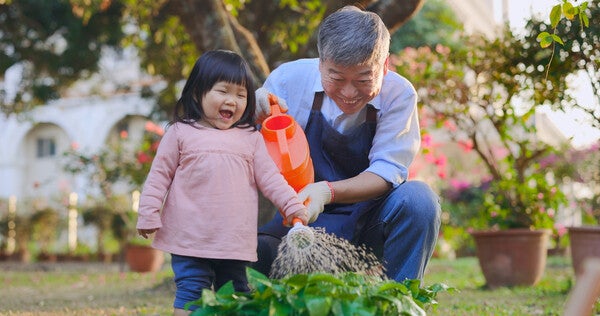
Here’s a helpful grandparenting tip: Assign roles based on each grandparent’s strengths to make daily handoffs smoother.
Getting specific about who does what early on saves everyone a lot of guesswork, and a lot of hurt feelings, later.
Give each grandparent a role that fits them.
Think about what lolo and lola are genuinely good at and enjoy doing. Maybe lola has the patience for nightly kuwento and the bedtime routine, while lolo’s the one who gets your toddler outside for piko in the park or habulan with other kids. When you assign roles based on their strengths instead of just who’s free, the setup feels less like an obligation to them and more like something they look forward to.
Write down who’s in charge of what.
You don’t need anything formal; a shared note or group chat works fine. Jot down who handles school pickup, who’s on duty on weekends, and what to do when plans change last minute. Having it written down means nobody has to rely on memory when everyone’s tired and patience is running low.
How to Align on Parenting Decisions Together
Roles solve who does what. Decisions solve how you all do it. Skip this step, and your child gets mixed signals fast.
Agree on the non-negotiables early.
Sit down with lolo and lola before a conflict comes up, not in the middle of one. Talk through screen time limits, food rules, and how you want discipline handled. You don’t need them to agree with every choice; you just need them to follow it when they’re the ones in charge. Getting this settled early means you get to relax a little when you leave your child with them, instead of bracing for what they might let slide.
Make check-ins a regular habit.
A quick weekly chat, even just five minutes over merienda, keeps everyone on the same page before small issues turn into bigger ones. It also means less chance of mistakes slipping through. Do this consistently, and there’ll be less damage control and more teamwork.
Making Lolo and Lola Feel Like Real Partners
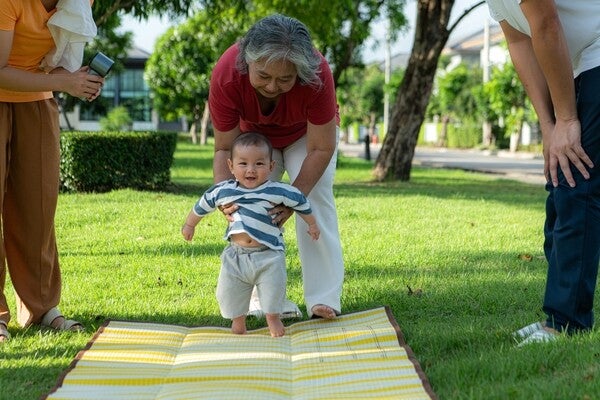
Including lolo and lola in first-day and first-step moments reinforces their place on the family team.
Dividing tasks and syncing on rules covers the logistics. This part covers the relationship, and it matters just as much.
Ask for their input, not just their help.
Lolo and lola raised kids too, and their experience is just as important as anyone else’s. Ask what worked for them, even if you don’t end up doing it the same way. When you ask instead of assign, they feel like part of the decision, not just someone carrying out your order.
Include them in milestone moments.
Let them be there for the first steps, the first day of school, the small wins you’d usually post about. It tells lolo and lola they’re not just backup; they’re part of the family, and that feeling is what keeps them showing up for the harder days too.
A Singapore-based study on Asian families found that when maternal grandparents were involved in childcare, mothers also showed warmer parenting around the same period, at their child’s ages 4.5 and 6. The study can’t say one caused the other, but it points to something worth noting: a close bond between you and lolo and lola doesn’t just benefit them and your child; it may reflect a warmer, more connected household all around.
When Boundaries and Grandparenting Work Together
Even the best partnerships can still have some friction, and co-parenting with lolo and lola doesn’t mean they get the final say on every decision. You’re still the one who decides, and they’re the ones supporting that decision. That’s actually what makes the partnership work, not what threatens it.
So, if a rule you both agreed on keeps getting overridden anyway, that’s not a sign the partnership failed. It just means it’s time for a direct conversation about setting boundaries with grandparents, the same way you’d work through any disagreement with someone you’re on the same team with.
Building a Grandparenting Team That Lasts
Real co-parenting with lolo and lola comes down to three things: clear roles, decisions you’ve agreed on, and making sure they feel like they’re truly involved, not left on the sidelines. Get those right, and everyone benefits. Your child gets consistency, you get real support, and lolo and lola get to feel like they’re a part of raising their apo. Grandparenting works best as part of a team. Start small: pick one role to clarify or one decision to align on this week, and go from there.
Want more grandparenting tips for lolo and lola? Join the ParenTeam Moms and Dads Facebook group and get real talk from other parents in the same boat.
References
Mayo Clinic Connect. "Grandparenting: How to Manage Conflicting Opinions." Accessed September 4, 2026. December 7, 2020. https://connect.mayoclinic.org/blog/take-charge-healthy-aging/newsfeed-post/grandparenting-how-to-manage-conflicting-opinions/
Kemp, Gina, Jeanne Segal, Lawrence Robinson, and Sheldon Reid. "Grandparenting Tips: How to Be a Better Grandparent." HelpGuide.org, last updated February 19, 2026. Accessed September 4, 2026. https://www.helpguide.org/family/parenting/grandparenting-tips-how-to-be-a-better-grandparent
Mendoza, Jhaki, and Gideon Lasco. "More-than-Parental Care: Exploring the Roles of Significant Others in Nurturing Young Filipino Children." Journal of Early Childhood Research, published online January 19, 2026. Accessed September 4, 2026. https://journals.sagepub.com/doi/10.1177/1476718X251408385
Sudo, Mioko, Petrina Hui Xian Low, Yena Kyeong, et al. "Grandparents' and Domestic Helpers' Childcare Support: Implications for Well-Being in Asian Families." Journal of Marriage and Family 87, no. 1 (2025): 134–56. Accessed September 4, 2026. https://onlinelibrary.wiley.com/doi/10.1111/jomf.13010


